
Women everywhere face a common yet rarely discussed wardrobe challenge that affects both comfort and confidence throughout the day. Panties toe, more commonly known as camel toe, occurs when tight-fitting clothing creates a visible outline in the crotch area, drawing unwanted attention and causing physical discomfort. This natural occurrence affects women of all ages, body types, and activity levels, yet finding solutions remains a priority for those seeking both style and discretion in their daily wear. Understanding the causes, health implications, and effective prevention strategies can transform your relationship with everyday undergarments and activewear.
What Causes Panties Toe and Why It Matters
The phenomenon of panties toe develops when fabric bunches or pulls tightly across the pubic area, creating a distinct vertical division. Several anatomical and design factors contribute to this issue.
Primary contributing factors include:
- Inadequate fabric coverage in the crotch panel
- Overly tight waistbands that pull fabric downward
- Insufficient gusset width for individual body shapes
- Thin or stretchy materials that conform too closely
- Poor seam placement that creates tension points
Body anatomy plays a significant role in how underwear fits. The variation in crotch and gusset measurements among different body types means that standard panty designs often fail to accommodate natural diversity. Women with fuller labia, athletic builds, or curvier hip-to-waist ratios frequently experience panties toe regardless of garment size.
The Physical Discomfort Factor
Beyond aesthetics, panties toe creates genuine physical discomfort. The constant pulling and pressure can lead to chafing, irritation, and even pain during movement. Research indicates that wearing overly tight clothing can contribute to various health concerns, including restricted circulation, nerve compression, and increased moisture retention in sensitive areas.
Women who exercise regularly face amplified challenges. High-impact activities like running, cycling, or gym workouts intensify fabric pressure, making panties toe both more likely and more uncomfortable. The friction from repeated movement can cause skin breakdown and increase vulnerability to infections.
Health Considerations Beyond Appearance
While panties toe primarily concerns aesthetics and immediate comfort, the underlying garment fit issues connect to broader intimate health considerations. Tight underwear that creates visible outlines often restricts airflow and traps moisture against delicate skin.
Medical experts emphasize that proper underwear fit significantly impacts vulvar health. Studies examining feminine intimate hygiene habits demonstrate that underwear type, material, and fit directly influence bacterial balance, pH levels, and overall genital comfort. When panties create excessive pressure or friction, they may contribute to conditions like vulvodynia or chronic irritation.
| Health Concern | Connection to Tight Underwear | Prevention Strategy |
|---|---|---|
| Yeast infections | Moisture retention, reduced airflow | Breathable fabrics, proper fit |
| Skin irritation | Constant friction, seam pressure | Seamless construction, adequate coverage |
| Bacterial imbalance | Warm, moist environment | Natural fibers, moisture-wicking properties |
| Nerve compression | Tight elastic, restrictive bands | Flexible waistbands, correct sizing |
Choosing appropriate underwear materials becomes crucial for preventing both panties toe and associated health issues. Natural fibers like cotton provide breathability, while modern performance fabrics offer moisture management without sacrificing comfort.
Design Features That Prevent Panties Toe
Understanding which construction elements successfully eliminate panties toe empowers better purchasing decisions. Not all underwear receives equal engineering attention, and specific design features make substantial differences.
Strategic Seam Placement
Traditional panty construction places center seams exactly where they create problems. Progressive designs eliminate or strategically relocate seams to distribute tension evenly across the garment. Seamless construction particularly excels at preventing fabric bunching, though quality varies significantly among brands.
Effective design elements include:
- Wide gusset panels that provide adequate coverage without pulling
- Reinforced side seams that maintain shape without center tension
- Anatomically contoured cuts following natural body curves
- Flexible elastic that secures without constricting
- Multi-panel construction distributing fabric smoothly
The gusset represents perhaps the most critical component. This diamond-shaped panel should accommodate individual anatomy without creating excess fabric or insufficient coverage. Women seeking invisible underwear for leggings particularly benefit from understanding how gusset design affects both panties toe prevention and overall invisibility under fitted clothing.
Fabric Technology and Innovation
Modern textile engineering offers solutions previous generations never imagined. Advanced fabrics combine stretch, recovery, smoothness, and breathability in ways that address multiple concerns simultaneously.
Performance fabrics specifically engineered for activewear deliver exceptional results for everyday underwear applications. These materials maintain consistent tension distribution, preventing the bunching that causes panties toe while managing moisture and temperature effectively.
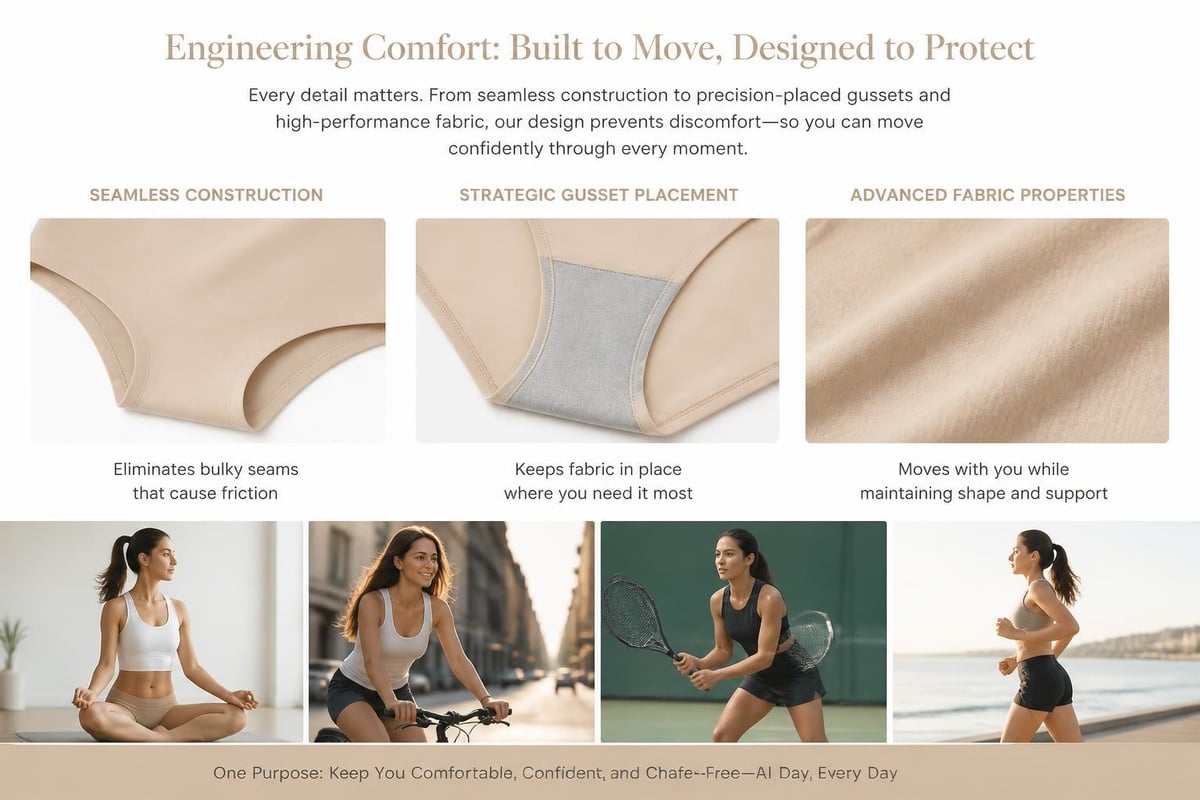
Compression fabrics deserve special mention. When properly calibrated, gentle compression smooths rather than tightens, creating an even surface that resists bunching. However, excessive compression simply amplifies the problem, making fabric selection and garment engineering critically important.
Choosing the Right Underwear Style
Different underwear styles offer varying levels of panties toe prevention. Understanding these differences helps match underwear choices to specific outfits and activities.
Thongs and Minimal Coverage Options
Thongs inherently reduce panties toe risk by eliminating fabric from areas where bunching typically occurs. However, not all thongs perform equally. The front panel design, waistband construction, and overall fit determine whether a thong successfully prevents visible outlines.
Modern thong designs incorporate specialized features like camel toe proof construction that specifically address this concern through innovative gusset shaping and strategic fabric placement. These engineered solutions recognize that simply reducing fabric coverage doesn't automatically solve the problem without thoughtful design.
Full Coverage and Athletic Styles
Full-coverage panties can successfully prevent panties toe when properly designed. Key factors include adequate front panel dimensions, appropriate fabric weight, and seam configurations that avoid center pulling. Athletic panties specifically engineered for active women often incorporate these features as standard, recognizing that movement intensifies typical fit challenges.
| Style | Panties Toe Risk | Best For | Key Features |
|---|---|---|---|
| Seamless thong | Very Low | Fitted clothing, dresses | Minimal fabric, strategic construction |
| Bikini | Moderate | Casual wear, jeans | Balance of coverage and discretion |
| Hipster | Low-Moderate | Active wear, leggings | Wide coverage, smooth edges |
| Boy short | Low | Workout, loungewear | Full coverage, athletic fit |
Understanding your body shape, typical activities, and wardrobe requirements guides optimal style selection. Women with athletic builds might prefer different solutions than those with curvier figures, and no single style suits all situations equally well.
Practical Prevention Strategies
Beyond purchasing well-designed underwear, several practical approaches minimize panties toe occurrence even with less-than-perfect garments.
Immediate solutions include:
- Sizing up when between sizes rather than choosing tighter fits
- Adjusting positioning regularly throughout the day, especially after movement
- Layering strategically using longer tops that provide coverage
- Choosing appropriate outerwear that doesn't exacerbate the issue
- Considering fabric weight in both underwear and outer garments
Sizing represents perhaps the simplest yet most overlooked solution. Many women wear underwear one or two sizes too small, believing tighter fits provide better shaping or stay in place better. Actually, proper sizing allows fabric to drape naturally rather than pull tightly, dramatically reducing panties toe likelihood.
Wardrobe Coordination
Certain clothing combinations naturally minimize panties toe visibility while others amplify it. Understanding these relationships helps coordinate outfits more successfully.
Thick fabrics like denim or structured materials provide more coverage than thin leggings or athletic wear. When wearing fitted bottoms, selecting underwear specifically designed for USA markets that understand American body diversity and sizing expectations often yields better results than international brands using different sizing standards.
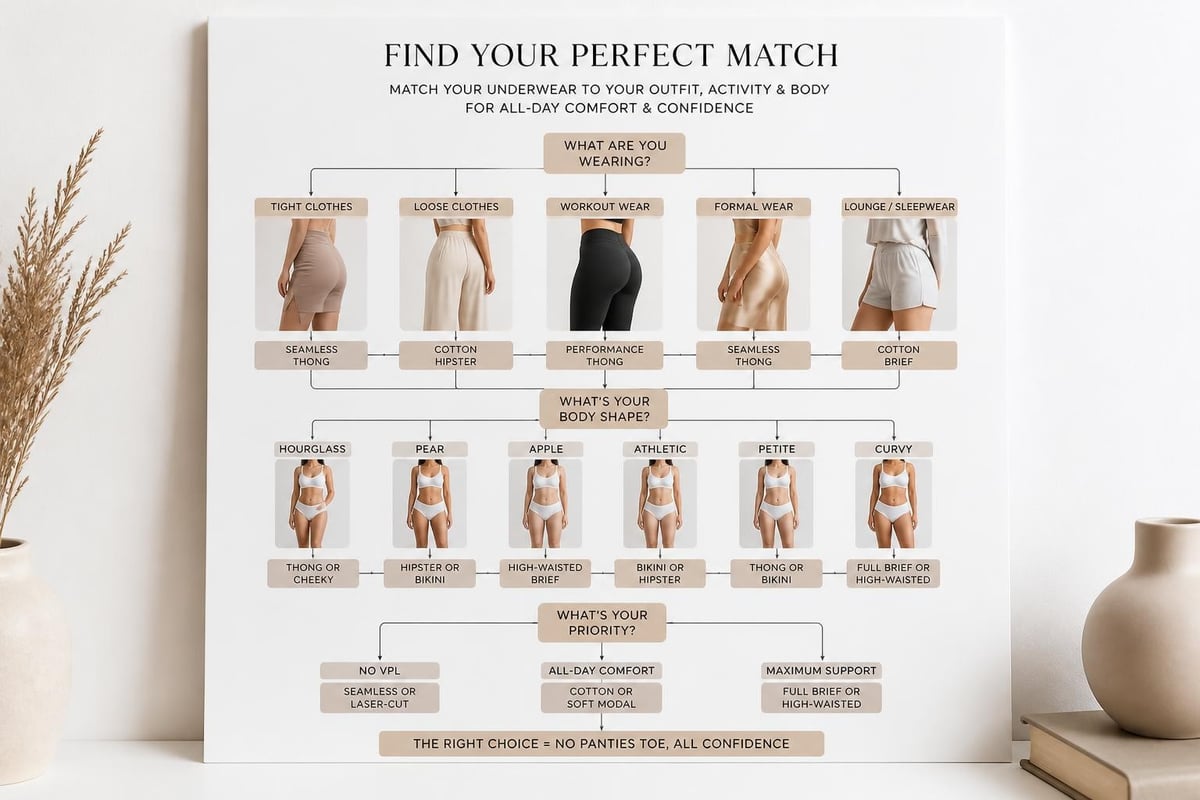
Pattern and color choices in outer garments also matter. Dark, solid-colored bottoms camouflage imperfections better than light colors or busy patterns that draw attention. Strategic styling transforms potential wardrobe malfunctions into confident, comfortable outfits.
The Role of Proper Fit and Sizing
Achieving proper underwear fit requires understanding both body measurements and brand-specific sizing systems. Unlike standardized outer garment sizing, underwear measurements vary dramatically across manufacturers.
Taking Accurate Measurements
Successful underwear selection begins with accurate body measurements. Hip circumference, waist measurement, and rise preference all influence how garments fit and whether they create panties toe.
- Measure hip circumference at the fullest part, typically 7-9 inches below the natural waist
- Determine waist size at the narrowest point, usually just above the belly button
- Assess rise preference by considering torso length and comfort priorities
- Consider activity level when selecting compression or support features
- Consult size charts specific to each brand rather than assuming standard sizing
Many brands now offer comprehensive size charts that account for body diversity and provide guidance beyond simple small-medium-large categories. These detailed resources help identify proper sizing that prevents both panties toe and other common fit issues like rolling waistbands or gapping leg openings.
When to Size Up or Down
Traditional sizing wisdom doesn't always apply to underwear designed to prevent panties toe. Garments engineered with specific anti-camel-toe features often perform best at true size, as the design already accounts for proper fabric distribution.
However, if experiencing panties toe with correctly sized garments, consider these adjustments:
- Size up if fabric feels tight across the pubic area despite correct hip/waist measurements
- Try different styles rather than simply changing sizes, as cut affects fit dramatically
- Evaluate rise options since low, mid, and high-rise versions of the same style fit differently
- Consider body changes as weight fluctuations, muscle development, or hormonal shifts alter fit requirements
Activity-Specific Considerations
Different activities place varying demands on underwear, making panties toe prevention strategies activity-dependent. What works perfectly for office wear might fail completely during high-intensity workouts.
Everyday Wear and Office Environments
Professional settings demand discretion and all-day comfort. Panties toe becomes particularly problematic when standing for presentations, sitting in meetings, or moving between locations where bathroom breaks for adjustments prove inconvenient.
Seamless construction and moderate compression fabrics excel in these environments. These garments maintain position throughout the day without requiring constant adjustment, preventing both panties toe and the self-consciousness that accompanies it.
Athletic Activities and Workouts
Exercise intensifies every underwear challenge. Increased movement, perspiration, and fitted athletic wear create perfect conditions for panties toe to develop and cause significant discomfort.
Athletic-specific underwear addresses these challenges through moisture-wicking fabrics, strategic compression, and construction that accommodates dynamic movement. Features like flat-lock seams and four-way stretch prevent the friction and bunching that plague traditional underwear during workouts.
Workout-specific underwear requirements:
- Quick-dry fabrics that prevent moisture accumulation
- Compression levels appropriate to activity intensity
- Seamless construction that eliminates chafing points
- Secure fit that stays positioned during movement
- Breathable materials maintaining comfortable temperature
Women who practice yoga, pilates, or similar activities face unique challenges. Positions that involve leg spreading or deep squats can cause even well-fitting underwear to shift, creating temporary panties toe. Underwear designed specifically for these activities incorporates extra gusset length and strategic seam placement that accommodates extreme ranges of motion.
Material Matters: Fabric Selection Guide
Fabric choice fundamentally influences whether underwear prevents or promotes panties toe. Understanding material properties helps identify garments likely to perform well.
| Fabric Type | Panties Toe Prevention | Breathability | Moisture Management | Durability |
|---|---|---|---|---|
| Cotton | Moderate | Excellent | Poor | Good |
| Microfiber | Good | Good | Excellent | Excellent |
| Nylon blend | Very Good | Moderate | Very Good | Excellent |
| Modal | Good | Excellent | Good | Moderate |
| Performance blends | Excellent | Very Good | Excellent | Very Good |
Natural fibers like cotton offer excellent breathability and comfort but lack the smoothness and recovery that prevent bunching. Synthetic performance fabrics provide superior shaping and moisture management but may sacrifice some breathability.
Advanced Fabric Technologies
Modern underwear increasingly incorporates specialized fabric treatments and constructions that specifically address panties toe. Laser-cut edges eliminate bulky seams, while bonded construction creates smooth surfaces without traditional stitching.
Ice silk and similar synthetic blends deliver remarkable smoothness that resists bunching while maintaining breathability comparable to natural fibers. These advanced materials often feature in premium seamless camel toe prevention thongs that combine multiple technologies for comprehensive solutions.
Beyond Prevention: Building Confidence
Addressing panties toe extends beyond physical comfort to psychological wellbeing. The constant worry about visible outlines creates genuine stress that affects confidence, posture, and social comfort.
Women report avoiding certain activities, outfits, or social situations due to panties toe concerns. This limitation of life choices based on underwear performance highlights why proper solutions matter beyond simple vanity.
Psychological Impact
Research demonstrates that clothing comfort significantly influences cognitive performance, social confidence, and overall wellbeing. When distracted by underwear concerns, women experience reduced focus, altered posture, and decreased willingness to engage fully in activities.
Eliminating panties toe through proper underwear selection removes this mental burden, allowing full attention to important tasks rather than constant wardrobe monitoring. This psychological freedom represents perhaps the most valuable benefit of well-designed undergarments.
Confidence benefits include:
- Freedom to wear fitted clothing without anxiety
- Improved posture from reduced self-consciousness
- Enhanced focus on activities rather than appearance concerns
- Greater willingness to participate in physical activities
- Reduced stress around wardrobe selection
Understanding that panties toe affects virtually all women at some point normalizes the experience while emphasizing that effective solutions exist. No woman should limit her choices or compromise her comfort due to inadequate underwear design.
Making Informed Purchasing Decisions
Armed with knowledge about causes, health implications, and design solutions, making informed underwear purchases becomes straightforward. Prioritizing specific features ensures investment in garments that truly address panties toe concerns.
Essential Features Checklist
Before purchasing underwear intended to prevent panties toe, verify these critical elements:
- Seamless or strategically placed seams avoiding center front tension
- Adequate gusset width and length for your body proportions
- Appropriate fabric weight and composition for intended use
- Flexible yet secure waistband that doesn't create downward pull
- Reviews or descriptions specifically mentioning camel toe prevention
Many brands now explicitly market camel toe prevention as a key feature, making identification easier. However, marketing claims require verification through construction details and customer reviews that confirm actual performance.
Investment vs. Budget Options
Premium underwear designed specifically to prevent panties toe typically costs more than basic options, but the investment often proves worthwhile. Well-constructed garments last longer, perform better, and eliminate the need for constant replacement of failing budget alternatives.
Consider cost per wear rather than absolute price. A $20 thong worn comfortably three times weekly for two years costs approximately $0.19 per wear, while a $5 option requiring replacement every three months due to poor performance costs $0.38 per wear despite lower initial investment.
Understanding panties toe causes, health implications, and prevention strategies empowers women to make informed choices about intimate apparel that supports both comfort and confidence. By selecting underwear with appropriate design features, proper sizing, and quality construction, this common concern becomes entirely manageable. Ambar Wear specializes in creating seamless, anatomically designed undergarments that specifically address camel toe, panty lines, and comfort issues through innovative construction and premium materials, offering solutions that help women feel confident and comfortable throughout every activity.