

Understanding the difference between underwear and panty might seem straightforward, but the terminology can be confusing for shoppers navigating the lingerie section or browsing online stores. While many people use these terms interchangeably, there are distinct definitions and nuances that separate them. The relationship between these two terms is hierarchical rather than opposing, with "panty" representing a specific category within the broader "underwear" umbrella. Whether you're shopping for everyday essentials, athletic wear, or specialized undergarments designed to eliminate common fit issues, knowing the precise difference between underwear and panty helps you make informed purchasing decisions and communicate your needs clearly.
What Is Underwear?
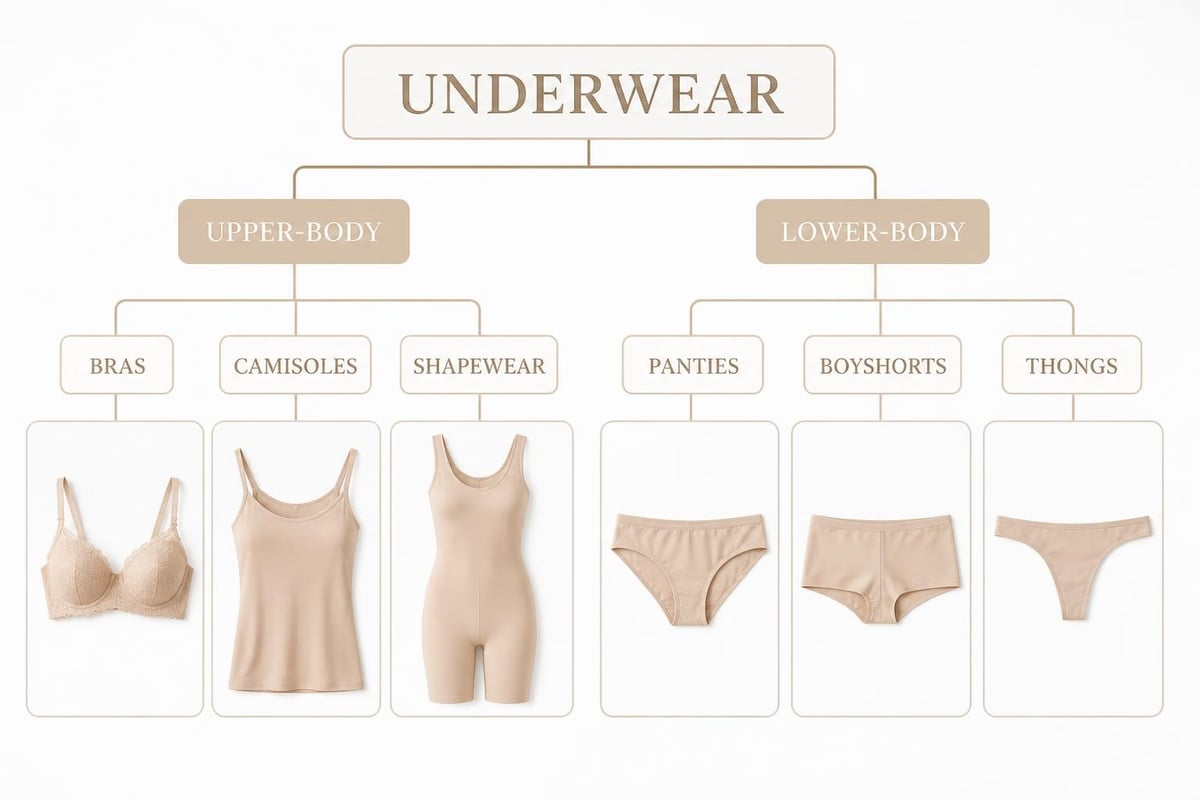
Underwear serves as an umbrella term encompassing all garments worn beneath outer clothing, directly against the skin. According to Wikipedia's comprehensive definition, underwear includes both upper and lower body garments for men, women, and children. This broad category covers everything from undershirts and camisoles to bras, boxers, briefs, and more.
The primary functions of underwear include:
- Providing a protective layer between the body and outer garments
- Absorbing perspiration and maintaining hygiene
- Offering support for various body parts
- Enhancing comfort during physical activities
- Preventing visible lines or outlines through clothing
The Complete Underwear Spectrum
For women specifically, underwear encompasses multiple garment types that serve different purposes throughout the day. The category includes bras, sports bras, undershirts, slips, shapewear, bodysuits, and all varieties of lower-body undergarments. Each type addresses specific needs, from everyday comfort to specialized athletic performance.
When shopping at retailers specializing in athletic panties or performance wear, you'll notice the underwear category branches into numerous subcategories based on function, fabric, and design. Understanding this hierarchy helps shoppers navigate product selections more efficiently.
What Are Panties?
Panties represent a specific subset within the larger underwear category. The Cambridge English Dictionary defines "panty" as a piece of underwear worn by women and girls on the lower part of the body. This definition immediately establishes the gender-specific and location-specific nature of the term.
The word "panties" (plural form) is predominantly used in American English, while British English speakers often prefer terms like "knickers" or "pants." According to the Oxford Advanced Learner's Dictionary, this regional variation adds another layer to understanding how the term functions in everyday language.
| Aspect | Panties | General Underwear |
|---|---|---|
| Body Coverage | Lower body only | Upper and lower body |
| Gender Association | Women and girls | All genders |
| Specificity | Narrow category | Broad umbrella term |
| Regional Variance | High (panties vs knickers) | Moderate |
Key Characteristics of Panties
Panties share several defining features that distinguish them from other underwear types. They typically feature an elastic waistband, a cotton or synthetic gusset for hygiene, and come in various rise options from low to high waist. Modern panties incorporate advanced fabrics and construction techniques, particularly in specialized designs like seamless underwear that prevents visible panty lines.
The design evolution of panties has addressed common concerns women face. Innovations in 2026 focus on eliminating issues like camel toe, excessive sweat patches, and uncomfortable seams through strategic fabric placement and construction methods.
The Difference Between Underwear and Panty Explained
The fundamental difference between underwear and panty lies in scope and specificity. Underwear functions as the broader classification, while panties represent one specific type within that classification. Think of it like the relationship between "vehicle" and "car." All panties are underwear, but not all underwear qualifies as panties.
This distinction matters practically when shopping or discussing undergarments. If someone asks for underwear recommendations, they could mean anything from sports bras to thong underwear. Asking specifically about panties narrows the conversation to lower-body female undergarments.
Grammatical and Usage Differences
Singular vs. Plural Forms
"Underwear" remains the same in both singular and plural usage ("I need new underwear"), while "panty" transforms to "panties" in most contexts. Interestingly, "panty" in singular form typically appears as a modifier (panty line, panty hose) rather than as a standalone noun.
Formality and Context
The term "underwear" carries more neutral, clinical connotations suitable for professional retail environments or medical contexts. "Panties" sounds more casual and intimate, though both terms are perfectly acceptable in appropriate settings. Marketing materials for underwear in the USA often balance both terms to appeal to different customer preferences.
Types and Styles Within Each Category
Panty Styles and Variations
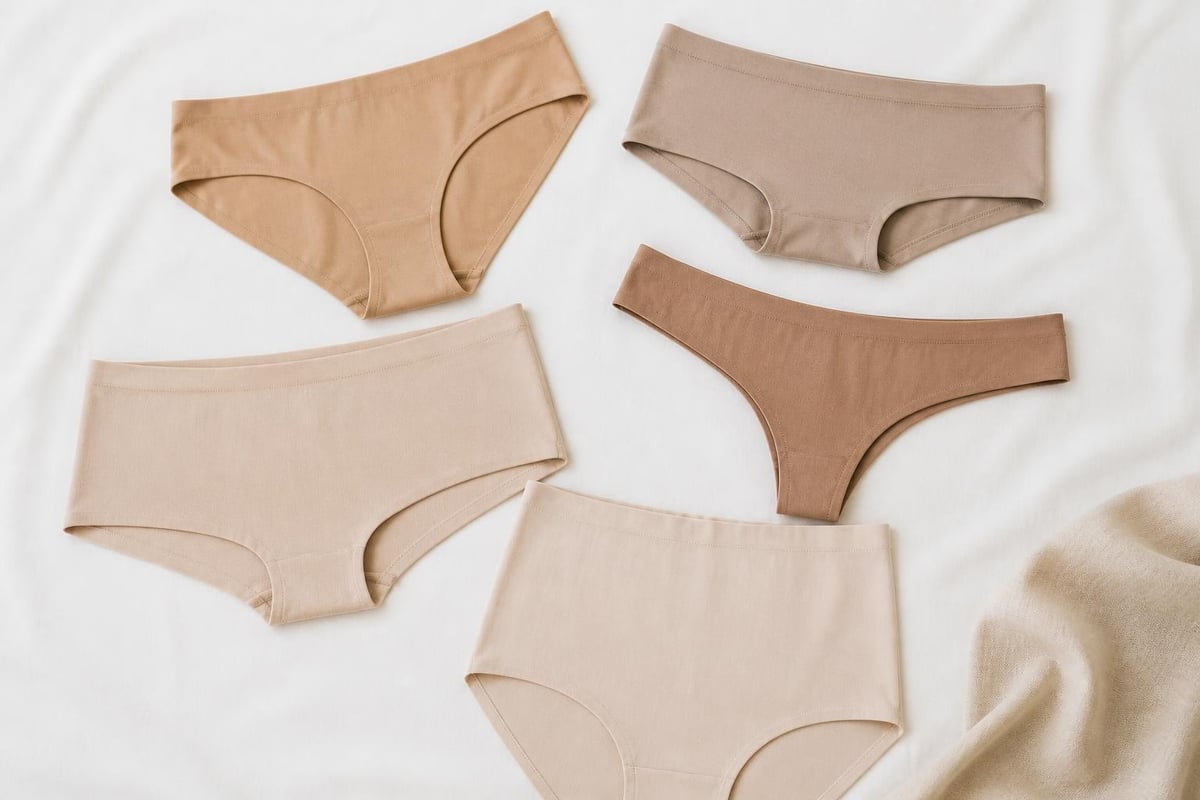
Understanding the difference between underwear and panty becomes clearer when examining specific panty styles. The panty category alone includes numerous variations:
- Bikini panties - Traditional cut sitting at or below the natural waist
- Hipsters - Lower rise with fuller back coverage
- Boyshorts - Athletic-inspired with extended leg coverage
- Thongs - Minimal back coverage for line-free wear
- High-waist styles - Extended coverage reaching above the natural waist
- Brazilian cuts - Moderate back coverage with flattering shaping
Each style addresses different needs. Women seeking invisible underwear for leggings often gravitate toward seamless thongs or laser-cut boyshorts that eliminate visible edges. Those prioritizing comfort for extended wear might choose full-coverage options with soft, breathable fabrics.
Beyond Panties: Other Underwear Categories
The broader underwear category extends far beyond panties for women. Bras represent the most significant other category, with their own extensive subcategories including push-up, wireless, sports, bralettes, and strapless options. Shapewear provides compression and smoothing, while undershirts offer layering options under sheer or fitted clothing.
Comprehensive Women's Underwear Categories:
- Bras and bralettes (all varieties)
- Sports bras and athletic support
- Camisoles and tank undershirts
- Slips and half-slips
- Shapewear and control garments
- Panties (all styles)
- Bodysuits and teddies
- Thermal underwear for cold weather
Functional Differences and Selection Criteria
The difference between underwear and panty extends beyond definitions into practical selection criteria. When choosing panties specifically, women consider factors like waistband placement, leg opening cut, fabric composition, and seamless construction. For the broader underwear category, additional considerations include support level (for bras), compression strength (for shapewear), and coverage needs (for multiple garment types).
Addressing Common Fit Issues
Modern underwear design in 2026 prioritizes solving persistent fit problems. Camel toe represents one of the most common concerns with panties, particularly when wearing fitted activewear or leggings. Specialized designs incorporating camel toe proof underwear technology use strategic seaming, fabric weight, and gusset construction to prevent this issue.
| Common Issue | Solution Features | Best Panty Styles |
|---|---|---|
| Visible panty lines | Seamless edges, laser-cut hems | Thongs, seamless hipsters |
| Camel toe | Reinforced gusset, strategic seaming | Athletic panties, boyshorts |
| Rolling waistband | Wider elastic, silicone grips | High-waist, stay-put bands |
| Sweat patches | Moisture-wicking fabrics, ventilation | Performance athletic styles |
Brands specializing in technical underwear solutions have developed innovative approaches to these challenges. Strategic fabric placement, bonded seams instead of stitched edges, and advanced moisture-management materials characterize modern performance underwear.
Shopping Considerations and Terminology
Navigating Retail Language
Understanding the difference between underwear and panty helps when shopping online or in stores. Product categories, search filters, and department organization all rely on these distinctions. Searching for "underwear" on retail websites typically returns all undergarment types, requiring further filtering. Searching specifically for "panties" narrows results to lower-body options immediately.
When shopping at specialized retailers focusing on undergarments for women, you'll encounter both broad underwear sections and specific panty subsections. This organization reflects the hierarchical relationship between the terms.
Effective Shopping Strategies:
- Use "underwear" for broad browsing across all categories
- Search "panties" when specifically seeking lower-body garments
- Combine with style modifiers (seamless panties, athletic underwear)
- Filter by specific features (no-show, moisture-wicking, high-waist)
Quality Indicators Across Categories
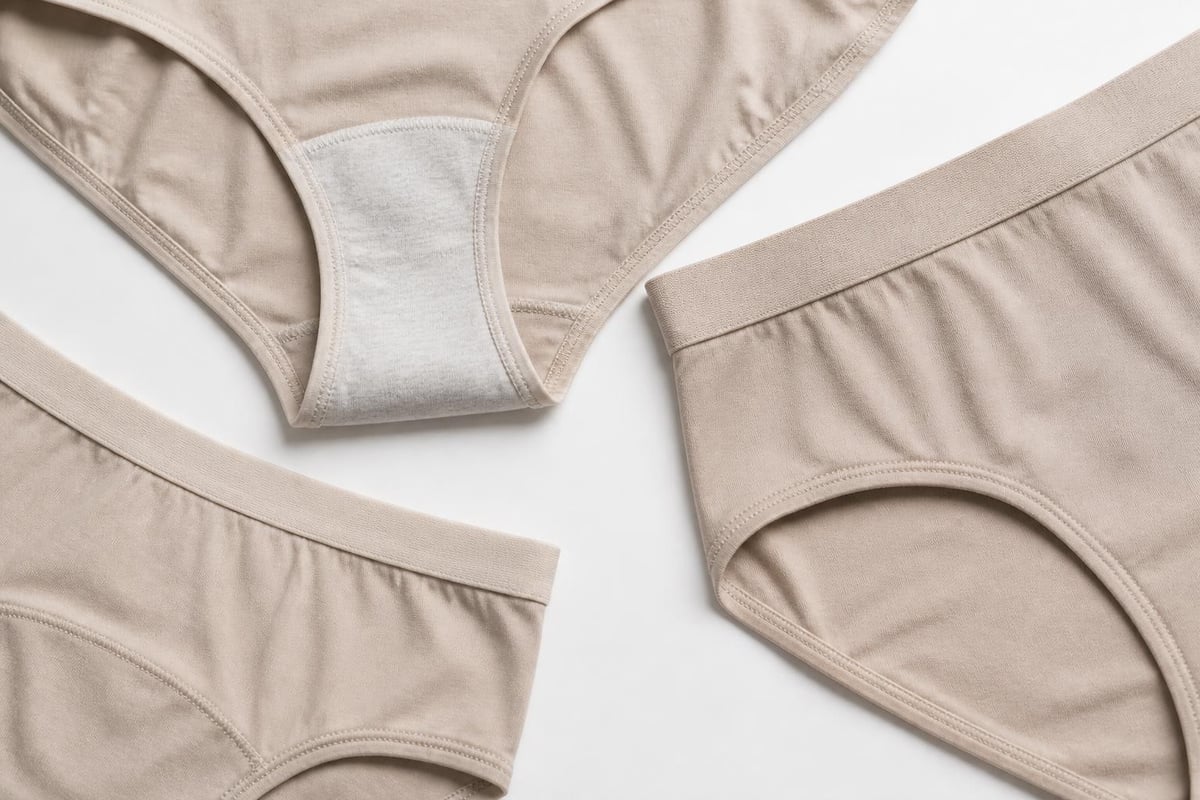
Quality markers differ somewhat between panty-specific features and general underwear construction. For panties, examine the gusset lining (should be cotton or moisture-wicking), elastic integrity (no rolling or digging), and seam construction (flat or bonded for comfort). For bras and other underwear types, assess strap adjustment mechanisms, hook-and-eye durability, and fabric recovery after stretching.
Cultural and Linguistic Perspectives
Regional Terminology Variations
The difference between underwear and panty takes on additional complexity when considering regional language preferences. Wikipedia's article on panties notes that American English predominantly uses "panties," while British English favors "knickers" or simply "pants." Australian English also uses "undies" as a casual catch-all term.
These regional variations don't change the fundamental relationship where panties represent a subset of underwear. However, they affect marketing language, product descriptions, and consumer search behavior in different markets.
Evolution of Terminology
Language surrounding underwear continues evolving. In 2026, many brands and consumers embrace gender-neutral terminology, using "underwear" or "undergarments" more broadly rather than gendered terms. However, "panties" remains widely used specifically for women's lower-body underwear in American contexts, valued for its clarity and specificity.
Material and Construction Differences
Fabric Choices Across Categories
Material selection varies significantly across the underwear spectrum. Panties commonly feature cotton, modal, microfiber, lace, and performance synthetics. The specific style influences fabric choice - everyday cotton panties prioritize breathability, while athletic panties incorporate moisture-wicking polyester blends.
Other underwear categories use different materials suited to their functions. Sports bras require compression fabrics with excellent recovery, while shapewear needs firm control materials that maintain compression throughout wear.
Common Fabric Applications:
- Cotton: Everyday panties, bra linings
- Modal/bamboo: Soft, eco-friendly panties and undershirts
- Microfiber: Seamless panties, no-show underwear
- Performance synthetics: Athletic panties, sports bras
- Lace: Decorative panties, bralettes
- Compression fabrics: Shapewear, control briefs
Construction Techniques
Modern construction methods have revolutionized how manufacturers create both panties and broader underwear categories. Seamless knitting technology produces garments without side seams, eliminating potential pressure points and visible lines. Laser-cut edges replace traditional hemming, creating smooth finishes that disappear under clothing.
Bonded seams, where fabric layers are thermally or adhesively joined rather than sewn, represent another advancement particularly valuable in seamless undergarments. These techniques apply across the underwear spectrum but prove especially critical in panty design where fit and invisibility matter most.
Practical Applications and Use Cases
Everyday Wear Versus Specialized Functions
The difference between underwear and panty becomes relevant when matching undergarments to specific activities or outfits. Everyday situations might call for comfortable cotton panties paired with a wireless bra. Athletic activities demand performance underwear including moisture-wicking panties and high-impact sports bras.
Special occasions introduce additional considerations. Formal wear often requires specific underwear solutions: seamless thong panties for women to avoid lines under fitted dresses, strapless bras for off-shoulder styles, or full shapewear bodysuits for smoothing effects.
Activity-Based Selection Guide:
- Office wear - Comfortable panties with good coverage, supportive bras
- Workouts - Athletic panties preventing camel toe, compression sports bras
- Yoga/stretching - Seamless panties, medium-support bralettes
- Running - Moisture-wicking panties, high-impact sports bras
- Formal events - No-show panties, specialized bras for dress styles
- Lounging - Soft cotton panties, comfortable wireless bras
Addressing Specific Concerns
Women facing particular fit challenges benefit from understanding the full range of underwear options available. Those concerned about underwear to prevent camel toe should explore panties with reinforced gussets, strategic seaming, and appropriate fabric weight. The solution lies specifically in panty selection rather than broader underwear categories.
Similarly, preventing visible panty lines requires choosing specific panty styles (thongs, seamless cuts) rather than changing bra types or other underwear categories. This specificity demonstrates why understanding the difference between underwear and panty matters for solving real wardrobe challenges.
Care and Maintenance Distinctions
Washing and Storage Differences
Care requirements vary across underwear types based on construction and materials. Panties with simple cotton construction tolerate machine washing in warm water, while delicate lace panties or performance athletic styles benefit from cold water and gentle cycles. Bras require different care entirely, ideally hand-washing or using mesh bags to protect underwires and maintain cup shape.
Storage methods also differ. Panties can be folded and stacked in drawers, while bras should be stored with cups nested or lying flat to preserve shaping. Shapewear needs hanging or flat storage to prevent compression fabric from developing permanent creases.
Care Best Practices by Category:
- Cotton panties: Machine wash warm, tumble dry low
- Performance panties: Cold wash, air dry to preserve elasticity
- Lace/delicate panties: Hand wash or gentle cycle, air dry
- Bras: Hand wash preferred, air dry always
- Shapewear: Cold wash, flat or hanging dry
- Athletic underwear: Cold wash, air dry to maintain technical properties
Longevity and Replacement Cycles
Different underwear categories have varying lifespans. Everyday panties typically last 6-12 months with regular wear before elastic degrades or fabric thins. Sports bras and athletic panties may need replacement more frequently (every 6 months) if used intensively, as performance features deteriorate with repeated washing and high-impact activities.
Understanding these replacement cycles helps budget for underwear purchases. Investing in quality camel toe free underwear or specialized athletic pieces proves economical when those garments perform reliably throughout their intended lifespan.
Understanding the difference between underwear and panty empowers women to shop confidently, communicate their needs clearly, and select undergarments that truly address their specific requirements. While "underwear" encompasses all garments worn beneath outer clothing, "panties" specifically refers to women's lower-body undergarments with distinct style variations and functional purposes. For those seeking solutions to common fit issues like camel toe, visible panty lines, or sweat patches, Ambar Wear specializes in seamless, comfortable undergarments designed specifically to eliminate these concerns while providing a flattering fit for all body types.