

Thong panty design comes down to five details: the waistband, the back panel, the gusset, the fabric, and the structure of the front panel. Get those right and a thong disappears under leggings; get them wrong and you see lines, shifting, or camel toe. For women who wear leggings, yoga pants, and other fitted clothes, the front panel and edge finish matter most, because those two details decide whether a silhouette looks smooth or shows every seam.
This guide explains how each design element works, which choices suit which outfits, and how to judge a pair before you commit to it.
What Makes a Thong Panty Design Work Under Fitted Clothes
A thong that works under fitted clothes has no hard edges, a front panel that holds its shape, and stretch that follows your body without digging in. Everything else is secondary.
Three outcomes define success:
- No visible lines. Edges are bonded, laser-cut, or finished flat rather than hemmed with thick elastic.
- No camel toe. The front panel is structured or lined so fabric does not settle into the seam of your leggings.
- No shifting. The waistband and back panel stay where they are through squats, lunges, and a full day of sitting.
Fit is the starting point for all three. According to The Healthy, a well-fitting thong should feel comfortable and form-fitting, while underwear that is too small can pinch and an oversized thong may slide and cause chafing. If you size up to avoid pinching, the garment can bunch and slip. If you size down for a smoother look, it can dig in and create the very lines you wanted to avoid.
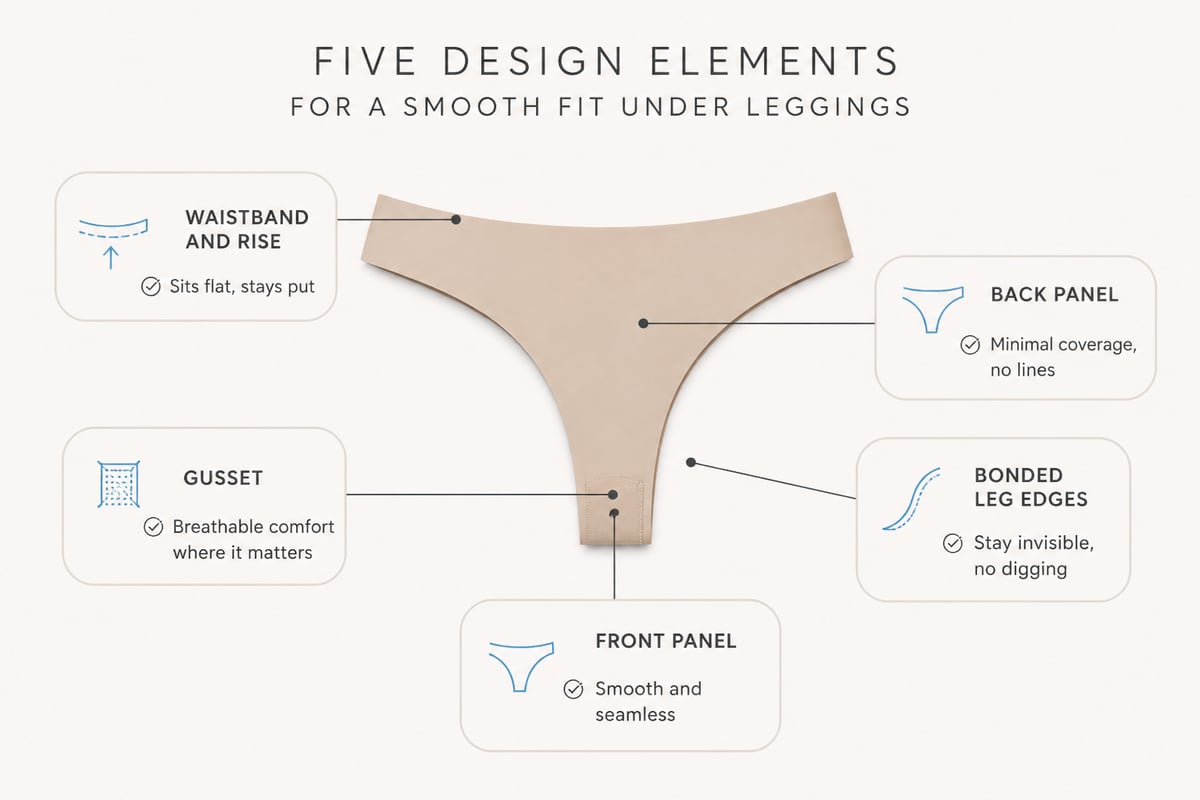
The Anatomy of a Thong: Five Design Elements
Each part of a thong has a job, and the best designs treat them as a system rather than isolated features.
Waistband and Rise
The waistband determines where the garment sits and how its edge reads through fabric. A thin, flat, bonded band lies smoother than a wide elastic one, which can ripple at the hip. Rise changes the effect:
| Rise | Where it sits | Best under |
|---|---|---|
| Low | Below the hip bone | Low-rise jeans, hip-hugging bottoms |
| Mid | Just below the navel | Everyday leggings, trousers |
| High | At or above the navel | High-waisted leggings, bike shorts |
If your leggings have a high waistband, a mid or high rise keeps the thong edge from peeking above the waist when you bend or sit. Ambar Wear covers this territory in its guide to the high-rise thong.
The Back Panel
The back sets how secure the thong feels. A narrow string back is lightest but can feel like it pulls. A wider, flat back distributes tension and tends to stay put during movement. For workouts, a slightly wider back that tapers gently is more stable than a thin cord, because it does not saw against skin when you move.
The Gusset
The gusset is the strip of fabric that touches the most sensitive area, so its material matters more than almost any other detail. The Healthy notes that a cotton or cotton-blend gusset is recommended for breathability, even when the rest of the garment uses another fabric. A gusset that is too narrow offers little coverage, while one that is too long can add bulk at the front.
The Front Panel
The front panel is the design element most connected to camel toe. Thin, single-layer fabric with a center seam tends to draw into the natural contour of the body and show through stretchy leggings. A structured front, meaning a smoothing or lined panel that holds a flat shape, prevents that settling. The seam placement matters too: a seam that runs lengthwise down the center can create a visible crease, while a seamless front lays flatter.
Edge Finishing
Leg openings are where most visible lines begin. Cut-and-sew elastic leaves a raised ridge. Bonded or laser-cut edges lie flat against the skin, which is why seamless construction has become the default in underwear built for leggings.
Fabric and Gusset Choices: Comfort Meets Smoothness
The best fabric for a thong under leggings balances breathability, stretch, and a smooth surface, and the gusset should lean toward cotton.
Health sources are consistent on this. Cleveland Clinic recommends choosing 100% cotton underwear and putting on a fresh pair at least daily. Pure cotton, though, has trade-offs for fitted clothing: it can hold moisture and lacks the elasticity that keeps a thong in place during exercise. That is why many seamless thongs combine a stretch outer fabric with a cotton or cotton-blend lining at the gusset, which keeps the smooth finish without giving up breathability.
Common material approaches include:
- Cotton or cotton blend. Breathable and soft, with moderate stretch. A strong choice for relaxed days.
- Nylon and spandex blends. Smooth and stretchy, often bonded for seamless edges. Good for activewear.
- Silky or ice-silk knits. Very light with a cool feel, which reduces fabric thickness under tight leggings.
- Mesh panels. Add airflow and can lighten the garment, as long as the front stays structured.
If you are prone to recurring vaginal or vulvar problems, Cleveland Clinic advises choosing underwear that is looser and more breathable. In that case, prioritize a cotton gusset and avoid the tightest fits.
Does Thong Design Affect Health?
Well-designed thongs are not linked to higher infection risk, but fit, fabric, and hygiene habits still matter. Cleveland Clinic reports that a study found thongs did not increase the risk of yeast infections, bacterial vaginosis, or urinary tract infections.
Practical habits matter more than the style itself. Gynecologists quoted by HuffPost recommend a comfortable fit that does not constrict or chafe, and they also recommend a cotton crotch for thong styles. A physician speaking to ABC13 Houston advises breathable material such as cotton, avoiding overly tight thongs, and washing or changing a thong if it becomes soiled.
The takeaway for workouts is simple: change out of sweaty underwear promptly, and choose moisture-wicking fabric when you know you will be active.
How Thong Panty Design Prevents Camel Toe
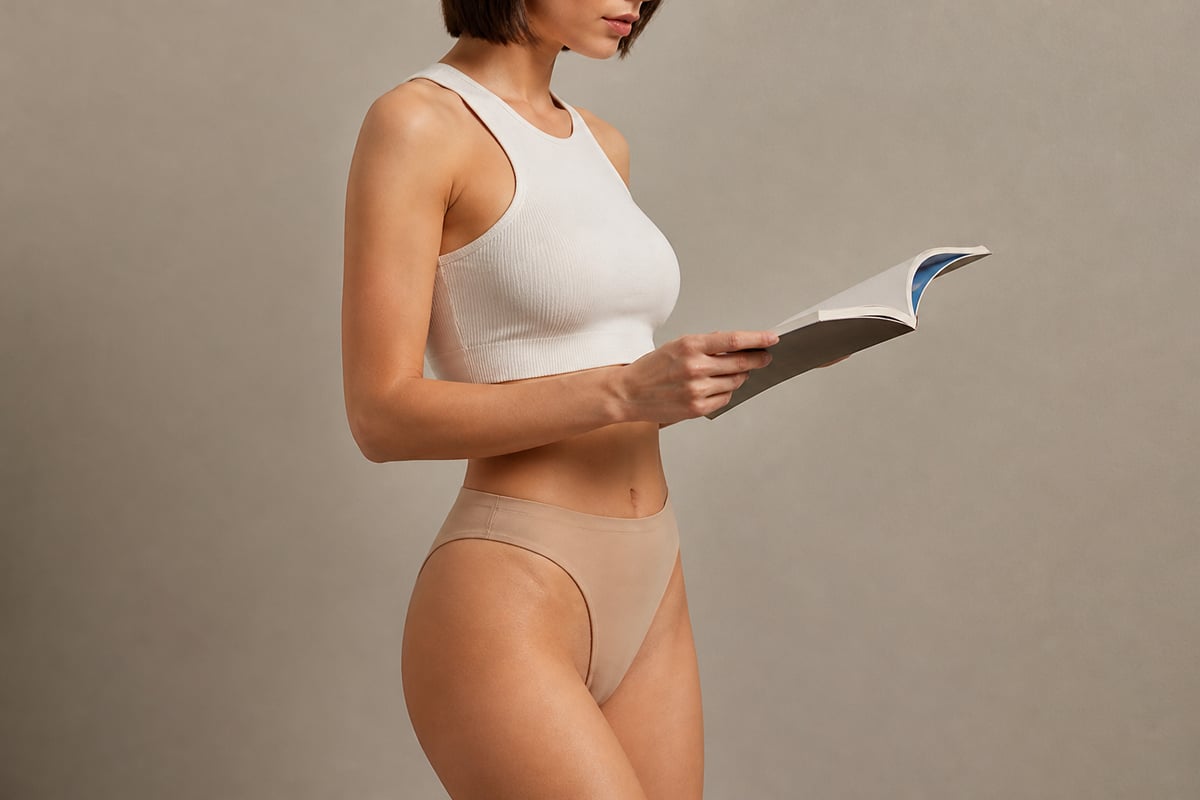
Camel toe happens when fabric is pulled into the contour of the body and the outline shows through stretchy bottoms, and design counters it in three ways.
- Structure. A front panel with a smoothing layer or reinforced lining keeps its shape instead of molding to the body.
- Seam placement. Moving or eliminating the center seam removes the crease line that leggings reveal.
- Coverage balance. A front that is neither too narrow nor too long avoids both gaps and bulk.
Fit adds another layer. A thong that is too small drags the front panel upward and tightens it into the very shape you want to avoid. A thong that is too large lets the front fold. If you are choosing between sizes, the one that lies flat without pulling is almost always right. Ambar Wear's explainer on camel toe in panty walks through why this happens in more detail.
Matching Thong Design to What You Wear
The right thong depends on the garment on top of it, and the lightest, smoothest option is not always the best one for every outfit.
- Light-colored or thin leggings. These show the most. Choose a seamless thong with bonded edges and a structured front. A skin-tone shade close to your own tone helps.
- High-waisted leggings and bike shorts. A mid or high rise prevents the waistband from showing at the top of the garment.
- Yoga and studio workouts. Look for 4-way stretch, a stable back panel, and moisture-wicking fabric so the thong holds position through deep stretches.
- Everyday jeans and trousers. A mid-rise thong with a slightly wider back is comfortable for long days of sitting.
A useful extra step is the movement test. Before wearing a new pair out, do a squat, a forward fold, and a lunge in front of a mirror with your legs covered. A thong that holds position and stays line-free through all three is built for fitted clothing. One that rides up or shows an edge will do the same in public.
A Practical Test for Judging Thong Quality
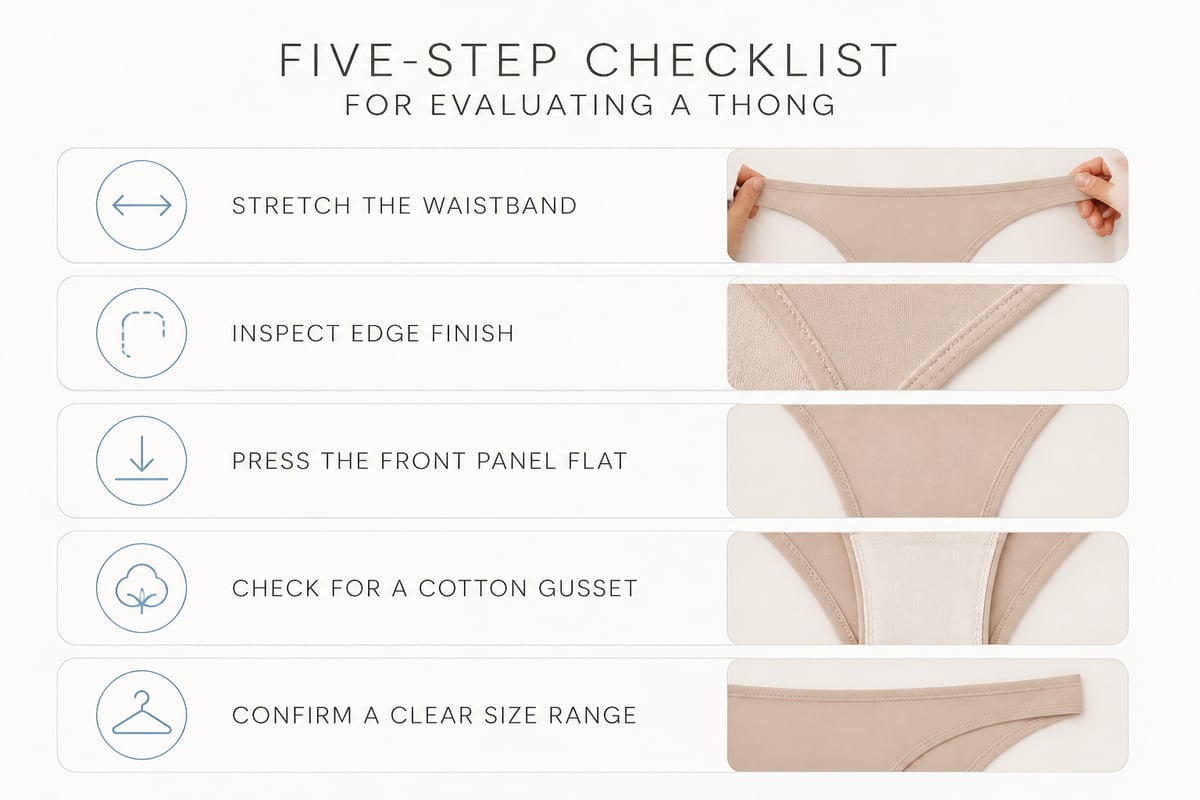
Most shoppers judge a thong by its photo, but a few quick checks reveal far more about how it will behave.
- Stretch the waistband and leg openings. They should return to shape quickly without rippling.
- Look at the edges. Flat, bonded, or laser-cut finishes signal a smoother result than thick turned-under hems.
- Press the front panel flat. A structured front keeps its smooth surface; a flimsy one folds or creases.
- Check the gusset label. Cotton or a cotton blend at the gusset is a practical sign of attention to breathability.
- Check the fit range. A garment sold in a clear size range that you can map to your measurements will fit more predictably than one-size-fits-most.
One more point is easy to miss in design discussions: wash behavior. Bonded edges and smoothing panels can lose their flat finish if exposed to high heat or harsh detergent, so follow the care label and air-dry when you can. A thong that looks seamless on day one but ripples after a month of hot cycles is not delivering on its design.
A Seamless Option Built for Leggings
If you want a thong that applies these principles, the Seamless Ice Silk Thong is a mid-rise, minimalist style sold as a 5-pack of seamless contrast mesh thongs for 14.90 USD. It is made from soft, breathable fabric with stylish mesh detailing, and it combines everyday function with modern style.
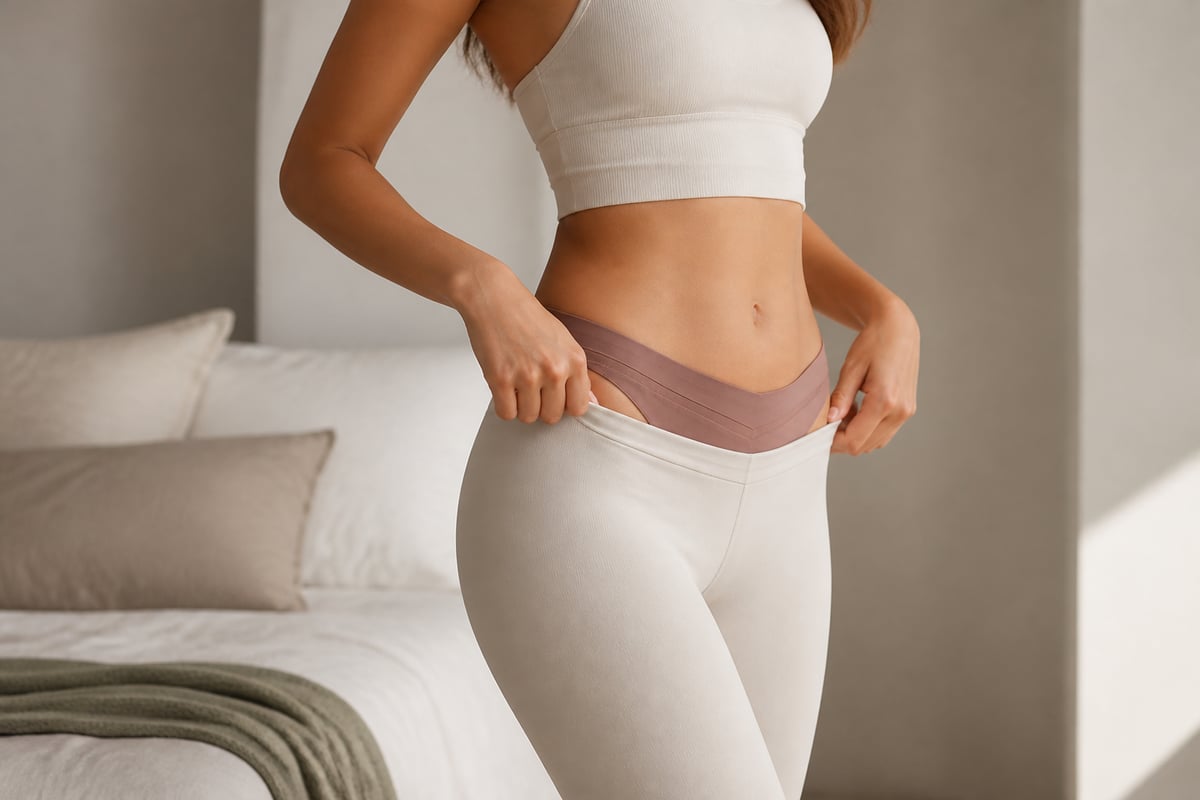
Ambar Wear's wider line is designed around the same goals: seamless construction with a structured front panel that stops camel toe, invisible wear under any legging including light colors, and 4-way stretch that stays in place for squats, lunges, and yoga. The brand reports over 1,000 customer reviews rated 4.6 out of 5, with 97% of customers saying they would recommend the product, and its 30-day guarantee refunds you if you do not feel the difference on your first wear. For other styles, such as a higher rise or a different front structure, browse the product pages on the site.
Choosing Between Thong Styles
Different thong cuts suit different priorities, and knowing the vocabulary makes shopping faster. For a broader comparison of cuts, Ambar Wear's guide to the difference between a thong and a panty is a useful reference.
- Classic thong. A narrow back with a triangular or curved front. Lightest coverage, best for very fitted outfits.
- Mid-rise seamless thong. Balanced coverage and a flat edge; the everyday choice for leggings.
- High-rise thong. Sits at the natural waist, pairs with high-waisted bottoms, and can add light smoothing.
- Thong with a wider back. More stable for exercise and long days; the wider band spreads pressure.
If you are building a drawer from scratch, start with one mid-rise seamless pair in a shade close to your skin tone and one slightly higher-rise pair for high-waisted leggings. Add specialty styles only after you know which rise and back width feel best to you. For a closer look at invisible fits under tight bottoms, see Ambar Wear's piece on thong leggings.
Start by trying one change: pick a single pair of your most-worn leggings, run the squat, fold, and lunge test with a seamless thong, and note whether any line, seam, or camel toe shows. If you want a pair built around that test, the Seamless Ice Silk Thong is a good place to begin, and Ambar Wear's full range of thongs, leggings, and bras is ready for you to shop now with a 30-day guarantee behind your first wear.