

Wearing leggings, yoga pants or any fitted bottom over the panties works best when the underwear is seamless, moisture-wicking and shaped to stay flat against the body. The wrong pair shows lines, rolls at the waist or creates a camel toe, while the right pair disappears under even light-colored fabric.
This guide covers how to choose the cut, fabric and fit that keep your underwear invisible, how to adjust for workouts, and how to keep the whole setup fresh and comfortable all day.
What Wearing Clothes Over the Panties Actually Means
Wearing clothes over the panties simply means layering fitted garments, such as leggings, yoga pants, bike shorts or skinny jeans, directly on top of your underwear. For women who train or live in stretch fabrics, that layer is where most visible problems begin.
Fitted clothing does not forgive anything. Elastic edges, stitched seams and thick gussets press against the fabric above them, and every bump becomes a visible line. The thinner or lighter the legging, the more the underwear underneath shows.
Three issues come up most often:
- Panty lines from leg openings, waistbands or side seams that cut into the skin
- Camel toe from fabric that bunches or lacks structure at the front
- Shifting and rolling when the waistband or leg openings move during exercise
Each one has a fix, and most of the fixes come down to construction rather than size alone.
Why Fabric and Construction Decide Everything
Fabric and construction matter more than style when your underwear sits under fitted clothing, because they determine whether lines form and whether moisture builds up.
Seamless knit construction removes the stitched edges that create ridges. Laser-cut or bonded edges lie flat against the skin instead of pressing into it. A smooth, stretchy knit also moves with the body, so it does not bunch or ride up when you bend.
Breathability matters as much as appearance. Experts interviewed by HuffPost say breathable fabrics such as cotton can support airflow, and that fit should be comfortable and should not constrict or chafe. Tight leggings already limit airflow, so your underwear should not add to the problem by trapping heat and moisture.
For a deeper look at what different fibers do against the skin, the Ambar Wear breakdown of panties materials is a useful reference.
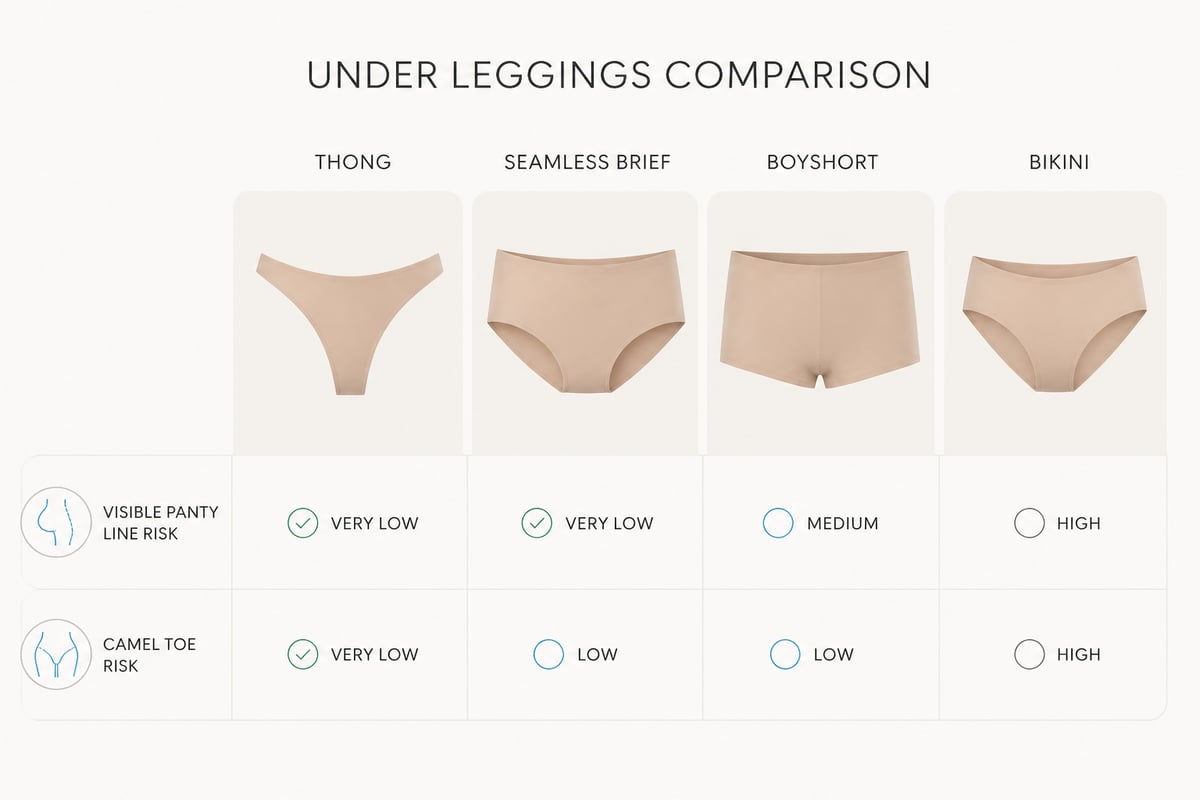
A quick comparison of common cuts under leggings
| Cut | Line risk | Camel toe risk | Best use |
|---|---|---|---|
| Thong | Very low at the hips | Moderate without a structured front | Light-colored leggings |
| Seamless brief | Low | Low to moderate | Everyday wear |
| Boyshort | Low at the hips, possible thigh line | Low | Longer workouts |
| Traditional bikini | High at the hips | Moderate | Looser pants only |
No cut solves everything alone. Structure at the front panel is what separates a smooth result from a disappointing one.
How to Stop Camel Toe Under Leggings
Stopping camel toe comes down to a structured front panel, a smooth surface and a cut that does not collapse inward as you move.
Camel toe appears when thin fabric dips between the legs and outlines the shape beneath it. Thin leggings make it worse, and so do panties with a soft, unstructured front. A panel designed to hold its shape creates a flat, even surface so the legging fabric glides over it instead of settling into it.
Practical steps that help:
- Choose underwear with a structured front panel rather than a flimsy gusset.
- Match the size carefully. A pair that is too large wrinkles and bunches, and a pair that is too small digs in and pulls.
- Check your leggings. Thicker, opaque fabric with a compressive feel hides more than thin, shiny material.
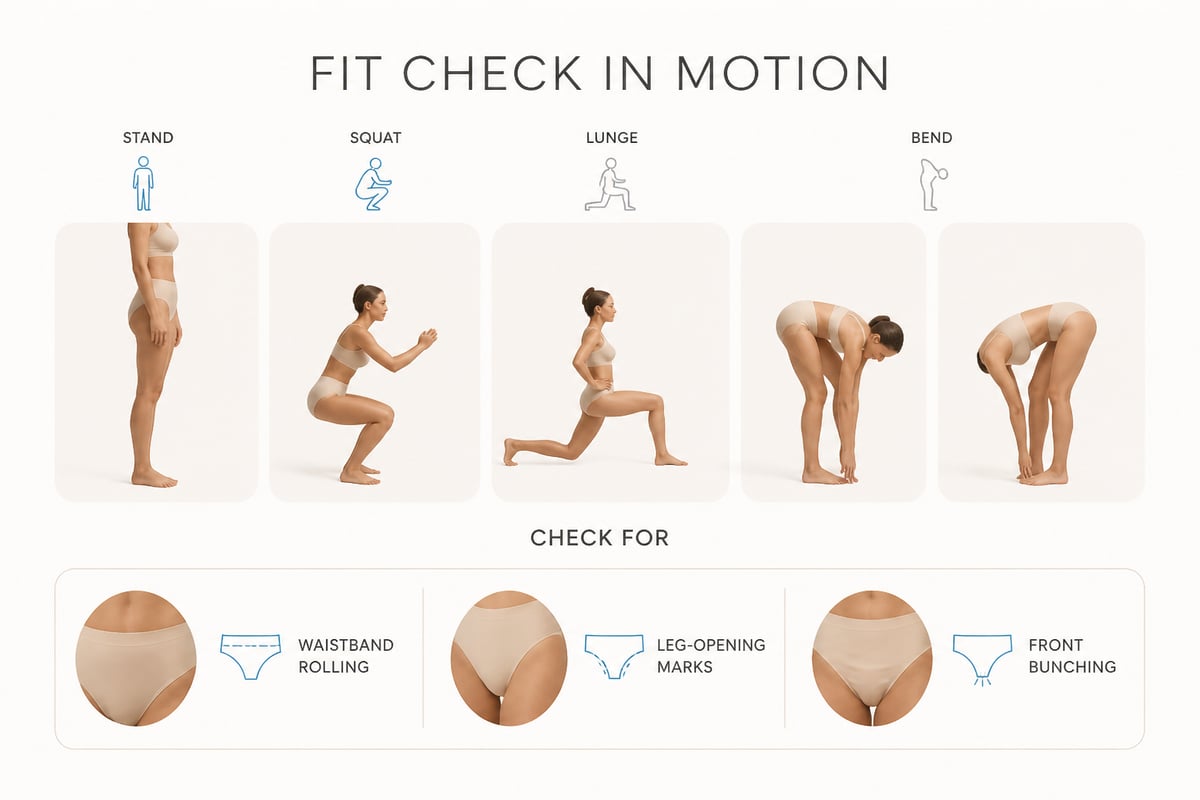
- Test in motion. Squat, lunge and bend in front of a mirror before leaving the house.
If you want a closer look at the problem, the Ambar Wear articles on camel toe in panties and panties for leggings walk through common causes and fixes.
Choosing the Right Pair for Your Workout
The right pair for a workout stays in place through movement, wicks sweat and does not roll at the waist, whatever you are training.
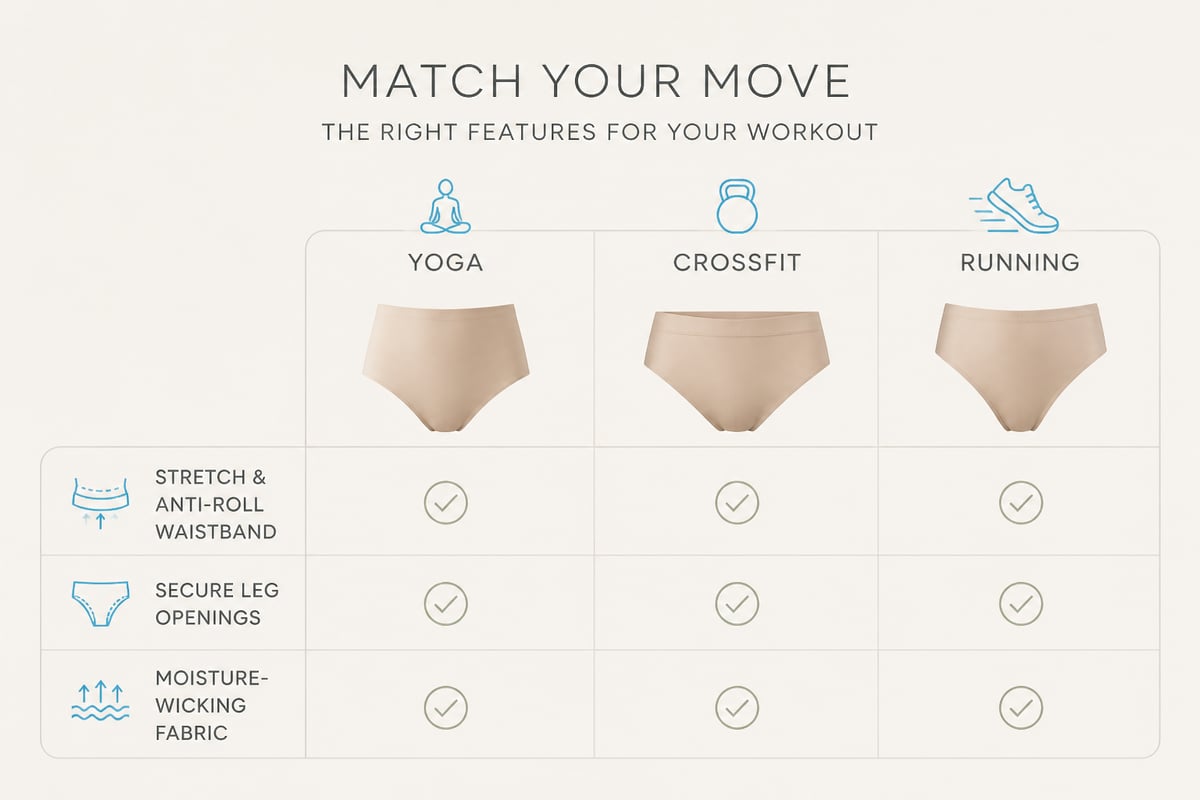
Different activities stress underwear in different ways:
- Yoga and pilates: Deep stretches and inversions need a waistband that does not roll and fabric that stretches in every direction.
- CrossFit and strength training: Squats, lunges and box jumps pull on leg openings, so a secure fit with no riding up matters most.
- Running and cardio: Moisture management becomes the priority, because sweat trapped against the skin causes chafing.
A mid-rise cut with an anti-roll waistband works well for many body types because it sits above the hip bone without digging in. The Ambar Wear guide to activewear panties goes further into matching the cut to the activity.
A Pair Built for Fitted Clothes
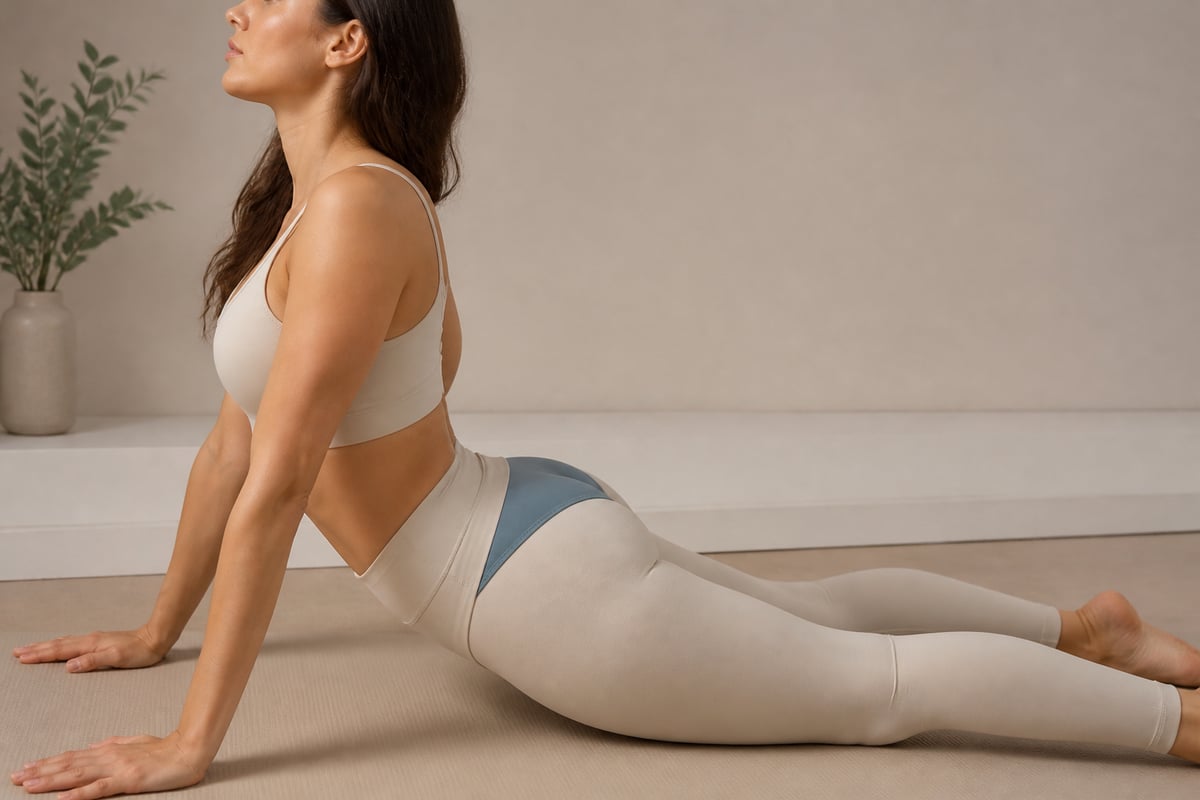
For women who want underwear designed around this exact problem, the Invisible Camel Toe Panties - Mid Rise from Ambar Wear combine camel toe blocking technology with invisible edges, so they disappear beneath even tight clothing. The seamless construction includes a structured front panel, the fabric is breathable and moisture-wicking, and the 4-way stretch stays in place through squats, lunges and yoga. Check the product page for the available sizes.
Each feature answers a specific complaint covered above. The invisible edges address the ridges that leg openings and waistbands press into thin legging fabric. The structured front panel keeps a flat surface at the center, so the legging glides over it rather than settling into a dip. The mid-rise shape sits above the hip bone, which suits the anti-roll approach described for workouts. Breathable, moisture-wicking fabric matters because HuffPost's 2025 reporting advises choosing underwear that does not trap excessive heat or moisture, and tight leggings already limit airflow.
Light-colored leggings, bike shorts and thin yoga pants are where this kind of construction earns its place, since those fabrics reveal the most. Sizing still deserves care: measure rather than guess, because a pair that is too large wrinkles and one that is too small digs in.
Customer feedback gives a sense of how the fit performs: Ambar Wear reports over 1,000 customer reviews rated 4.6 out of 5, plus Trustpilot reviews at the same rating. There is also a 30-day guarantee: if you do not feel the difference on your first wear, you are refunded.
How to Keep Everything Fresh Under Tight Layers
Underwear worn under leggings needs to be clean, dry and changed promptly, because tight layers hold moisture against the skin.
The guidance from medical sources is consistent. A HuffPost piece reports that doctors recommend changing underwear at least once a day, and sooner after exercise or when it becomes wet or sweaty. Doctors interviewed by TODAY add that damp underwear can contribute to irritation, skin breakdown or infection.
A simple routine keeps things comfortable:
- Pack a spare pair in your gym bag and change after your session
- Remove sweaty leggings and underwear soon after training instead of running errands in them
- Wash new pairs before the first wear
- Rotate several pairs so each one has time to dry and recover its shape
The Ambar Wear piece on fresh panties covers day-to-day habits that make this easier.
The Overlooked Variable: Your Legging's Own Construction
Your legging's waistband, seams and fabric weight change what your underwear can hide, and adjusting the legging side of the pairing often fixes problems that no underwear change will.
Check these four features before blaming the panties:
- Fabric opacity. Hold the legging up to a light source, and if you can see through it, it will show lines in any pair of underwear.
- Seam placement. A center-front seam or an inseam that sits right at the crotch creates a ridge that mimics a camel toe, and nothing underneath will change it.
- Waistband height. A high, wide waistband covers the top edge of your underwear, while a low one exposes it with every bend.
- Compression level. Firm, compressive leggings smooth surface variation, and lightweight ones reveal it.
Pairing the right underwear with the right legging is what creates a truly smooth result. If one of them fails, the other has to work much harder. Try your leggings on with your most reliable pair of underwear, and only then judge whether the legging itself needs replacing.
Sizing and Body Type Considerations
Sizing correctly matters because a pair that fits your body type will lie flat, while a mismatched pair bunches, rolls or digs in under fitted clothes.
Women with curves may find that standard cuts slide or cut into the thigh, so a wider leg opening or a slightly higher rise may improve comfort. Petite frames may need a shorter rise so the waistband does not climb too high.
For anyone unsure, a few rules apply across body types:
- Measure rather than guess, since sizing varies between brands
- Look for stretch that recovers fully after wear
- Avoid anything that leaves marks on your skin at the end of the day
- Choose breathable fabric that does not trap excess heat or moisture, in line with the advice in a 2025 HuffPost article
A Simple Pre-Outfit Checklist
A short routine before you leave the house catches nearly every problem with wearing fitted clothes over the panties.
- Dress in good light. Look at your outfit in a mirror with bright, direct light, because bad lighting hides lines that daylight reveals. If your mirror sits in a dim hallway, step near a window or switch on the brightest bulb in the room.
- Move through your day's activities. Squat, lunge, bend forward and sit down. If you are headed to a yoga class, add a deep forward fold and a wide-legged stance. If you will be on your feet at work, walk a few paces and climb a stair or two.
- Check the front. Look for any dip or shadow at the center, and turn side-on to see whether the fabric lies flat.
- Check the hips and waist. Look for ridges where leg openings or the waistband end. Run a hand along the waistband to see whether it has started to fold over.
- Check the underwear itself. Confirm the pair is clean and dry. Dermatologists quoted by Yahoo Life advise changing underwear every 24 hours, and sooner after sweating or getting wet.
- Adjust before you commit. If anything shows, swap the underwear or the legging before you leave.
Spending two minutes on this saves hours of discomfort, tugging and self-consciousness during a workout or errand run.
Frequently Asked Questions
Should I wear underwear under leggings?
Yes, for most people it is the more hygienic choice, since underwear protects your leggings from moisture and makes them easier to keep clean. The key is choosing a seamless pair so the underwear does not show.
What color underwear is best under light leggings?
A shade close to your skin tone usually disappears best, because white and bright colors can show through light fabric. Matching to your skin matters more than matching to your legging.
Can the right pair prevent chafing during workouts?
Moisture-wicking fabric and a smooth, flat construction reduce friction, and changing out of damp clothing quickly helps too. The fit should not constrict or rub, as the earlier fit guidance covers.
Before your next workout, try on your usual leggings with a seamless pair, then squat and lunge in front of a mirror to see what shows. If lines or camel toe appear, Ambar Wear designs undergarments for exactly this situation, starting with the Invisible Camel Toe Panties - Mid Rise. Browse the full range and shop now at Ambar Wear to find a pair that stays smooth and in place all day.