

Women penties come in five main styles (thong, bikini, brief, hipster and boyshort), and the right pair depends on the fabric, the rise and what you wear over them. For women who live in leggings, yoga pants and fitted clothes, the best choice is a seamless, moisture-wicking pair with a structured front that sits flat and stays put.
This guide breaks down each style, explains how fit and rise change the way a pair performs, compares common materials and shows how to choose underwear that works for training and everyday wear.
What Are the Main Styles of Women's Panties?
The main styles are thong, bikini, brief, hipster and boyshort, and each one differs in rear coverage, leg-line cut and how visible it is under fitted clothing.
- Thong: Minimal rear coverage with a narrow back panel. It removes the leg-line and seat-line that many fitted garments reveal, which is why it is a common choice under leggings. Our guide to thong panties for women covers the range in more detail.
- Bikini: A moderate cut that covers more of the hip than a thong but sits lower than a brief. It is comfortable for everyday wear, though the leg openings can show through close-fitting fabric.
- Brief: Full rear coverage and a higher leg opening. Briefs feel secure, but the extra fabric can bunch under slim silhouettes.
- Hipster: Sits on the hip bone with a wider side panel. It offers more coverage than a bikini without the height of a brief.
- Boyshort: Extends onto the upper thigh, which helps prevent chafing during long walks, runs or lifting sessions. The hem can print through thin leggings.
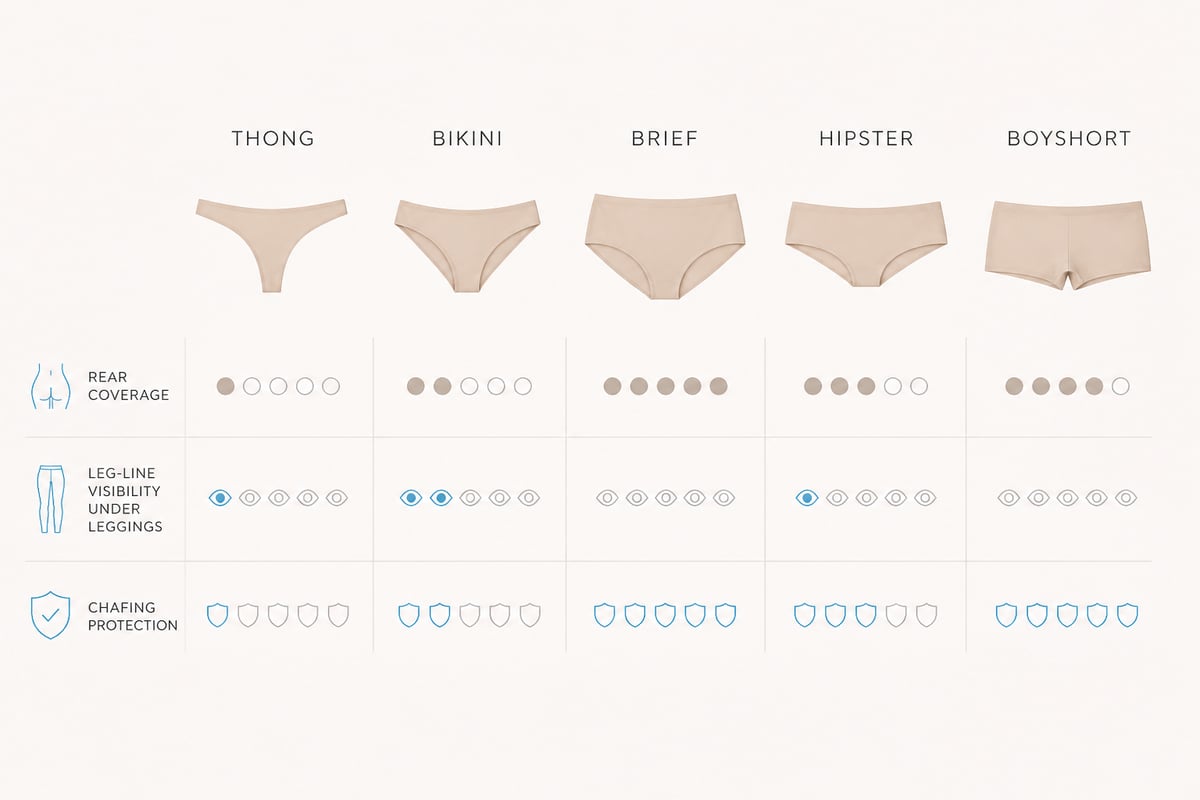
No single style wins in every situation. The useful question is what the garment over it demands. Light-colored yoga pants and compression tights show every edge, so a cut with bonded or laser-finished edges matters more than the style name.
How Should Women's Panties Fit?
A well-fitting pair lies flat against the skin without digging in, rolling or shifting, and it should be comfortable when you sit, squat and bend.
A few checks help you judge fit quickly:
- Waistband: It should hold without leaving a deep groove. Rolling at the top usually means the pair is too small or the elastic is too stiff.
- Leg openings: They should hug without pinching. Visible indentation after a few hours signals a size or cut problem.
- Front panel: The fabric should lie smooth against the body. Gaping or bunching here is what causes visible lines and the shifting that creates camel toe under leggings.
- Rear coverage: It should stay in place during movement rather than creeping upward.
A 2025 expert roundup from TheSkimm reports that gynecologists emphasize a comfortable, non-tight fit and breathable fabrics, and that seamless construction can reduce digging into skin. The pair you forget you are wearing is often a good sign of fit.
Size charts vary between brands, so measure your hips and compare against the specific chart rather than assuming your usual size carries over. Our article on women's panties sizes explains how to read those charts.
Which Rise Is Best: Low, Mid or High?
Mid rise is the most versatile choice for leggings and fitted clothing because the waistband sits below the natural waist and above the hip bone, which keeps it from showing above low-cut bottoms or rolling under high-waisted ones.
- Low rise: Sits well below the navel. It suits low-rise jeans but can slide down during exercise.
- Mid rise: Sits just below the navel. It tends to stay put through squats, lunges and yoga flows.
- High rise: Sits at or above the navel. It offers more core coverage and pairs well with high-waisted leggings, though the band can be visible under cropped tops.
Match the rise to the waistband of what you wear on top. A high-rise legging with a low-rise pair underneath leaves a visible gap at the hip, where seam lines tend to appear.
Which Materials Work Best for Women's Panties?
Cotton, nylon-spandex blends and modal each have trade-offs, and the best fabric depends on how much you sweat and how fitted your outer layer is.
| Material | Strengths | Limitations | Suited to |
|---|---|---|---|
| Cotton | Soft, breathable, familiar feel | Holds moisture, dries slowly | Low-sweat days, sleep |
| Nylon-spandex blend | Stretchy, smooth, dries quickly | Less breathable if the weave is dense | Training, fitted clothing |
| Modal or bamboo blend | Silky, drapes well | Can stretch out over time | Everyday wear |
| Seamless stretch knit | No stitched edges, minimal lines | Quality varies between brands | Leggings, yoga pants |
Guidance on cotton is nuanced. Bradford Teaching Hospitals notes that 100% cotton underwear may be preferable and suggests avoiding tight clothing that can encourage a moist environment. Some physicians recommend a high cotton content in the shell, though this is an individual recommendation rather than a universal standard.
Sweat changes the picture. A 2025 HuffPost article reports that cotton can retain too much moisture during heavy perspiration, and a cotton-synthetic blend may be a better choice in those circumstances. For a spin class or a hot yoga session, a moisture-wicking blend is a reasonable fit. For a desk day in a breathable skirt, cotton may be fine.
How Do You Stop Visible Lines and Camel Toe Under Leggings?
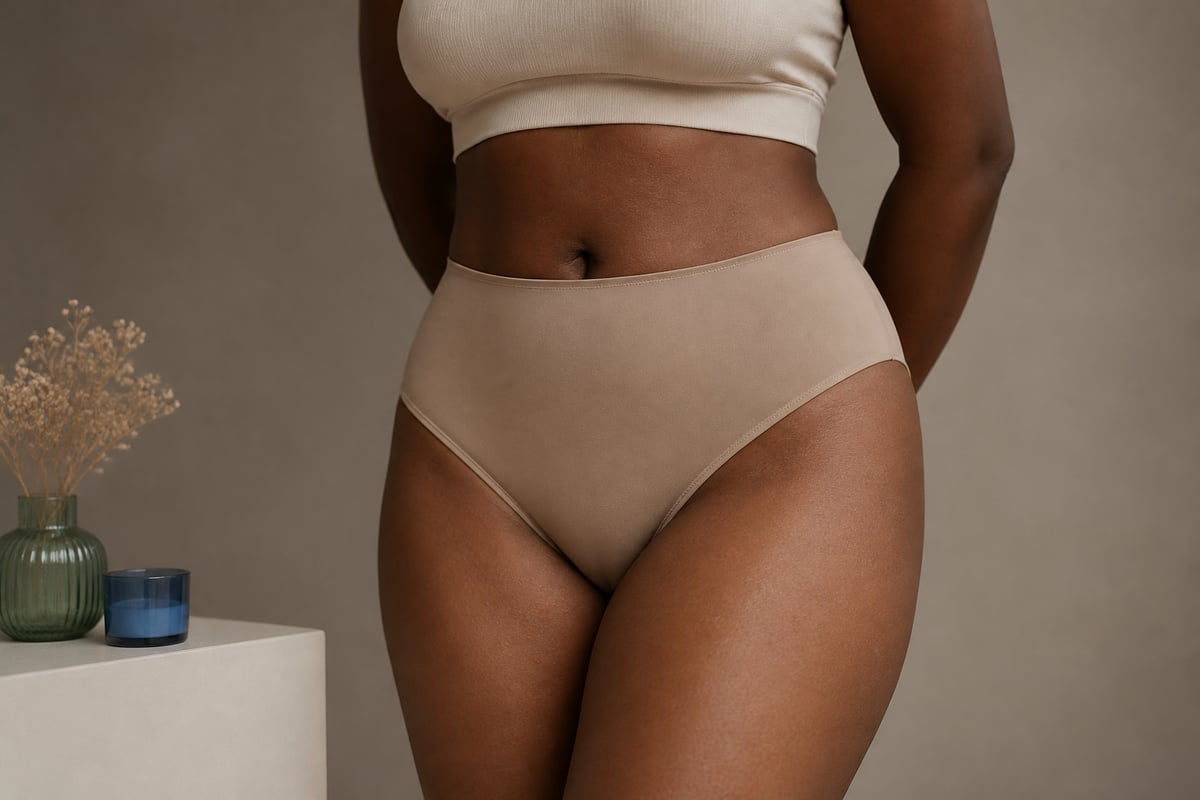
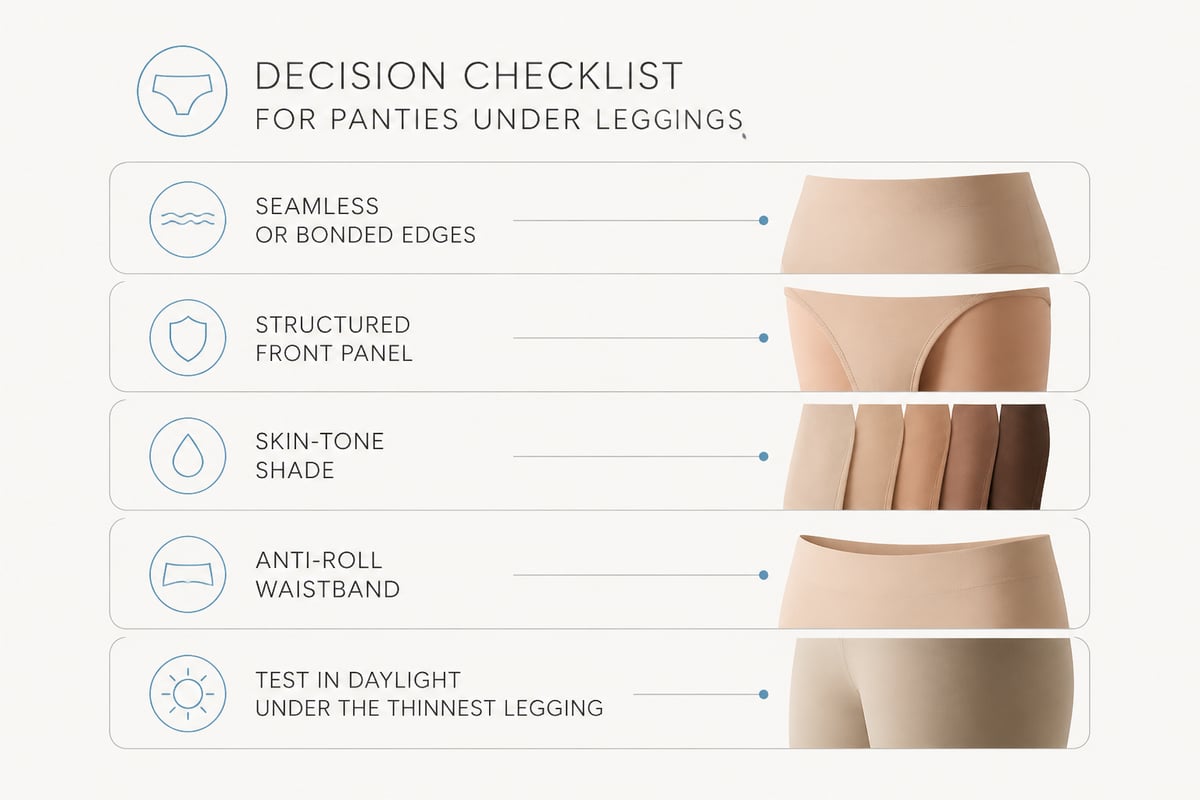
Visible lines come from stitched edges, elastic bands and loose fabric, and camel toe comes from a front panel that lacks structure, so the fix is seamless edges plus a front panel that holds its shape.
Try this approach:
- Choose bonded, laser-cut or fully seamless edges instead of sewn hems.
- Look for a lined or structured front panel that smooths the area rather than a single thin layer of fabric.
- Pick a skin-tone shade close to your own rather than white, which can show through light leggings.
- Confirm the waistband has some grip or an anti-roll design so it stays flat during movement.
- Test the pair under your thinnest, lightest legging in natural daylight before committing to it.
Fabric thickness of the legging matters too. Compression leggings in a dense knit hide more than sheer, light-colored styles, so adjust your underwear choice to match your most revealing pair.
What Should Active Women Look for in Women's Panties?
Active women should prioritize moisture-wicking fabric, four-way stretch and a secure waistband, because underwear that shifts or traps sweat becomes a distraction during squats, lunges, pilates and CrossFit.
Look for these features:
- Moisture management: Fabric that pulls sweat away from the skin helps you stay fresh through a long session.
- Four-way stretch: The pair should move in every direction with your body without bunching.
- Stay-put design: It should not ride up or twist during dynamic movement.
- Flat finishes: Barbell work, floor exercises and mat pilates press the seat against the ground and bench, so any raised seam will be felt.
Our overview of athletic underwear for women goes deeper on training-specific features.
One option built around these needs is the Invisible Camel Toe Panties - Mid Rise from Ambar Wear. It combines cameltoe-blocking technology and invisible edges with a breathable, sweat-wicking fabric, and its mid-rise anti-roll waistband is designed to hold in place from yoga to the gym. It is available in sizes S, M, L and XL.

Ambar Wear reports over 1,000 customer reviews rated 4.6 out of 5, with 97% of customers saying they would recommend the product. Its Trustpilot page lists 1,349 reviews at the same 4.6 out of 5 rating. The brand also offers a 30-day guarantee: if you do not feel the difference on your first wear, you are refunded. For current terms, check the product page.
How Often Should You Change and Replace Panties?
Change underwear at least once a day, and more often after a workout, because clean and dry fabric is the simplest way to keep the area comfortable.
A 2025 HuffPost article quoting clinicians advises changing underwear at least once daily to help keep the area clean and dry. If you train in the morning and have a full day afterward, switching into a fresh pair after you shower is a practical habit.
Replacement is a matter of condition rather than a fixed schedule. Retire a pair when you notice:
- Elastic that has gone slack and no longer holds the waistband flat
- Thinning or pilling fabric, especially at the front panel
- Persistent odor that survives a normal wash
- Edges that have begun to curl or fray, which creates visible lines
Wash new pairs before the first wear, follow the care label and avoid fabric softener on moisture-wicking fabrics, since it can coat fibers and reduce their performance.
Do Thongs Work for Everyday Wear?
Thongs work well for many women under fitted bottoms because they remove the rear leg-line, though comfort is personal and some prefer more coverage on days that involve long periods of sitting.
A seamless thong is often the first thing active women try when briefs and bikinis keep showing through leggings. Curvier body types may prefer a wider back panel and a softer waistband so the pair does not pinch, and our guide to thongs for curvy women covers fit considerations for that case. If you are weighing the style against other options, the article on seamless thongs for women compares construction details.
A practical approach is to keep a small rotation: a seamless thong or minimal-coverage pair for your tightest, lightest leggings, and a slightly fuller cut for days when you are mostly seated.
How Do You Build a Practical Panty Rotation?
A practical rotation covers three situations, training, fitted everyday wear and low-key days, with enough pairs to avoid wearing the same one two days running.
A simple starting point:
- Two or three training pairs: Moisture-wicking, stretchy and seamless, for workouts and any day in light leggings.
- Three or four everyday pairs: Breathable fabric in your preferred cut, chosen to match the rise of your usual bottoms.
- One or two backups: A fuller-coverage pair for days when comfort matters more than invisibility.
Buy in sets once you find a style that works, since consistency in cut and fabric makes laundry and outfit planning easier. Our overview of undergarments for women can help you think through the rest of the drawer, including bras and matching sets.
When shopping, read product descriptions for fabric composition, edge finish and rise rather than relying on photos alone. A garment that lists its blend, describes its front panel and states its stretch is giving you the information you need to compare.
Take your thinnest pair of leggings, hold a pair of your current panties against them in daylight and note which edges, seams or bunching show; that tells you exactly what to fix. If seam lines and camel toe are the issues, the Invisible Camel Toe Panties - Mid Rise are built around a structured front and invisible edges. When you are ready to find a smooth, comfortable fit for training and everyday wear, Ambar Wear makes it simple to shop now and see the difference on your first wear.