

Finding underwear that fits properly can be challenging when you're petite. Standard sizes often bunch, ride up, or create unflattering lines because they're designed for average-height proportions. Petite underwear addresses these issues by adjusting key measurements like rise, leg openings, and overall proportions to complement shorter frames. Understanding these differences helps you choose undergarments that stay comfortable throughout the day while providing the seamless look you deserve.
Understanding Petite Proportions and Underwear Fit
Petite sizing isn't just about being smaller overall. It's about different body proportions that require specific adjustments in clothing construction. Determining whether you fall into petite sizing categories typically starts with height measurements, but torso length matters just as much for underwear fit.
Women who stand 5'4" and under often have shorter torsos, which means the distance from waist to hip sits differently than on taller frames. Standard underwear designed for average heights places waistbands, leg openings, and gussets at incorrect points on petite bodies. This creates several common problems:
- Waistbands that sit too high on the natural waist
- Excess fabric bunching at the hip area
- Leg openings positioned incorrectly, causing riding up
- Longer gusset areas that don't align with anatomy
- Rise measurements that feel disproportionate
Key Measurements That Matter
Petite underwear adjusts multiple dimensions simultaneously to create proper fit. The rise measurement, which determines how high the underwear sits from crotch to waistband, typically reduces by one to two inches compared to regular sizes. This adjustment ensures the waistband lands at your natural waist without pulling or creating gaps.
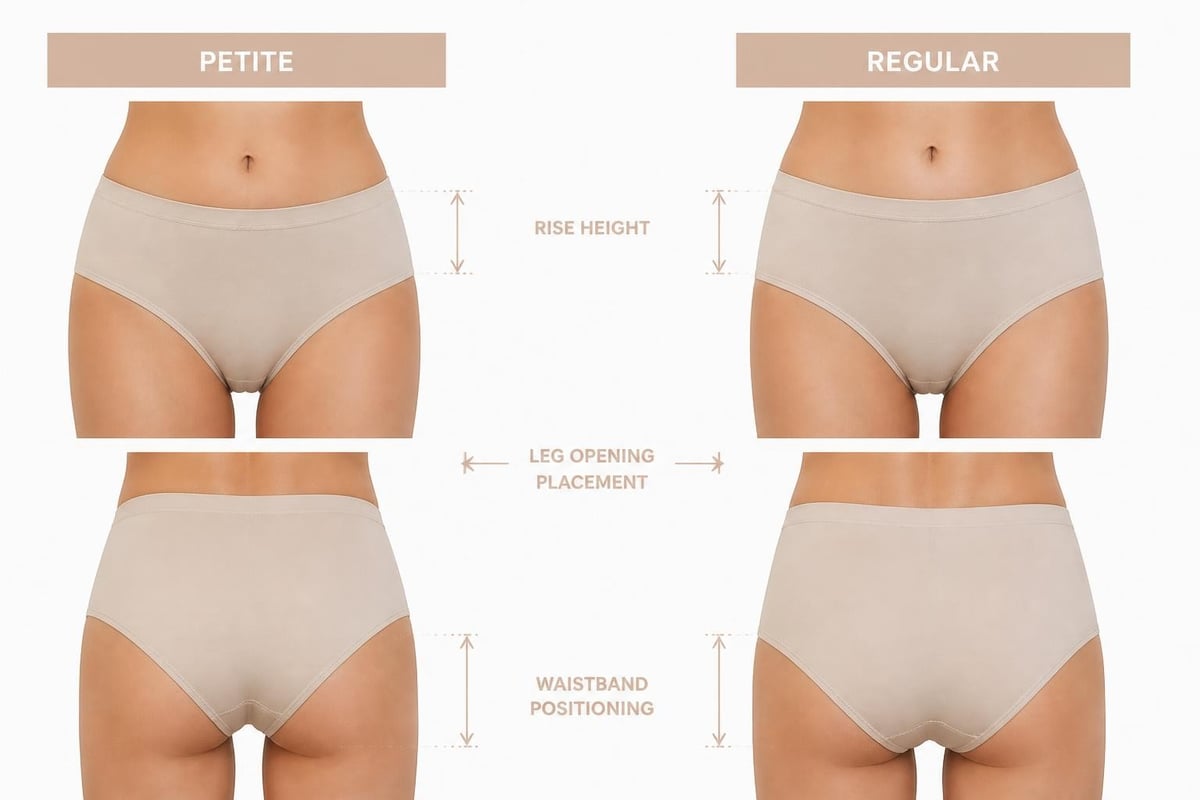
Leg openings also shift to accommodate shorter leg length from hip to thigh. When these openings sit at the wrong position, they create pressure points that cause underwear to migrate throughout the day. Petite-specific designs place these openings where they naturally fall on a shorter frame.
| Measurement Area | Regular Size | Petite Adjustment | Impact on Fit |
|---|---|---|---|
| Front Rise | 8-9 inches | 6.5-7.5 inches | Prevents gaping at waist |
| Back Rise | 10-11 inches | 8.5-9.5 inches | Reduces bunching |
| Leg Opening | Standard placement | 1-2 inches higher | Stops riding up |
| Waistband Width | 0.5-1 inch | Same or slightly narrower | Proportional appearance |
Fabric Selection for Petite Underwear
The right fabric makes a significant difference in how petite underwear performs throughout the day. Understanding underwear fabric options helps you select materials that work with your body rather than against it.
Seamless microfiber leads the category for petite frames because it creates minimal bulk under clothing. These synthetic blends stretch in four directions, allowing the garment to move with your body without excess fabric folding or bunching. The smooth surface eliminates visible panty lines, which become more noticeable on petite frames where clothing proportions sit closer together.
Modal and bamboo fabrics offer natural alternatives with excellent drape characteristics. These materials hang smoothly without adding volume, which matters when you have less vertical space between waist and hip. They also manage moisture effectively, preventing the dampness that can cause fabric to cling or bunch.
Performance Features in Modern Fabrics
Cotton remains popular for everyday comfort, but modern cotton blends perform better than traditional 100% cotton for petite underwear. A small percentage of elastane (3-5%) provides necessary stretch while maintaining the breathability cotton offers. This combination prevents the sagging that pure cotton develops after a few hours of wear.
Technical fabrics designed for activewear translate exceptionally well to petite underwear needs:
- Moisture-wicking polyester blends keep you dry during workouts or warm weather
- Ice silk materials provide cooling properties with minimal thickness
- Compression fabrics offer targeted support without adding bulk
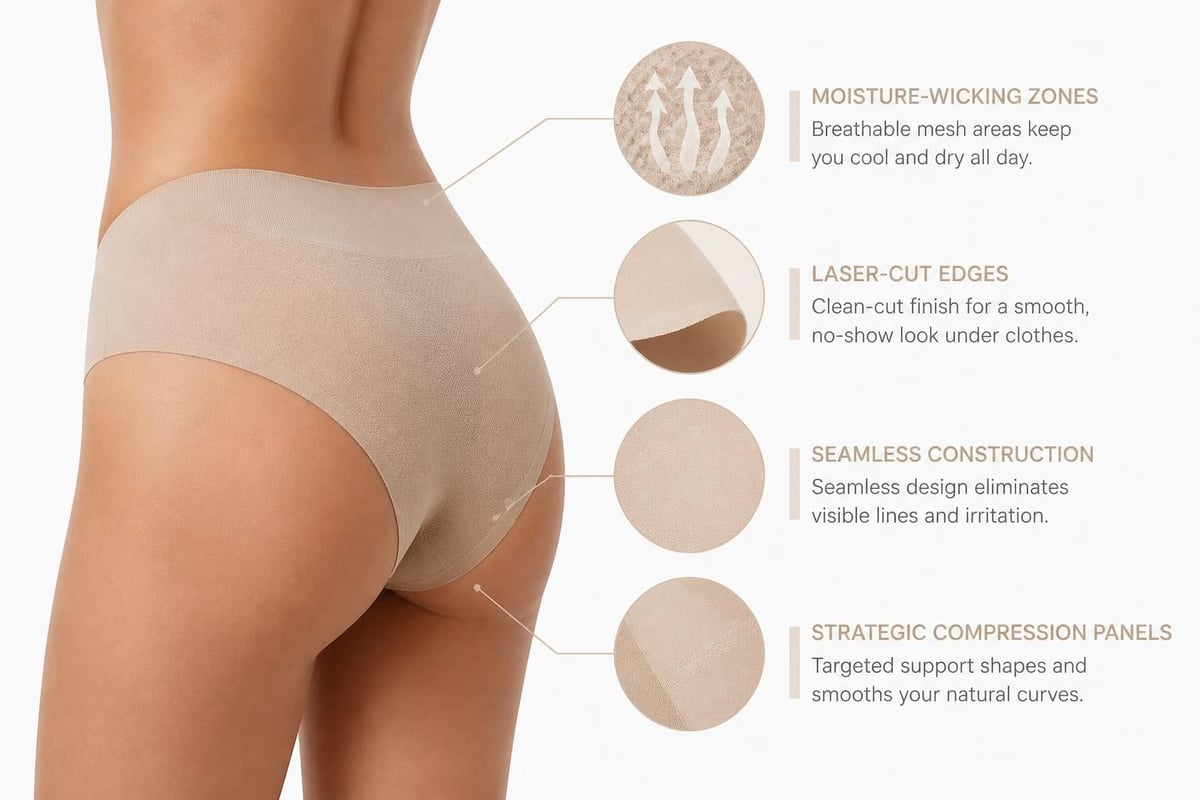
- Laser-cut edges replace traditional elastic bands for true invisibility
The construction method matters as much as the fabric itself. Seamless knitting technology creates underwear from a single piece of material without side seams or connecting stitches. This approach works particularly well for petite bodies because there are fewer places for fabric to catch, fold, or create pressure points.
Style Variations for Petite Bodies
Different underwear styles serve different purposes, but not all styles work equally well for petite proportions. Understanding which styles complement your frame helps you build a functional underwear wardrobe.
Thong Styles
Thongs designed specifically for petite underwear adjust the back triangle size and string placement. Standard thongs often have triangles cut too large for petite proportions, creating excess fabric that defeats the purpose of minimal coverage. Petite-specific thongs reduce this back panel while maintaining adequate coverage where it matters.
The invisible lingerie concept becomes especially important for petite women wearing fitted clothing. With less vertical distance from waist to hip, any bunching or lines show more prominently through pants, skirts, and dresses.
Low-rise thongs work well under low-waisted pants but require careful sizing to prevent front gaping. Mid-rise options offer versatility for most outfits, sitting just below the natural waist without creating bulk. High-rise styles provide tummy control and work beautifully under high-waisted bottoms, which have become wardrobe staples in 2026.
Brief and Hipster Options
Full coverage styles require more adjustment for petite proportions than minimal coverage options. The leg opening placement becomes critical to prevent the underwear from functioning more like shorts. Petite briefs should have leg openings that sit at the hip crease, not several inches down the thigh.
Hipster styles offer moderate coverage with a lower rise than traditional briefs. For petite bodies, hipsters sized correctly provide enough coverage to prevent visible lines while sitting low enough to work with modern pant rises. Look for options where the side height measures 2-3 inches rather than the standard 3-4 inches.
Common Fit Problems and Solutions
Even when shopping in petite sections, certain fit issues persist due to variation in body types within the petite category. Recognizing these problems helps you identify which specific adjustments you need.
Waistband rolling happens when the band sits at the wrong position on your torso. Rather than sizing down, which creates tightness elsewhere, look for petite underwear with wider waistbands that have more surface area to grip your skin without rolling over itself.
Gusset positioning frequently causes discomfort when the crotch area sits too far forward or back. This anatomical placement varies even among petite women, so finding brands that align with your specific proportions may require trying multiple options. The gusset should sit flat against your body without pulling fabric in either direction.
| Common Problem | Likely Cause | Solution |
|---|---|---|
| Rides up constantly | Leg openings too low | Choose higher-cut legs or smaller size |
| Gaps at waist | Front rise too long | Seek petite-specific rise measurements |
| Bunches at hips | Overall width too wide | Try narrower hip-to-hip dimension |
| Visible lines | Fabric too thick | Switch to seamless microfiber options |
| Elastic digs in | Band too tight | Size up or choose elastic-free edges |
Addressing Camel Toe Concerns
This common issue affects petite women disproportionately because standard gussets don't align correctly with anatomy. The solution involves both proper sizing and design features that prevent fabric from settling into natural body contours. Specialized camel toe-proof designs incorporate additional fabric layers and strategic seam placement to maintain a smooth front appearance.
Petite underwear that addresses this concern uses gussets positioned specifically for shorter torso proportions. The fabric composition also matters: materials with recovery properties (ability to return to original shape) prevent the stretching that contributes to this fit issue.
Shopping Strategies for Petite Underwear
Finding quality petite underwear requires understanding how petite sizing actually works across different brands. Unlike standardized regular sizing, petite proportions vary significantly between manufacturers. Some brands adjust only length measurements while others redesign the entire garment architecture.
Direct-to-consumer brands often provide more detailed sizing information than traditional retailers. They typically include specific measurements for rise, leg openings, and waistband placement rather than just stating "petite small" or "petite medium." This transparency helps you compare options and predict fit before purchasing.
Brand Comparison and Consistency
Building relationships with specific brands that fit your proportions well saves time and frustration. Once you identify a brand whose petite sizing aligns with your body, stick with them for core basics. Keep notes about which styles and sizes work best from each brand since consistency varies even within single manufacturers' product lines.
Multi-pack purchases often provide better value, but only invest in quantity after testing a single item. Underwear that feels comfortable for one hour may reveal problems after a full day of wear. Testing new styles on weekends or work-from-home days lets you evaluate true performance before committing to larger orders.
- Order one item in your anticipated size
- Wear it for a full day during normal activities
- Check for riding up, rolling, or discomfort at four-hour intervals
- Wash according to instructions and assess any size or shape changes
- If successful, order multiples or try related styles from the same brand
Specialized Features Worth Seeking
Modern petite underwear incorporates technology and design innovations that address specific concerns beyond basic fit. These features elevate everyday comfort and performance.
Tummy control panels work differently in petite proportions than regular sizes. The compression zone must sit precisely at your natural waist to provide shaping without creating bulges above or below. Petite-specific control underwear adjusts these panel placements accordingly.
Laser-cut edges represent a significant advancement for petite bodies. Traditional elastic can appear bulky relative to smaller frames, but laser-cutting creates finished edges that lie completely flat. This technology particularly benefits petite women who wear fitted business attire or performance athletic wear.
Moisture Management Systems
Sweat-wicking gussets have become standard in quality petite underwear. These features use technical fabrics in the crotch area while maintaining comfort fabrics elsewhere. The combination keeps you dry without compromising breathability or creating the plastic-like feel of all-synthetic garments.
Antimicrobial treatments prevent odor-causing bacteria growth, extending the time between washes and maintaining freshness during long days. These treatments work especially well in warm climates or for active lifestyles where changing mid-day isn't practical.
Color and Pattern Considerations
While aesthetics seem secondary to fit, color choices affect how petite underwear performs under clothing. Nude shades that match your skin tone create true invisibility under light-colored pants and skirts. Petite women benefit from maintaining at least three nude tones: one matching winter skin, one for summer, and one for year-round wear.
Dark colors show less when worn under dark clothing but can create visible lines under lighter fabrics. The optical effect of dark underwear under thin material becomes more pronounced on petite frames where fabric layers sit closer to the body surface.
Patterns and lace add visual interest but typically increase thickness. If you choose patterned petite underwear, reserve these for outfits where slight texture won't show. Solid, seamless options remain the most versatile for everyday wear across different clothing types.
Seasonal Adjustments for Petite Underwear
Temperature and activity level changes throughout the year require different underwear solutions. Building a seasonal rotation ensures comfort across all conditions.
Summer months demand thinner fabrics and more moisture management. Ice silk and cooling microfiber blends provide the breathability petite women need without adding bulk under lightweight summer clothing. Look for petite underwear with mesh zones that enhance airflow while maintaining opacity.
Winter layering presents unique challenges for petite proportions. Thermal underwear designed for regular sizes often bunches under pants or creates unflattering bulk at the waistline. Petite-specific base layers use thinner insulating materials with adjusted proportions that layer smoothly under winter clothing.
- Spring/Fall transition: Medium-weight microfiber that works across temperature ranges
- Hot weather: Maximum breathability with minimal coverage options
- Cold weather: Thermal materials cut specifically for petite proportions
- Active seasons: Enhanced moisture-wicking for outdoor activities
Caring for Petite Underwear
Proper maintenance extends the life of quality petite underwear and maintains the fit characteristics you've carefully selected. Elastic degradation happens faster in smaller garments because the material works harder relative to its size.
Hand washing remains ideal for preserving shape and elasticity, but modern petite underwear often withstands machine washing when done correctly. Use mesh lingerie bags to prevent stretching and tangling. Wash in cold water on gentle cycles to minimize fiber breakdown.
Air drying prevents the heat damage that causes elastic to lose stretch memory. Dryers work fabrics harder through tumbling and heat, causing faster deterioration in the precise proportions that make petite underwear fit correctly. Laying flat or hanging to dry takes minimal effort and significantly extends garment lifespan.
Rotate your petite underwear collection rather than wearing favorites repeatedly. Each wearing and washing cycle stresses the fabric, so distributing use across multiple pairs allows recovery time between wears. Most quality underwear should last 6-12 months with proper care and rotation.
Finding petite underwear that truly fits transforms your daily comfort and confidence. The right proportions, fabrics, and features work together to create underwear that stays in place, remains invisible under clothing, and supports your active lifestyle. Ambar Wear understands these unique needs, offering seamless designs engineered to eliminate common fit issues like camel toe, visible lines, and uncomfortable bunching-all while providing the precise proportions petite frames require. Discover undergarments that finally work with your body rather than against it.