

Ladies ka underwear should fit at the waist and seat without pinching, use a breathable fabric, and match the clothes you wear it under. For anyone who lives in leggings, yoga pants or fitted skirts, that means a seamless cut with a structured front that prevents camel toe and visible lines.
Most fit problems come from three choices: the wrong size, the wrong fabric, or the wrong cut for the outfit. This guide walks through each one, then covers how to wash and replace your underwear so it keeps performing.
How Do You Find the Right Size in Ladies Ka Underwear?
Find your size by measuring your natural waist and the fullest part of your seat, then comparing both numbers to the brand's size chart. Do not rely on the number from the last pair you bought, because sizing varies from label to label.
Here is a simple process:
- Measure your waist at the narrowest point, usually just above the belly button.
- Measure around the fullest part of your hips and seat, keeping the tape level.
- Compare both numbers to the specific brand's chart.
- If you fall between two sizes, choose the larger one.
That last rule is standard practice. One published chart from Cotton On lists US size 38 as a 28.3-inch waist and a 38.6-inch seat, and advises sizing up when measurements fall between sizes. The exact numbers will differ by brand, which is why checking each chart matters.
Fit also affects how underwear looks under clothing. A pair that is too small digs into the skin and creates a visible ridge at the leg and waist. A pair that is too large bunches and shifts, which is a common cause of camel toe, because loose fabric folds inward instead of sitting flat. The right size feels secure but leaves no marks at the end of the day.
Which Fabrics Work Best for Everyday Underwear?
For regular wear, breathable natural fibers are the safest baseline, while blends with stretch and moisture-wicking properties work better for activewear and fitted outfits. The right choice depends on how you spend your day.
Cleveland Clinic recommends underwear made from 100% cotton for regular wear, noting that cotton is breathable and helps wick away moisture. That makes it a dependable pick for lounging, sleeping and low-sweat days.
For workouts, leggings and long days in fitted clothes, many women prefer engineered fabrics that stretch in four directions and dry quickly. Compare the common options:
| Fabric | Breathability | Stretch | Best for |
|---|---|---|---|
| 100% cotton | High | Low to moderate | Daily wear, sleep, sensitive skin |
| Cotton blend with spandex | Moderate to high | High | Everyday wear under fitted clothes |
| Nylon or microfiber blend | Moderate | High | Smooth lines under leggings |
| Ice silk and mesh blends | Moderate | High | Seamless, lightweight, warm weather |
| Lace | Low to moderate | Moderate | Occasional wear, delicate care needed |
If you are choosing for yoga or gym sessions, look for a fabric described as moisture-wicking and a waistband that stays flat. A higher-stretch blend moves with your body during squats and lunges instead of rolling or twisting.
What Cuts Prevent Camel Toe and Visible Lines?
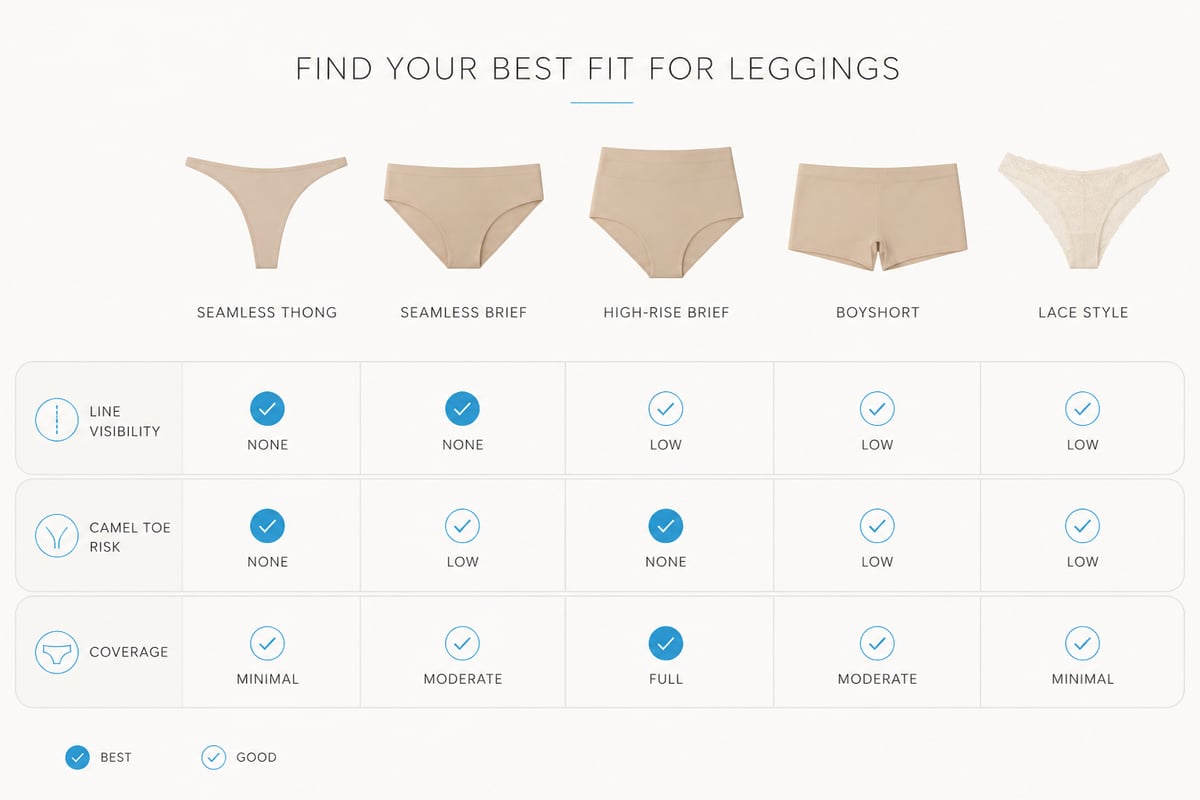
Seamless thongs and seamless briefs with a structured front panel are the cuts most likely to prevent camel toe and panty lines under leggings. The reason is simple: fewer seams and edges mean fewer places for the fabric to show through, and a smooth front panel keeps the fabric from folding inward.
The main styles break down like this:
- Seamless thong: Removes the leg and seat edges completely, which is why it is the go-to under thin or light-colored leggings. Our guide to seamless thong underwear covers this cut in more detail.
- Seamless brief or hipster: Offers more coverage with laser-cut or bonded edges that lie flat against the skin.
- High-rise brief: Sits at or above the navel, so the waistband stays hidden under a high-waisted legging.
- Boyshort: Works well under skirts and dresses, though thicker leg bands can show under very fitted pants.
- Lace or embellished styles: Better for occasions than for leggings, since raised patterns can print through thin fabric.
Because camel toe depends on the front of the garment, the structure of that front panel matters as much as the cut. A guide to underwear that prevents camel toe explains what to look for, and the broader overview of underwear for leggings helps match cuts to specific outfits.
How Can You Test Underwear Before Committing to a Full Drawer?
Test a single pair under the exact outfit you plan to wear it with, then check it from the front, side and back in bright light. A fitting room mirror under soft lighting hides problems that daylight reveals.
Run through this short checklist:
- Stand, squat and bend forward, then look for bunching or shifting at the front panel.
- Check the waistband and leg openings for ridges or indents after ten minutes of wear.
- Wear it under your lightest-colored leggings, since pale fabrics show the most.
- Walk, climb stairs or do a few lunges to see whether the fabric stays put.
A brand's return policy matters here. Ambar Wear's own product copy describes its underwear as built for seamless, all-day comfort, so testing a pair under your own outfit is a sensible way to judge fit. A trial window like that lets you judge fit during a real day rather than in a fitting room.
Which Seamless Option Suits Leggings and Fitted Clothes?
A seamless mid-rise thong with stretchy, lightweight fabric is a strong choice for leggings and fitted clothing, because it removes edge lines and moves with your body. Ambar Wear's Seamless Ice Silk Thong is a mid-rise 5-pack made from soft, breathable fabric with mesh detailing, and it comes in sizes S, M, L and XL. The ultra-light, stretchy fit is designed to sit close to the body under leggings, dresses or activewear.

More broadly, Ambar Wear's underwear is built around a seamless construction intended to reduce camel toe and panty lines. Over 1,000 customer reviews rate it 4.6 out of 5, and 97% of customers say they would recommend it. You can browse the full underwear collection to compare cuts and sizes.
What Underwear Works Best for Women Over 50?
Women over 50 generally do best with soft, breathable, wide-stretch underwear that has a gentle waistband, a secure fit and no scratchy seams. Comfort matters most, since skin can become more sensitive and body shape often changes across the midsection and hips.
Practical priorities include:
- A smooth, flat waistband that does not roll or cut into the stomach.
- Breathable fabric such as cotton or a cotton blend, which helps with moisture and temperature.
- Seamless or bonded edges that avoid friction at the leg openings.
- Mid- or high-rise cuts that stay in place and provide more stomach comfort than a low rise.
None of this means giving up style under fitted clothing. Seamless options in neutral shades still prevent lines under leggings and trousers. For wider body types, a guide to underwear for curvy women covers fit considerations in more depth.
What Is Fancy Women's Underwear Called?
Fancy women's underwear is usually called lingerie, a term that covers decorative styles in lace, satin, mesh and silk. Within that category, you will see names such as bralettes, teddies, babydolls, garter sets and matching two-piece sets.
Lingerie prioritizes appearance, so it often features delicate trims, sheer panels and raised patterns. Those same details can show through leggings, which is why many women keep lace for special occasions and wear smooth seamless pieces for daily life. If you want a coordinated look without the bulk, a matching underwear set in a seamless fabric is a practical middle ground.
How Often Should You Change and Wash Underwear?
Change your underwear at least once a day, and more often if it becomes wet or stained. That is the guidance from Cleveland Clinic, and it applies especially after workouts, when sweat sits against fabric for hours.
Washing habits matter as much as wearing habits:
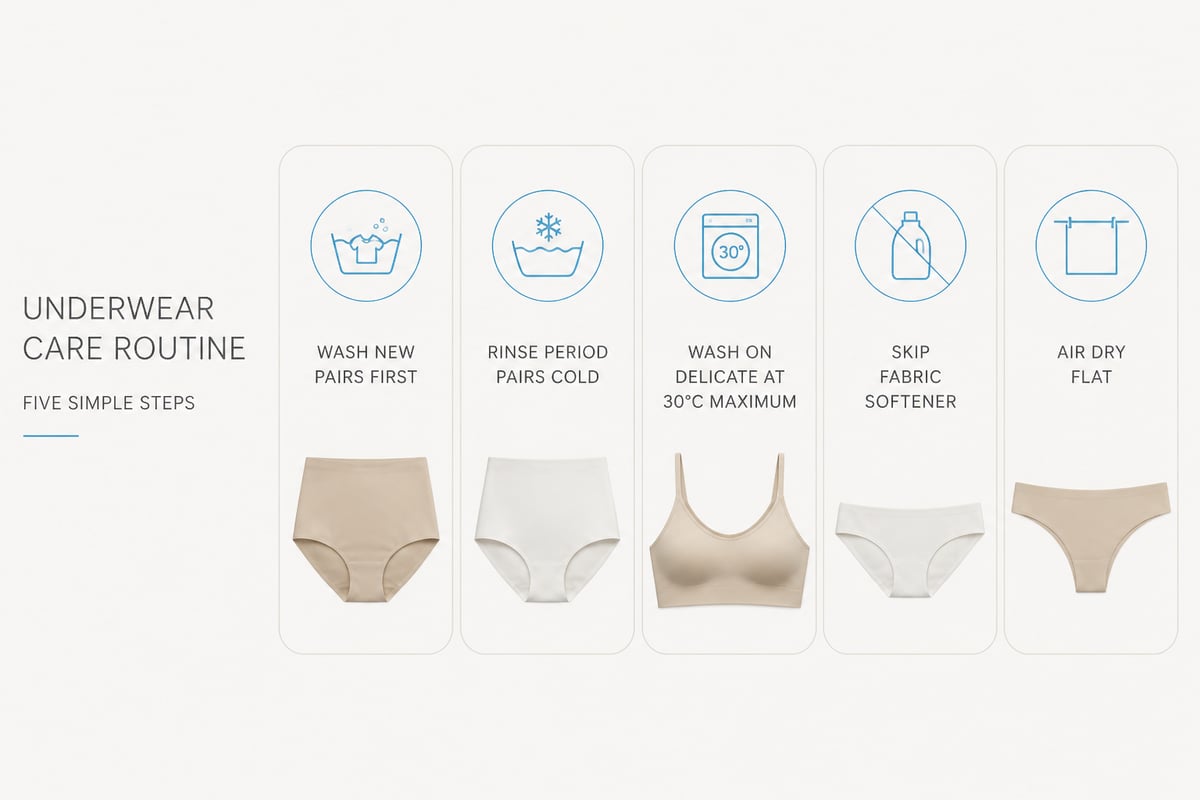
- Wash new pairs first. Cleveland Clinic advises washing new underwear before wearing it and suggests a fragrance- and dye-free hypoallergenic detergent to reduce possible irritation.
- Use a gentle cycle. DIM's care guide recommends a delicate cycle at a maximum of 30°C and advises avoiding fabric softener, which can coat fibers and reduce wicking.
- Hand wash delicates. The same guide suggests washing lace and other delicate pieces by hand below 30°C with mild detergent, without wringing the fabric.
- Read the care label. Symbols vary by garment, and a care-label overview from Leonisa explains gentle washing and drying for underwear and other delicates.
For broader hygiene context, Healthline's underwear hygiene overview covers breathable fabrics and washing practices in more detail.
When Should You Replace Your Underwear?
Replace underwear when the elastic loosens, the fabric thins or pills, or the shape no longer holds, which usually depends on how often a pair is worn and washed. Stretched-out waistbands and thinning front panels are the first signs, and both cause the shifting that leads to camel toe and visible lines.
Rotating several pairs extends the life of each one, because elastic recovers between wears. Rinsing sweaty pairs promptly and air drying them also slows wear, since high heat in a dryer breaks down stretch fibers. If you buy in multi-packs, you can retire pairs on a staggered schedule instead of replacing a whole drawer at once.
What Underwear Is Trending in 2026?
In 2026, the dominant trend is seamless, bonded-edge underwear in skin-tone neutrals, paired with breathable performance fabrics and mid-rise cuts. That reflects how many women dress now, with leggings, athleisure and fitted knits worn from morning workouts through the workday.
Comfort-first details are driving most choices: soft mesh panels, laser-cut edges, wide waistbands and lightweight stretch. Bold lace remains popular for occasions, but everyday buying skews toward invisible, low-profile pieces. If you want ideas for building a rotation, the essentials underwear guide outlines the pairs worth keeping on hand.
FAQ
What type of underwear is best under white leggings?
Seamless underwear in a shade close to your skin tone is best under white leggings, since matching your own tone hides better than white fabric does. A thong or bonded-edge brief avoids leg and seat lines, and a structured front panel helps prevent camel toe.
Is a thong or a brief better for avoiding visible lines?
A seamless thong removes the most edges, so it typically gives the cleanest line under tight leggings. A seamless brief with laser-cut or bonded edges is a good alternative if you prefer more coverage and still want a smooth finish.
How many pairs of underwear do I need?
Having several pairs on rotation lets each one recover its elastic between wears, so a small set covering a week of daily changes plus workout extras is a practical starting point.
Start by measuring your waist and seat tonight, then check the numbers against the size chart of the brand you plan to try. If you want underwear built for leggings and fitted clothes, the Seamless Ice Silk Thong is a good first pair to test under your lightest leggings. Ambar Wear designs seamless, comfortable undergarments aimed at eliminating camel toe, sweat patches and panty lines, so you can shop now at Ambar Wear and find a fit that stays smooth all day.