

Good underwear fits without shifting, uses breathable fabric, has flat or seamless edges, and holds its shape after dozens of washes. If you wear leggings, yoga pants, or other fitted clothes, it also needs a front panel that keeps its structure so you avoid camel toe and visible lines. The sections below explain how to judge fabric, construction, and fit, then how to care for your pairs so they last.
What Makes Underwear Good?
Good underwear meets four standards: comfort that lasts all day, fabric that breathes, a fit that stays put, and construction that survives repeated washing. A pair that fails any one of these will end up at the back of your drawer.
For women who wear fitted clothing, a fifth standard applies. The underwear must stay invisible and flat under stretchy fabric, with no seams, bunching, or front-panel collapse that creates camel toe. You can read more about this specific problem in our guide to good underwear for leggings.
Quality shows up in small details:
- Stitching: Flat or bonded seams that do not dig in or ridge under clothing.
- Elastic: Edges that stretch and recover instead of rolling, twisting, or leaving marks.
- Gusset: A lined crotch panel made from a breathable material.
- Fabric weight: Enough body to resist transparency and stretching out, without feeling heavy.
If a pair feels fine for an hour but irritating by mid-afternoon, the fabric or the fit is working against you.
Which Fabrics Are Best for Underwear?
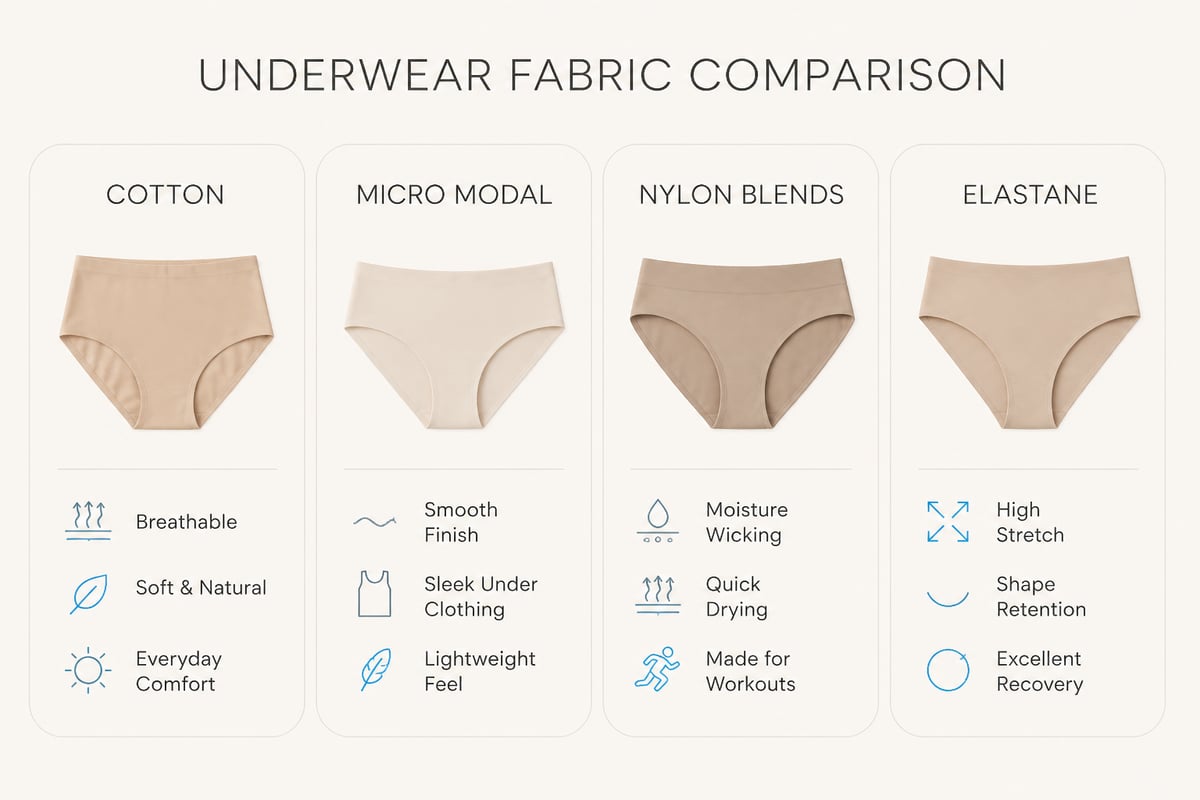
Cotton is the most widely recommended fabric for everyday underwear, though stretch blends often perform better in leggings and workouts. A Cleveland Clinic gynecologist recommends 100% cotton underwear for its breathability and because it is less likely than synthetic fabric to cause an allergic reaction.
Each fabric type has a different job, so the best choice depends on what you are wearing and doing that day.
| Fabric | Strengths | Trade-offs | Best use |
|---|---|---|---|
| Cotton | Breathable, soft, gentle on skin | Absorbs moisture and dries slowly | Everyday wear, sleep, sensitive skin |
| Modal or micro modal | Silky, smooth, drapes well | Can lose shape if washed hot | Under fitted clothing |
| Nylon or polyester blends | Moisture-wicking, quick drying | Less breathable if low quality | Workouts, humid weather |
| Spandex or elastane blend | Stretch and recovery | Weakens with high heat | Seamless and fitted styles |
The label matters as much as the fiber name. A cotton pair with a small amount of elastane often keeps its shape better than 100% cotton, which can sag by the end of the day. For athletic wear, moisture-wicking fabric helps prevent the damp, clingy feeling that leads to discomfort.
How Should Good Underwear Fit?
Good underwear sits flat against the skin without cutting in, gapping, or sliding out of place when you move. If you feel it adjusting itself, or you spend the day tugging at it, the fit is wrong.
Use this checklist when you try on a new pair:
- Leg openings: They should lie flat and leave no deep indentation after an hour of wear.
- Waistband: It should stay put without rolling down or digging into your waist.
- Rise: The back should cover without riding up, and the front should lie flat.
- Crotch panel: It should stay lined, smooth, and fully covering when you sit, squat, or lunge.
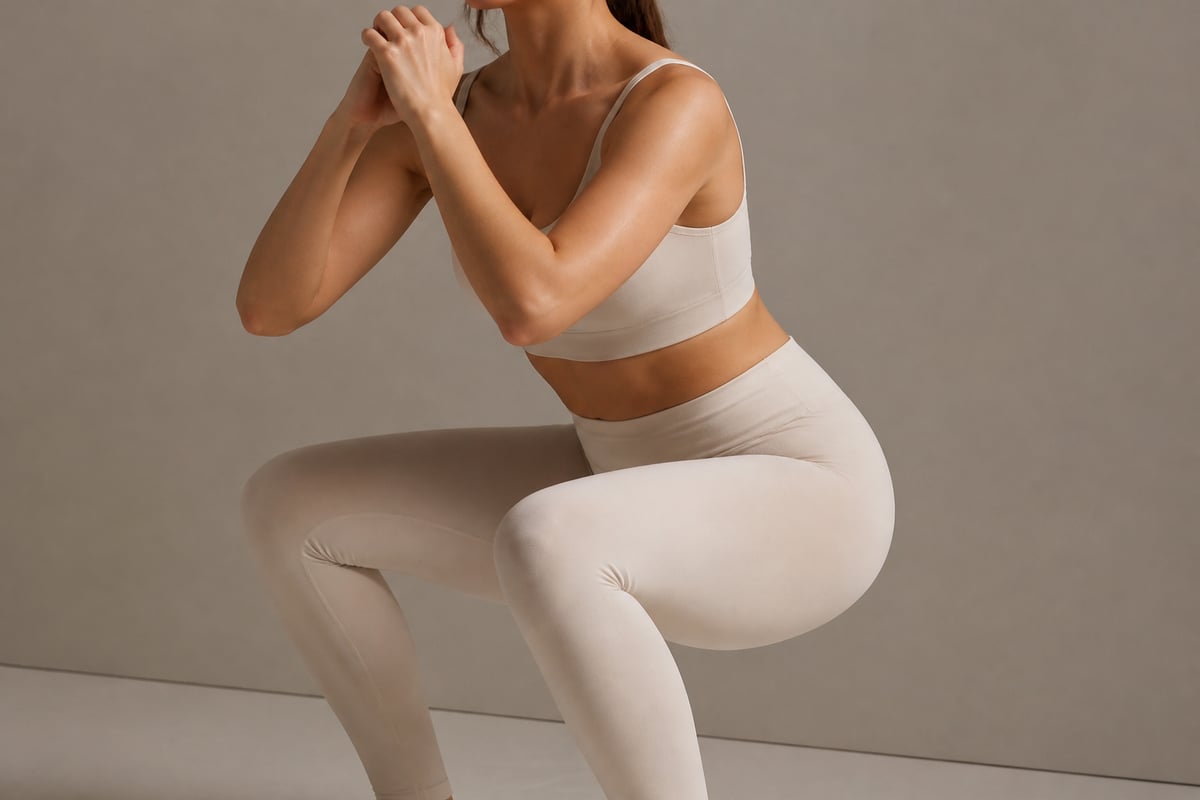
- Movement test: Squat, bend, and raise a knee. The pair should stay where it started.
Sizing varies between brands, so measure your hips and compare against each brand's chart instead of assuming your usual size. If you are between sizes, consider the fabric. Stretchy seamless fabrics often run more forgiving, while rigid cotton may need the larger size.
For a deeper look at how cut and body shape interact, see this guide on underwear for curvy women.
Why Do Lines and Camel Toe Appear Under Leggings?
Visible panty lines and camel toe happen when underwear creates a ridge, seam, or collapsed front panel that the legging fabric then outlines. Thin or light-colored leggings reveal the most.
The causes are usually simple:
- Edges that cut in: Elastic leg bands press into the skin and create a line that stretch fabric traces.
- Seams in the wrong place: Stitched hems, tags, and lace trim form ridges.
- Soft, unstructured front panels: Without support, the fabric folds with the body and the legging molds around the fold.
- Wrong rise or cut: A style that bunches at the crease of the hip or compresses the front looks worse under tight clothing.
A seamless, structured design addresses all four at once. That is the principle behind seamless underwear, and it explains why bonded edges and a shaped front panel matter so much more than the style name on the tag.
Dark leggings forgive more than light ones. If you wear white, cream, or heathered gray, test any new pair in front of a mirror in good light before committing to it.
What Is the Best Quality Underwear for Daily Use?
The best quality underwear for daily use combines a breathable fabric, a stable fit, and construction that survives frequent washing. For most women, that means a soft stretch fabric with a lined gusset and flat edges.
Match the pair to your day:
- Desk or errands: Cotton blend or modal with light stretch.
- Gym or yoga: Moisture-wicking, seamless, with 4-way stretch.
- Fitted outfits: Seamless, bonded edges, structured front.
- Sleep or lounge: Soft cotton with a gentle waistband.
Rotate several pairs instead of wearing the same two on repeat. Rotation reduces wear on the elastic, and it makes replacement easier to plan. If you want a starting point for building a rotation, our overview of essentials underwear covers the basics.
Where Can You Buy Nice Underwear?
You can buy nice underwear from department stores, specialty lingerie shops, activewear retailers, and direct-to-consumer brands, with each channel suiting a different need. Department stores offer variety and easy returns, while specialty brands often focus on one problem, such as invisibility under leggings.
Before you buy anywhere, check these points:
- Fabric content on the label, not just the marketing description
- Return policy, especially for hygiene items
- Customer reviews that mention fit under leggings and wash durability
- Size chart, with measurements instead of letter sizes alone
Reviews are a useful signal. Look for patterns across many buyers, such as repeated comments about rolling waistbands or fabric that thins after a few washes. For more on where to shop, see this rundown of stores for underwear.
Ambar Wear is one option built specifically for the leggings problem. Its seamless pieces use a structured front panel designed to stop camel toe and stay invisible under any legging, including light colors. The fabric is breathable and moisture-wicking, and the 4-way stretch stays in place during squats, lunges, and yoga. Customers have left over 1,000 reviews rated 4.6 out of 5, and Trustpilot reviews carry a 4.6 out of 5 rating. You can browse the underwear collection to compare styles.
How Do You Make Underwear Last Longer?
Underwear lasts longer when you wash it gently, avoid high heat, and rotate your pairs. Most early failures come from care mistakes, not poor manufacturing.
Start with the basics. The Cleveland Clinic advises washing new underwear before wearing it and suggests fragrance- and dye-free detergent if you are prone to irritation. It also recommends changing underwear at least daily, and more often if it becomes wet or stained.
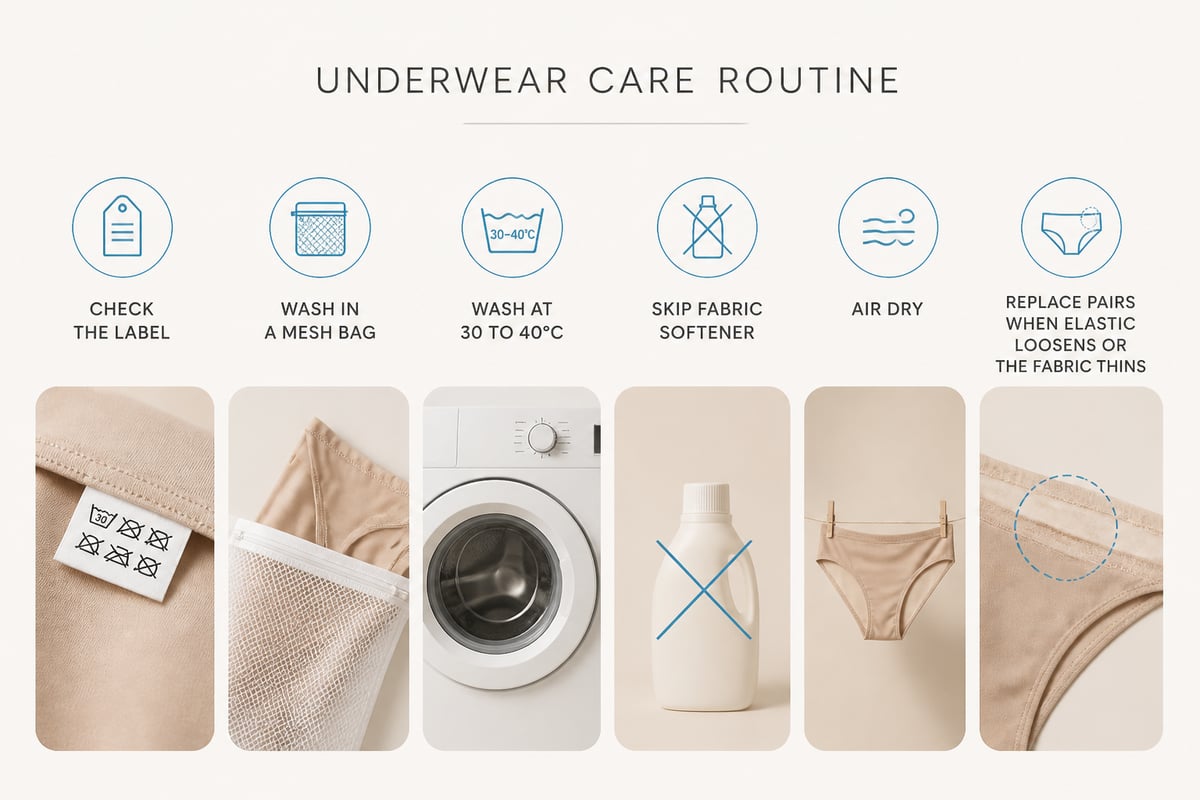
Temperature and cycle settings depend on the fabric. According to DIM, cotton briefs can go in the machine at 30 to 40°C depending on the care label, with colors washed separately. For bras and shapewear, DIM recommends a delicate cycle at a maximum of 30°C and avoiding the tumble dryer to help preserve elasticity. Lace and other delicate pieces should be hand-washed below 30°C with mild detergent, without wringing.
A simple routine covers most situations:
- Check the care label on each new pair.
- Wash in a mesh bag to reduce snagging and stretching.
- Skip fabric softener, which can coat fibers and reduce moisture-wicking.
- Air dry flat or hang, especially stretch and seamless styles.
- Replace pairs when the elastic loosens or the fabric thins.
How Do You Know When to Replace Underwear?
Replace underwear when the elastic no longer holds, the fabric thins or pills, or the pair starts showing lines it did not show before. Most wardrobes keep pairs far past that point.
Watch for these signs:
- The waistband or leg openings stay stretched after washing.
- The gusset wears thin, stains permanently, or loses its lining.
- Seams loosen or fray.
- The pair rolls, twists, or slides during normal movement.
- You notice new irritation that a detergent change does not fix.
Old underwear is also less hygienic when the fabric has broken down and no longer wicks moisture. Retire worn pairs and keep two or three reliable ones for fitted outfits, where performance matters most.
What Should You Look for When Buying Underwear for Leggings?
When you buy underwear for leggings, look for seamless or bonded edges, a structured front panel, breathable moisture-wicking fabric, and stretch that stays in place during movement. These features address the three problems that matter under fitted clothes: lines, camel toe, and sweat.
Thong cuts remove the leg-band line entirely, which is why many women choose them for light-colored leggings.
Run through this before you buy:
- Edges: Bonded, laser-cut, or flat, with no stitched hems.
- Front panel: Lined and structured so it holds its shape.
- Fabric: Breathable and moisture-wicking, with 4-way stretch.
- Color: A shade close to your skin tone if you wear light leggings.
- Return window: Enough time to test the pair during a real workout or workday.
Ambar Wear backs its seamless pieces with a 30-day guarantee: if you do not feel the difference on your first wear, you are refunded. According to the brand, most customers would recommend the product. For fit details, see how the brand approaches underwear to prevent camel toe.
FAQ
What is underwear called in the USA?
In the United States, underwear is commonly called underwear, panties, or undies. Specific styles include briefs, thongs, hipsters, and boyshorts, while "knickers" is the British term.
Is cotton underwear better than synthetic?
Cotton is more breathable and less likely to cause irritation, which makes it a strong choice for everyday and sensitive-skin wear. Synthetic blends wick moisture faster and stretch more, so they suit workouts and fitted clothing better.
How many pairs of underwear should you own?
Having enough pairs to get through a few days between laundry loads is a practical approach, with a few seamless pairs reserved for leggings and workouts. Rotating pairs reduces wear on the elastic and extends the life of each one.
Pull out the pair you wear most often and check the elastic, the gusset, and how it looks under your lightest leggings in a mirror; that test tells you whether it is time to replace it. If you want a pair designed to stay smooth and invisible during squats, lunges, and yoga, Ambar Wear makes seamless underwear with a structured front panel and a 30-day guarantee, so you can shop now and judge the difference on your first wear.