

Body thongs have evolved dramatically from their controversial introduction to becoming a wardrobe staple for millions of women in 2026. These minimal-coverage undergarments offer unique benefits, from eliminating visible panty lines to providing a barely-there feel under fitted clothing. However, choosing and wearing body thongs properly requires understanding fit, fabric, hygiene practices, and health considerations to maximize comfort while minimizing potential issues.
Understanding Body Thongs and Their Modern Evolution
Body thongs represent a category of underwear characterized by minimal back coverage, typically featuring a narrow strip of fabric between the buttocks and a front panel that provides varying degrees of coverage. Unlike traditional underwear styles, body thongs eliminate fabric across the hips and buttocks, creating a seamless appearance under clothing.
The design philosophy behind body thongs centers on invisibility and functionality. Modern iterations focus heavily on comfort engineering, moving beyond the purely aesthetic origins. The history of thongs reveals their transformation from exotic beachwear to everyday essentials embraced across demographics.
Different Styles of Body Thongs
Understanding the variety within body thongs helps women select options matching their needs:
- Classic thongs: Traditional triangle or V-shaped front with minimal back coverage
- G-strings: Even less coverage than standard thongs, with string-like construction
- Tanga thongs: Slightly more back coverage with wider side panels
- Seamless body thongs: Constructed without visible stitching for ultimate invisibility
- High-rise thongs: Extended waistband sitting above the natural waist
- Low-rise options: Designed to sit below the hipbone for low-waisted clothing
Each style serves specific wardrobe requirements. Seamless body thongs work exceptionally well under activewear and leggings, while high-rise versions pair perfectly with high-waisted jeans and skirts.
Health Considerations When Wearing Body Thongs
The relationship between body thongs and health remains a frequently debated topic, with legitimate concerns requiring attention. Understanding potential risks enables informed decisions about when and how to wear these undergarments safely.
Common Health Concerns
Research indicates several health considerations associated with body thong usage. Potential health risks of wearing thongs daily include increased risk of bacterial transfer and skin irritation when worn continuously without proper hygiene practices.
The design of body thongs creates a potential pathway for bacteria to migrate from the anal area toward the vagina and urethra. This anatomical concern doesn't mean body thongs are inherently dangerous, but it emphasizes the importance of fabric selection and hygiene routines.
| Health Concern | Risk Level | Mitigation Strategy |
|---|---|---|
| Bacterial transfer | Moderate | Choose breathable fabrics, change regularly |
| Skin irritation | Low to Moderate | Proper sizing, seamless construction |
| Yeast infections | Low | Cotton-lined gussets, avoid synthetic materials |
| Hemorrhoid aggravation | Low | Proper fit, avoid overly tight waistbands |
| Urinary tract infections | Low to Moderate | Maintain hygiene, select moisture-wicking fabrics |
Concerns about thongs and hemorrhoids suggest that while body thongs don't directly cause hemorrhoids, poorly fitting options with tight waistbands or rough seams can aggravate existing conditions.
Fabric Matters: Choosing Health-Conscious Materials
The material composition of body thongs significantly impacts their health profile. Best underwear materials emphasize breathability and moisture management as critical factors for vaginal health.
Recommended fabrics for body thongs:
- Cotton or cotton-blend gussets: Provide breathability and moisture absorption in the most sensitive area
- Moisture-wicking synthetics: Advanced materials that pull moisture away from skin
- Bamboo blends: Natural antimicrobial properties with exceptional softness
- Seamless microfiber: Smooth texture reduces friction and irritation
Avoid continuous wear of synthetic body thongs without cotton lining. Maintaining proper underwear hygiene includes selecting appropriate fabrics based on activity level and duration of wear.
Achieving Perfect Fit: Comfort Without Compromise
Proper fit represents the single most important factor separating comfortable body thongs from painful experiences. Many women who report discomfort with body thongs simply haven't found their correct size or style.
Sizing Guidelines for Body Thongs
Body thongs should fit snugly without cutting into skin or creating visible indentations. The waistband should sit flat against your body without rolling, bunching, or requiring constant adjustment throughout the day.
Key fit indicators:
- Waistband check: Should stay in place without creating muffin top or digging into skin
- Gusset positioning: Front panel covers adequately without pulling or riding up
- Back strap comfort: Minimal awareness of the back portion during movement
- No pinching: Side seams don't create pressure points or visible marks
- Movement test: Remains comfortable during sitting, walking, and bending
Refer to a comprehensive size chart when purchasing body thongs, as sizing varies significantly between brands. Many women find they need different sizes in body thongs compared to traditional underwear styles.
Addressing Common Fit Problems
Why thongs cause discomfort often relates to correctable fit issues rather than inherent design flaws. Understanding these problems enables better selection and comfort.
Problem: Constant wedgie sensation Solution: Try wider back straps or different rise heights
Problem: Waistband rolls or folds Solution: Size up or select styles with wider, elasticized waistbands
Problem: Front panel rides up Solution: Choose body thongs with more substantial front coverage or different cut
Problem: Painful digging at hip points Solution: Opt for seamless construction without elastic trim
Hygiene Best Practices for Body Thong Wearers
Maintaining proper hygiene when wearing body thongs requires slightly more attention than traditional underwear styles. These practices minimize health risks while maximizing comfort and confidence.
Daily Care and Rotation
Never wear the same body thongs two days consecutively without washing. The minimal fabric and body contact areas require thorough cleaning between wears to prevent bacterial accumulation.
Establish a rotation system with multiple pairs, allowing adequate time for proper laundering and drying. Hand washing body thongs in gentle detergent extends their lifespan while ensuring thorough cleaning of delicate fabrics.
When to Skip Body Thongs
Certain situations call for alternative underwear styles to maintain optimal health:
- During menstruation (unless using specialized menstrual designs)
- When experiencing yeast infections or urinary tract infections
- During intense workouts lasting over 90 minutes
- While sleeping (allowing the vaginal area to breathe unrestricted)
- When wearing clothing that doesn't require invisible panty lines
Understanding whether thongs affect body odor reveals that proper hygiene practices matter more than the underwear style itself. Regular changing and breathable fabrics prevent odor-causing bacterial overgrowth.
Styling Body Thongs for Different Occasions
The versatility of body thongs extends across casual, professional, athletic, and formal settings. Matching the right style to each occasion optimizes both comfort and appearance.
Athletic and Active Wear Applications
Body thongs designed specifically for athletic activities incorporate moisture-wicking fabrics and secure construction that stays in place during movement. When wearing form-fitting leggings, seamless body thongs eliminate visible lines while preventing chafing during exercise.
Choose body thongs with flat, bonded seams rather than traditional stitching for workout sessions. The gusset should feature antimicrobial properties to combat moisture and bacteria during extended physical activity.
Professional and Everyday Wear
Office-appropriate body thongs balance coverage with invisibility under professional attire. High-rise options work exceptionally well with pencil skirts and tailored trousers, providing security and smoothness throughout busy workdays.
Nude-toned body thongs in your skin shade disappear under white or light-colored clothing. Invest in multiple neutral shades rather than focusing solely on black, which can show through lighter fabrics.
| Clothing Type | Recommended Thong Style | Fabric Priority |
|---|---|---|
| Tight dresses | Seamless, no-show | Smooth microfiber |
| Athletic leggings | Moisture-wicking, stay-put | Technical synthetics |
| Professional trousers | Mid to high-rise | Cotton blend |
| Casual jeans | Classic or tanga | Comfort stretch |
| Formal gowns | Minimal G-string | Luxe silk blends |
Special Considerations: Body Thongs and Camel Toe Prevention
Camel toe represents a common concern when wearing body thongs under fitted clothing, particularly activewear and leggings. The front panel design significantly impacts whether visible definition occurs in the intimate area.
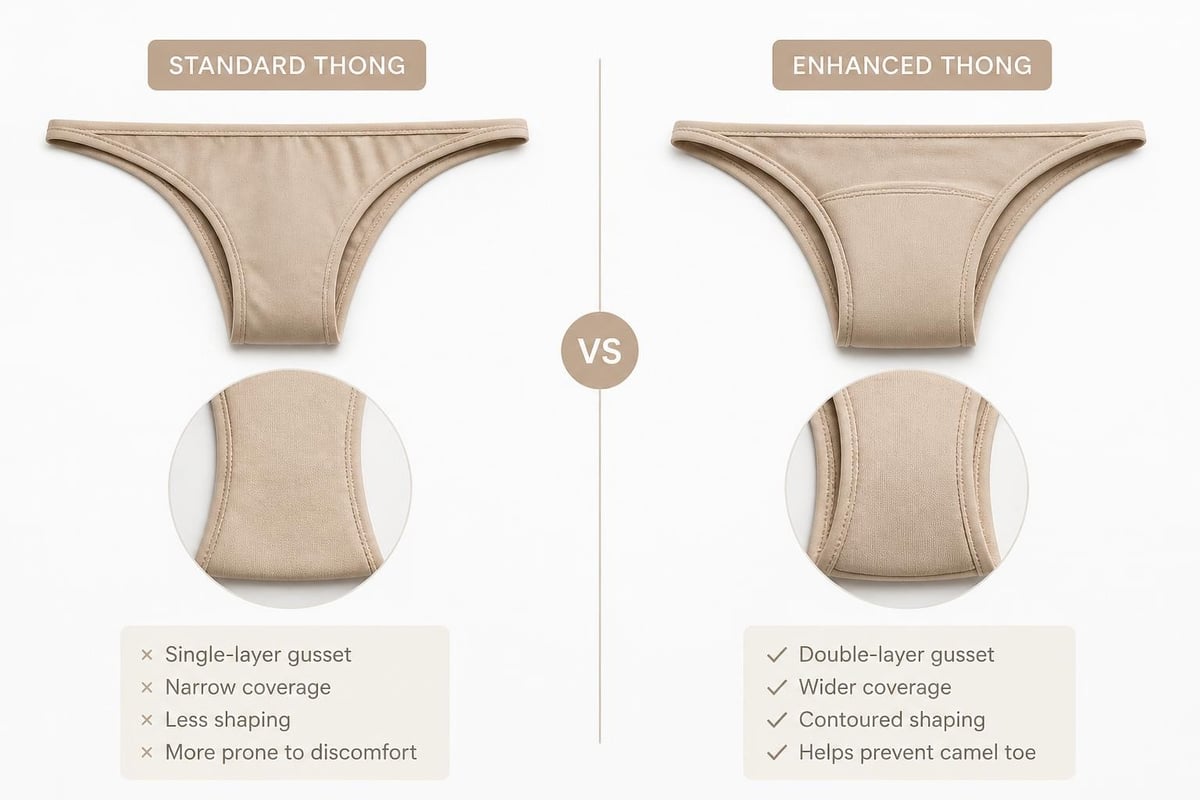
Modern body thongs incorporate engineering specifically targeting this issue. Specially designed gussets with camel toe prevention features use thicker, contoured fabric panels that smooth rather than divide.
Design Features That Prevent Camel Toe
Effective body thong characteristics:
- Double-layered front panels with strategic thickness gradation
- Wider gusset construction that covers more surface area
- Seamless edges that don't create dividing lines
- Slightly compressive fabrics that smooth without restricting
- Anatomically contoured shapes matching natural body curves
Testing body thongs before committing to multiple pairs helps identify which designs work best with your body type and preferred clothing. Many brands now offer specialized collections addressing this specific concern through innovative construction techniques.
Shopping Smart: Investing in Quality Body Thongs
The body thong market ranges from budget multipacks to luxury designer options. Understanding value versus price helps build a functional collection without overspending on underperforming products.
Price Points and Quality Indicators
Expect to pay between $10 and $35 per pair for quality body thongs that balance durability, comfort, and aesthetics. Extremely cheap options often use inferior fabrics that pill, lose elasticity quickly, or cause irritation through rough construction.
Quality markers in body thongs:
- Fabric composition labels: Detailed material breakdowns indicate manufacturing transparency
- Seamless or flatlock seams: Superior construction prevents irritation
- Gusset lining: Cotton or moisture-wicking liner in the most sensitive area
- Elastic quality: Maintains shape after multiple washes without becoming loose
- Care instructions: Specific washing guidelines suggest quality materials
Building a starter collection of 7-10 pairs in various colors and rises provides adequate rotation while you determine preferred styles. Underwear packs often offer better value than individual purchases while allowing you to test different options.
Trying Before Buying: Return Policies Matter
Since fit is highly personal with body thongs, prioritize retailers with generous return policies allowing you to test comfort in your home environment. Wear body thongs around the house for several hours before committing to keep them.
Many online retailers now offer quiz-based recommendations helping identify ideal body thong styles based on body type, preferences, and typical clothing choices. Taking a personalized quiz can streamline the selection process considerably.
Caring for Body Thongs: Extending Lifespan
Proper care significantly extends the functional life of body thongs, protecting your investment while maintaining hygiene standards. Delicate construction requires gentler treatment than basic cotton underwear.
Washing and Storage Best Practices
Washing guidelines:
- Hand wash or use lingerie bags in washing machines
- Use gentle, fragrance-free detergents
- Wash in cold or lukewarm water to preserve elastic
- Avoid fabric softeners that can break down moisture-wicking properties
- Never use bleach, even on white body thongs
Air drying preserves elastic integrity far better than machine drying. Hang body thongs by the waistband or lay flat on clean towels. High heat from dryers accelerates elastic breakdown and fabric deterioration.
Store body thongs flat or gently folded rather than tightly rolled. Organize by color or style in shallow drawers, allowing you to see your full collection without creating creases or stretching elastic through cramming.
Knowing When to Replace Body Thongs
Even with excellent care, body thongs require periodic replacement. Worn elastic, thinning fabric, or persistent odors despite thorough washing indicate it's time to retire a pair.
Replace body thongs showing these signs:
- Waistband no longer returns to original shape
- Visible thinning or transparency in fabric
- Loose or damaged seams
- Persistent discoloration despite proper washing
- Loss of moisture-wicking or odor-control properties
Most quality body thongs last 6-12 months with regular rotation and proper care. Athletic styles worn frequently during intense workouts may require replacement more often due to increased stress on fabrics.
Addressing Myths and Misconceptions About Body Thongs
Despite their mainstream adoption, body thongs still face misconceptions that discourage some women from trying them or cause unnecessary worry among regular wearers.
Myth: Body Thongs Are Always Uncomfortable
Reality varies dramatically based on fit, fabric, and individual anatomy. Many women who initially found body thongs uncomfortable simply needed different sizing, rise heights, or construction styles. Understanding tight underwear effects clarifies that discomfort comes from improper fit rather than the thong design itself.
Myth: Body Thongs Are Inherently Unsanitary
Hygiene concerns about thongs largely depend on wearing habits and fabric choices rather than the garment style itself. Proper hygiene practices, quality materials, and regular changing make body thongs as sanitary as any underwear style.
Myth: Only Certain Body Types Can Wear Body Thongs
Modern body thongs come in extended size ranges designed for all body types. The key is finding styles engineered for your shape rather than assuming body thongs work only for specific figures. Brands now design body thongs specifically for plus-size bodies, athletic builds, and everything in between.
Making Body Thongs Work for Your Lifestyle
Successfully incorporating body thongs into your wardrobe rotation requires matching styles to activities while respecting your body's signals about comfort and health.
Creating a Balanced Underwear Wardrobe
Rather than switching exclusively to body thongs or avoiding them entirely, most women benefit from maintaining variety. Reserve body thongs for situations where they provide clear advantages: eliminating visible panty lines, wearing specific clothing styles, or occasions requiring confidence in fitted garments.
Rotate between body thongs and other underwear styles throughout the week, giving your body variety in coverage and support. This approach prevents potential health issues associated with exclusive wear while maintaining the benefits body thongs provide.
Listening to Your Body
Individual responses to body thongs vary significantly. Some women wear them daily without any issues, while others find them suitable only occasionally. Neither experience is wrong or abnormal.
Pay attention to these signals suggesting you need a break from body thongs:
- Persistent irritation or itching
- Recurring yeast infections or UTIs
- Constant awareness or discomfort throughout the day
- Visible marks or indentations lasting hours after removal
- Preference for other styles during certain activities
Comfort should guide your choices. If body thongs never feel comfortable despite trying multiple brands, sizes, and styles, alternative underwear options that eliminate visible panty lines exist, including seamless hipsters and laser-cut bikinis.
Understanding how to select, wear, and care for body thongs properly transforms them from potentially problematic garments into comfortable, confidence-boosting essentials. Prioritizing quality construction, appropriate fabrics, and proper fit eliminates most common complaints while maintaining intimate health. Ambar Wear specializes in seamless, comfortable body thongs engineered to prevent common issues like camel toes and panty lines, offering designs that work with your body rather than against it. Explore their collection to discover how modern body thong construction can deliver all-day comfort without compromise.