

The best underwear for camel toe is a seamless thong or brief with a structured, padded front panel, a flat gusset, and stretch fabric that stays put when you move. Fit matters as much as design: underwear that rides up, bunches, or sits too tight pulls fabric inward, and thin leggings show every detail.
This guide explains why camel toe happens, which features actually prevent it, how to choose a style for your leggings, and how to keep your underwear comfortable and healthy through long wear.
Why camel toe happens in leggings and fitted clothes
Camel toe appears when tight fabric presses into the folds of the vulva and outlines them through your clothing. Three factors usually combine to cause it.
- Thin or stretchy outer fabric. Light-colored, lightweight, or high-stretch leggings cling closely and reveal shape. When the fabric is stretched across the body, it loses opacity and thickness, so even small contours become visible.
- Underwear that bunches or rides up. A narrow, unstructured front panel folds in on itself and creates ridges. During movement such as walking, squatting, or cycling, the panel can slide forward or twist, and the leggings then take on that crumpled shape.
- A seam or gusset in the wrong place. Center seams and stitched edges press into the body and leave visible lines. A seam that runs front to back can split the fabric into two raised halves, which is exactly what camel toe looks like from the outside.
Body type does not decide whether you are affected. Anyone who wears fitted bottoms can see it, which is why the solution is mostly about the garment rather than your shape. Leggings with a seam running straight through the crotch are a common culprit, because the seam sits directly on the area you are trying to smooth. Changing the underwear, the leggings, or both usually solves it.
What features make the best underwear for camel toe
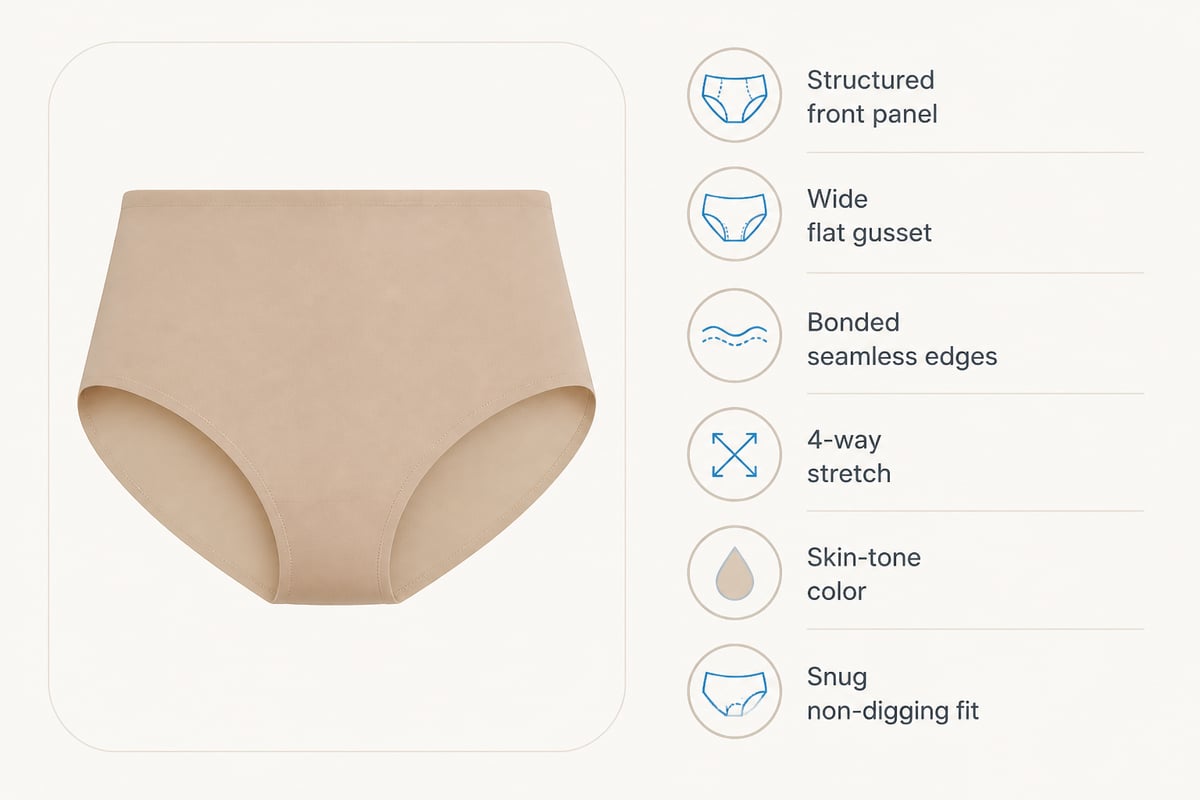
The best underwear for camel toe combines a smooth, structured front, a wide flat gusset, and seamless edges. Look for these features when you compare options.
- A structured or padded front panel. A gently thicker front creates an even surface so fabric lies flat rather than folding inward.
- A wide, flat gusset. A narrow gusset collapses into a crease. A wider one distributes pressure.
- Bonded or laser-cut edges. Seamless construction removes the raised stitching that creates panty lines.
- 4-way stretch. Fabric that stretches in every direction moves with squats, lunges, and yoga instead of shifting out of place.
- A color close to your skin tone. Matching your skin is more effective than white under light leggings, because white shows through.
- A fit that is snug but not tight. Waistbands and leg openings should lie flat without digging in.
Which style works best: thong, brief, or boyshort
A seamless thong is usually the strongest option under leggings, though a well-cut brief can work if the front panel is structured. The right choice depends on how much coverage you want and how thick your leggings are.
| Style | Visible lines | Camel toe control | Best for |
|---|---|---|---|
| Seamless thong with padded gusset | Minimal | High | Light or thin leggings, workouts |
| Seamless brief | Low to moderate | Moderate | Everyday wear, thicker leggings |
| Boyshort | Moderate (leg band lines) | Low to moderate | Under skirts, not tight bottoms |
| Standard cotton brief with seams | Higher | Low | Loose clothing |
Thongs have a reputation for being uncomfortable or unhealthy, but some sources suggest the health concern may be overstated. Cleveland Clinic notes that thongs have not been found to increase the risk of yeast infections, bacterial vaginosis, or urinary tract infections, though people with recurring vulvar problems may prefer looser, more breathable underwear.
For a deeper look at thong construction, see this breakdown of underwear for women who prefer a thong.
A thong built for camel toe prevention
If you want a single product that applies every feature above, the Tummy Control Camel Toe Proof Thong from Ambar Wear is designed around this problem. It pairs a seamless build with a padded gusset that helps prevent camel toe, plus gentle tummy shaping. The padded gusset creates the even front surface described earlier, so thin leggings lie flat instead of folding into the body, while the seamless construction keeps the edges from leaving lines at the hip or along the leg opening.

Ambar Wear's underwear uses stretch fabric that moves with squats, lunges, and yoga, and breathable fabric that keeps you comfortable through the day. That combination suits the situations where camel toe is most noticeable: light-colored leggings, a morning workout followed by errands, or a long day in fitted trousers. Over 1,000 customer reviews rate it 4.6 out of 5, and most customers say they would recommend it. Check the product page for current sizing details and availability.
How to match underwear to your leggings
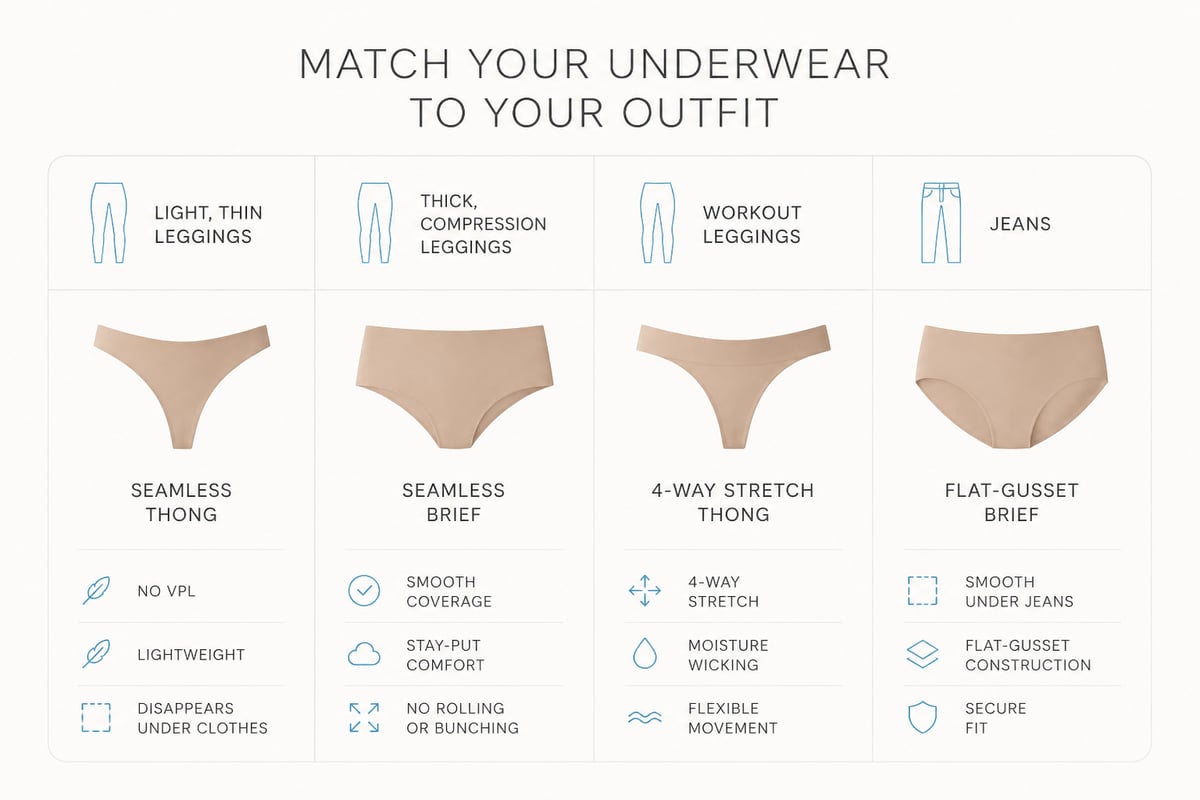
Choosing underwear by legging type prevents most visible lines. Use these pairings as a starting point.
Light-colored or thin leggings
These are the hardest to dress. Choose a seamless thong in a shade that matches your skin, with a structured front panel. Avoid white and bright colors, which show through. Ambar Wear's underwear is designed to stay as invisible as possible under leggings, including lighter colors.
Thick, high-waisted compression leggings
Thicker fabric hides more, so a seamless brief often works. Make sure the waistband of your underwear sits below the legging waistband to avoid a double line at the hip.
Yoga and workout leggings
Movement is the test here. Pick 4-way stretch fabric with a stay-put fit so nothing rolls or twists during a class. After exercise, change promptly. UW Health advises changing out of workout clothes or swimsuits as soon as possible and washing them between uses.
Everyday jeans and fitted trousers
Camel toe is less common here, but a flat gusset and seamless edges still prevent ridges. A stretch brief or thong both work.
Fabric choices: comfort, breathability, and health
Fabric affects both the look and the comfort of your underwear. Cotton is the traditional recommendation for health reasons, but a smooth, wicking blend can be a better fit for fitted clothes.
Cleveland Clinic recommends 100% cotton underwear for regular wear because it is breathable and less likely to cause an allergic reaction than synthetic fabrics. University of Iowa Health Care also advises cotton underwear and avoiding tight clothing and synthetic fabrics in its vulvar skin-care guidance.
The practical tradeoff is that plain cotton can show seams and may hold moisture during sweaty workouts. A reasonable approach:
- Everyday, low-sweat days: choose cotton or a cotton-lined style.
- Workouts and fitted leggings: choose a breathable, moisture-wicking seamless fabric, and change afterward.
- Sensitive skin or recurring irritation: stick with cotton and a looser cut, and talk to your clinician. ACOG's overview of vulvodynia covers gentle-care measures, including underwear and potential irritants.
Choosing and caring for your underwear
Wearing the right size matters more than any single feature. If a thong is too small, it digs in and bunches. If it is too large, it shifts and wrinkles. Check the size chart on the product page and consider your measurements rather than your usual clothing size.
Good habits keep underwear working and keep you comfortable:
- Change daily. Cleveland Clinic advises changing underwear at least once daily, and more often if it becomes wet or stained.
- Wash between wears. Use a gentle, fragrance-free detergent and skip fabric softener, which can reduce wicking.
- Air dry when possible. Heat can break down stretch fibers and soften a structured panel over time.
- Rotate pairs. Having several seamless pairs reduces wear and keeps the front panel firm.
Pay attention to the leggings as well. ACOG recommends pants and underwear that are not tight-fitting, and leggings or tights with a cotton crotch to allow air circulation. If your leggings feel restrictive, a better-cut pair often reduces camel toe more than changing underwear alone.
Do you still need shapewear for camel toe?
You usually do not need dedicated shapewear if your underwear has a structured front and seamless edges. Underwear built with a padded gusset handles the main issue, and it is more comfortable for daily wear than compression garments. Heavy compression can also work against you: a tight, high-pressure panel presses fabric against the body and may create new ridges at the leg openings or waistband. ACOG recommends pants and underwear that are not tight-fitting, which is a useful benchmark when deciding how much compression you want.
Shapewear can still help when your outfit is very thin or very clingy. In that case, choose a thin, breathable piece rather than heavy compression, and avoid wearing it for many hours. A sheer white maxi skirt or a pair of lightweight stretch trousers are typical examples where an extra smoothing layer makes sense. If you do add a layer, change out of it as soon as the event ends and wash it before wearing it again. For more on picking the right category, these guides to camel toe proof underwear and good underwear for leggings walk through the options in detail.
FAQ
What underwear do gynecologists recommend?
Gynecologists generally recommend breathable underwear in cotton or a similar moisture-friendly fabric, with a comfortable, non-restrictive fit. ACOG specifically advises avoiding tight-fitting pants and underwear, and choosing leggings or tights with a cotton crotch so air can circulate. Cleveland Clinic recommends 100% cotton for regular wear and suggests changing underwear at least once daily, and more often if it becomes wet or stained. Change out of sweaty clothing promptly and wash underwear between wears. If you have recurring vulvar irritation, a looser, more breathable cut is the safer choice, and your clinician can advise further.
What are the best anti-camel toe leggings?
Look for thicker, opaque fabric with a seamless or flat-seam crotch and a gusset that sits flat. Darker colors and compressive, high-waisted cuts hide more than thin, light-colored styles. Pairing them with underwear that has a structured front panel gives the smoothest result. When shopping, hold the crotch area up to the light: if you can see through it or feel a thick center seam, expect visible lines once the fabric is stretched. A cotton crotch panel also helps with air circulation, in line with ACOG's guidance.
Can the wrong underwear cause camel toe even under thick leggings?
Yes. Narrow, unstructured, or ill-fitting underwear can bunch and push fabric into the folds, and the leggings then follow that shape. Thicker leggings reduce visibility, but a flat gusset and seamless edges prevent the problem at its source. A pair that is too small digs in and creates ridges, while one that is too large shifts and wrinkles, so size matters as much as style. Check the size chart before ordering.
Start by checking the underwear you wear most often under leggings: if the front bunches, rides up, or leaves a seam line, that pair is the first one to replace. The Tummy Control Camel Toe Proof Thong is a seamless option built for exactly that situation. Ambar Wear designs seamless underwear and activewear for women who want a smooth, confident fit in leggings and fitted clothes. Browse the full range and shop now at Ambar Wear to find the pair that suits your wardrobe.