

The modern active woman demands more from her undergarments than ever before. Athletic panties have evolved from simple workout underwear into sophisticated garments that combine cutting-edge fabric technology, ergonomic design, and performance features that support everything from morning yoga sessions to high-intensity interval training. Whether you're a seasoned athlete or someone who enjoys staying active, understanding what makes athletic underwear different can transform your workout experience and daily comfort.
Understanding Athletic Panties and Their Purpose
Athletic panties serve a fundamentally different purpose than everyday underwear. These specialized garments address the unique challenges that arise during physical activity: moisture management, friction reduction, temperature regulation, and maintaining coverage during dynamic movements.
The primary distinction lies in fabric construction and material selection. While traditional cotton underwear absorbs moisture and holds it against your skin, athletic panties utilize moisture-wicking fabrics that pull sweat away from your body and allow it to evaporate quickly. This fundamental difference prevents the uncomfortable dampness, chafing, and potential bacterial growth that can occur during and after workouts.
Key Features That Define Quality Athletic Underwear
When evaluating athletic panties, several critical features separate exceptional products from mediocre ones:
- Seamless construction that eliminates friction points and visible panty lines
- Four-way stretch fabrics that move with your body during every movement
- Antibacterial properties that prevent odor and maintain freshness
- Quick-dry technology that keeps you comfortable during extended activities
- Strategic ventilation in high-heat zones for improved breathability
- Flatlock seams that sit flush against skin to prevent chafing
The best moisture-wicking underwear options combine multiple features to create a comprehensive solution for active lifestyles.
Fabric Technology Behind Performance Underwear
The materials used in athletic panties represent significant advancements in textile engineering. Modern performance fabrics go far beyond simple polyester blends to incorporate sophisticated fiber technologies.
Synthetic performance blends typically combine polyester, nylon, and elastane in precise ratios. Polyester provides the moisture-wicking foundation, nylon adds durability and a smooth texture, while elastane (spandex) delivers stretch and recovery. Premium athletic panties often feature proprietary fabric blends that optimize these properties.
Natural vs. Synthetic Fabric Considerations
| Fabric Type | Moisture Management | Durability | Odor Resistance | Environmental Impact |
|---|---|---|---|---|
| Synthetic Blends | Excellent | High | Very Good | Moderate |
| Merino Wool | Very Good | Moderate | Excellent | Good |
| Bamboo Blend | Good | Moderate | Good | Variable |
| Cotton Performance | Fair | Good | Fair | Best |
Merino wool deserves special mention for athletic applications. Unlike regular wool, merino fibers are incredibly fine and soft, providing natural temperature regulation and outstanding odor resistance. However, merino athletic panties typically come at a higher price point.
Many brands now incorporate recycled materials into their athletic underwear lines, using recycled polyester made from plastic bottles or ocean waste. This approach maintains performance while reducing environmental impact, similar to how sustainable swimwear companies like MAIN Design create eco-friendly activewear from recycled materials.
Choosing the Right Style for Your Activity
Not all athletic panties suit every workout equally well. The ideal style depends on your specific activities, body type, and personal preferences.
Thongs and minimal coverage styles work exceptionally well under form-fitting workout clothes like leggings and bike shorts. The invisible camel toe thong design eliminates visible lines while preventing common fit issues during activities like cycling, running, or dance fitness.
Activity-Specific Recommendations
For high-impact activities such as running, CrossFit, or plyometric training, you need athletic panties with secure coverage that won't shift during jumping movements. Boy shorts or bikini cuts with wide elastic bands provide stability without sacrificing comfort.
Yoga and Pilates practitioners benefit from seamless designs that remain invisible under tight clothing while allowing complete freedom of movement through complex poses. Mid-rise and high-rise options prevent gaps during forward folds and inversions.
Low-impact activities like walking, light cycling, or weight training offer more flexibility in style selection. Here, comfort and personal preference take priority over specific performance requirements.
For those dealing with specific concerns, understanding underwear designed to prevent camel toe helps select styles that maintain both comfort and confidence during any activity.
Fit and Sizing Considerations for Athletic Underwear
Proper fit separates athletic panties that enhance your workout from those that become a distraction. Unlike regular underwear where some give in sizing might be acceptable, athletic underwear must fit precisely to perform correctly.
The ideal athletic panties should feel like a second skin without creating any pressure points. When trying on new styles, perform a few squats, lunges, and arm raises to test how the fabric responds to movement.
Finding Your Perfect Size
Measure accurately using a soft tape measure around your hips at the widest point, typically about 8 inches below your natural waistline. Compare these measurements to the manufacturer's size chart rather than assuming your usual size will translate correctly.
Consider these sizing indicators:
- Waistband comfort: Should sit flat without rolling or digging into skin
- Leg openings: Secure without creating visible indentations
- Gusset placement: Centers correctly without shifting during movement
- Overall coverage: Matches your preference without excess fabric bunching
Many women find they need different sizes in athletic panties compared to everyday underwear. Performance fabrics often have more compression, which can affect fit preferences.
Moisture Management and Sweat Control
The primary reason athletic panties outperform regular underwear during workouts centers on superior moisture management. Understanding how this technology works helps you appreciate the investment in quality athletic underwear.
Capillary action drives moisture-wicking in performance fabrics. The synthetic fibers feature microscopic channels that use surface tension to pull moisture away from skin and distribute it across a larger surface area for faster evaporation. Quality athletic panties from retailers like DICK'S Sporting Goods incorporate this technology throughout the entire garment.
The Science of Staying Dry
During exercise, your body produces sweat to regulate temperature. Cotton underwear absorbs this moisture but holds it against your skin, creating dampness that leads to discomfort and potential skin issues. Athletic panties reverse this process.
The wicking process happens in stages:
- Sweat contacts the fabric layer against your skin
- Hydrophobic (water-repelling) fibers push moisture outward
- Capillary channels spread moisture across fabric surface
- Increased surface area accelerates evaporation
- Your skin remains relatively dry throughout activity
Premium athletic panties often feature graduated moisture management, with different fabric weights in various zones. The gusset area might use a lighter, more breathable fabric, while structural areas incorporate slightly heavier materials for support.
Preventing Common Workout Discomforts
Athletic panties solve several specific problems that plague active women. Addressing these issues directly improves workout quality and encourages consistent exercise habits.
Chafing prevention ranks among the most important benefits. Friction between skin, fabric, and movement creates irritation that can sideline even dedicated athletes. Seamless athletic panties eliminate the raised seams that commonly cause chafing, while moisture-wicking properties reduce the wetness that exacerbates the problem.
Eliminating Visibility Issues
Visible panty lines (VPL) and camel toe concerns affect confidence during workouts, particularly in group fitness classes or gym environments. The seamless camel toe thong design addresses both issues simultaneously through strategic fabric placement and construction techniques.
Anti-odor technology incorporated into quality athletic panties uses silver ions, copper infusions, or other antimicrobial treatments that inhibit bacterial growth. Since bacteria feeding on sweat creates odor, preventing bacterial proliferation keeps athletic underwear fresher between washes.
Temperature regulation matters more than many realize. Your body's core temperature rises during exercise, and trapped heat in the pelvic region can cause discomfort and excessive sweating. Athletic panties with ventilated panels or breathable mesh zones help maintain optimal temperature.
Care and Maintenance for Longevity
Proper care extends the life of athletic panties while maintaining their performance properties. These specialized garments require slightly different handling than regular underwear.
Wash after every use without exception. Allowing sweat and bacteria to remain on athletic underwear between wears degrades fabrics and reduces effectiveness. However, excessive heat damages performance fibers, so always use cold or warm water rather than hot.
Best Practices for Washing Athletic Underwear
- Turn garments inside out before washing to protect outer surfaces
- Use mild, performance-specific detergents without fabric softeners
- Avoid bleach, which breaks down synthetic fibers and elastic
- Wash with similar fabrics rather than mixing with heavy items like jeans
- Consider hand-washing delicate or expensive pieces
Air drying preserves elastic and prevents heat damage from dryers. While some athletic panties tolerate low-heat drying, hanging or laying flat to dry always provides the safest option. The quick-dry properties of performance fabrics mean air-dried athletic underwear typically dries within a few hours.
Storage matters less for athletic panties than washing, but avoid crushing or tightly folding pieces with special construction features. Rolling or loosely stacking maintains shape better than cramming into overstuffed drawers.
Comparing Price Points and Value
Athletic panties range from budget-friendly multipacks under $20 to premium single pairs exceeding $30. Understanding what drives these price differences helps you make informed purchasing decisions.
Entry-level options typically use basic polyester blends with standard construction. These serve casual exercisers adequately but may lack durability and advanced features like targeted ventilation or specialized anti-chafing technology.
| Price Range | Typical Features | Best For | Expected Lifespan |
|---|---|---|---|
| Under $10 | Basic wicking, simple construction | Light activity, trying athletic underwear | 6-12 months |
| $10-$20 | Good moisture management, seamless options | Regular workouts, most activities | 12-18 months |
| $20-$30 | Advanced fabrics, specialized features | Serious athletes, specific needs | 18-24 months |
| $30+ | Premium materials, innovative technology | Performance athletes, luxury preference | 24+ months |
Mid-range athletic panties ($15-25) often provide the best value for most active women. These incorporate quality moisture-wicking fabrics, seamless construction, and durability that justifies the investment. Collections like those available at Nordstrom's moisture-wicking panties section showcase this sweet spot of performance and price.
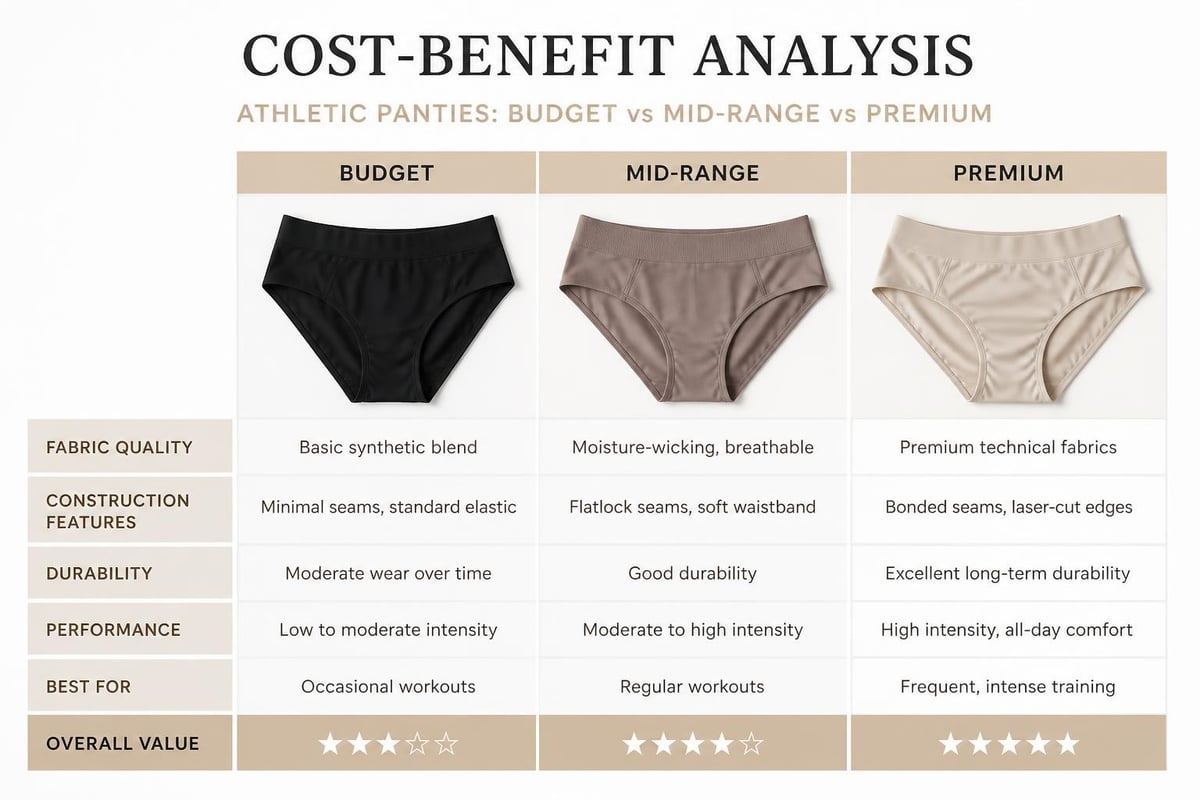
Premium options justify higher prices through innovative features like body-mapping technology, proprietary fabric blends, or superior construction methods. Brands specializing in performance apparel invest heavily in research and development, with benefits passed to consumers through longer-lasting, better-performing products.
Building Your Athletic Underwear Wardrobe
How many athletic panties do you actually need? The answer depends on workout frequency, laundry habits, and activity variety.
Minimum recommendations for different activity levels:
- Occasional exercisers (1-2 workouts weekly): 3-4 pairs rotate adequately
- Regular athletes (3-4 workouts weekly): 5-7 pairs prevent constant laundry urgency
- Daily exercisers: 7-10 pairs provide flexibility and reduce wear from frequent washing
- Multiple daily sessions: 10-14 pairs accommodate intense training schedules
Consider diversifying your collection with different styles for various activities. A balanced athletic underwear wardrobe might include thongs for yoga and running, bikini cuts for cycling and dance, and boy shorts for high-impact training.
Strategic Purchasing Approaches
Test before investing in multiples. Buy one or two pairs of a new style or brand before committing to a larger purchase. What works perfectly for one woman might not suit another's body type or preferences.
Seasonal considerations affect needs differently. Summer training might require more frequent changes and thus more athletic panties, while winter workouts in climate-controlled environments may reduce this need. Similarly, the best moisture-wicking underwear for women designed for hot weather might incorporate lighter fabrics than year-round options.
Take advantage of multipacks when you find athletic panties that work well for you. Many brands offer bundled pricing that reduces per-pair costs significantly, similar to how seamless camel toe thongs packs provide better value than individual purchases.
Special Considerations for Different Body Types
Athletic panties should accommodate and flatter all body types while delivering consistent performance. However, certain design elements work better for specific shapes and sizes.
Plus-size athletes benefit from athletic panties with wider waistbands that distribute pressure evenly and prevent rolling. High-rise options often provide better coverage and stay in place during movement. Look for brands that extend size ranges and specifically design for curvier bodies rather than simply scaling up smaller sizes.
Petite and Tall Body Considerations
Petite women often struggle with athletic panties that sit incorrectly due to proportionally longer rise measurements. Low-rise and mid-rise cuts typically work better than high-rise styles, which may extend too far up the torso. Some brands offer petite-specific sizing that adjusts both circumference and rise height.
Tall athletes face opposite challenges, with standard rises often falling short of comfortable coverage. High-rise athletic panties and brands that offer tall sizing ensure adequate coverage during movement. The tummy control camel toe proof thong demonstrates how thoughtful design addresses multiple needs simultaneously.
Body shape variations also influence ideal athletic panties choices:
- Pear shapes: Seamless sides prevent digging at wider hip areas
- Apple shapes: Mid to high-rise with gentle compression around midsection
- Athletic builds: Any style works; focus on personal comfort preferences
- Hourglass figures: Styles with some stretch accommodate natural curves
Health and Hygiene Considerations
The relationship between athletic panties and intimate health deserves serious attention. Proper underwear choices during exercise can prevent infections and irritation.
Yeast infections and bacterial vaginosis occur more frequently when moisture remains trapped against skin. Athletic panties with superior moisture-wicking properties reduce this risk significantly by keeping the area dry. Gynecologists often recommend changing out of workout clothes, including underwear, immediately after exercise to minimize moisture exposure.
Breathability complements moisture-wicking to create a healthier environment. Cotton gussets in otherwise synthetic athletic panties provide a compromise that maintains performance while offering natural fiber contact in the most sensitive area. Products from Anita Active sports briefs often incorporate this design philosophy.
Material Sensitivities and Allergies
Some women experience sensitivity to specific synthetic materials or antimicrobial treatments used in athletic underwear. If you notice increased irritation, redness, or itching when wearing certain athletic panties, consider:
- Testing athletic panties with different fabric blends
- Choosing options with cotton or modal gussets
- Selecting unscented, chemical-free alternatives
- Consulting a dermatologist about potential fabric allergies
Menstrual considerations affect athletic panties selection for many women. Specialized menstrual panties designed for athletic use incorporate absorbent layers while maintaining moisture-wicking properties in other zones. These serve as backup protection during light flow days or combine with other menstrual products during heavier days.
Environmental Impact and Sustainable Choices
The athletic apparel industry faces increasing scrutiny regarding environmental sustainability. Athletic panties, despite their small size, contribute to this larger conversation.
Synthetic fabrics that make athletic panties so effective at moisture-wicking create environmental challenges. Most performance fabrics are petroleum-based and shed microplastics during washing. However, the durability of quality athletic underwear means fewer replacements over time compared to cheaper alternatives that wear out quickly.
Sustainable alternatives exist and continue improving. Recycled polyester performs identically to virgin polyester while diverting plastic waste from landfills and oceans. Brands incorporating recycled materials into athletic panties demonstrate that performance and sustainability can coexist.
Making Environmentally Conscious Choices
Consider these factors when selecting eco-friendly athletic panties:
- Material source: Recycled synthetic vs. virgin plastic-based fabrics
- Production methods: Water usage, chemical treatments, and manufacturing energy
- Longevity: Durable construction that extends replacement cycles
- End-of-life: Whether materials can be recycled or biodegrade
- Brand practices: Company commitment to sustainability beyond individual products
Natural performance fabrics like Tencel, modal, and bamboo blends offer renewable material sources, though they may sacrifice some moisture-wicking efficiency compared to synthetics. Testing different options helps you find the balance between environmental values and performance needs.
Some companies address sustainability through take-back programs, repairing services, or innovative recycling initiatives that give worn-out athletic underwear new life. Supporting brands with comprehensive sustainability programs amplifies your individual choices.
Integrating Athletic Panties into Complete Activewear Systems
Athletic panties work best as part of coordinated activewear systems. Thoughtful pairing with other workout clothing enhances both performance and appearance.
Leggings and athletic panties require special consideration. The high-rise seamless lifting leggings exemplify how matching underwear and outerwear in terms of rise height and seamless construction creates a unified, comfortable system without visible lines or bunching.
Matching compression levels between athletic panties and outer layers prevents the "sausage effect" where tighter underwear creates bulges under looser pants. Conversely, very compressive leggings paired with minimal athletic panties can create shifting and discomfort.
Coordinating for Specific Activities
Different workouts benefit from specific underwear and outerwear combinations:
- Running: Lightweight athletic panties with moisture-wicking shorts or capris
- Cycling: Seamless thongs with padded cycling shorts or bibs
- Yoga: Invisible athletic panties with form-fitting, high-rise leggings
- CrossFit: Secure coverage athletic panties with flexible shorts or compression tights
- Swimming/water sports: Quick-dry athletic panties under athletic swimwear
Two-piece activewear sets often provide pre-coordinated solutions. The two-pieces set with high-rise seamless lifting approach eliminates guesswork about how pieces work together.
Sports bras and athletic panties should match in support level and style. Matching sets create a cohesive look while ensuring your underwear and support garments work together rather than against each other. A seamless push-up bra paired with seamless athletic panties provides invisible support throughout your entire workout wardrobe.
Troubleshooting Common Athletic Underwear Issues
Even with quality athletic panties, occasional problems arise. Understanding solutions prevents frustration and helps you maximize your investment.
Riding up during workouts typically indicates incorrect sizing or cut. Athletic panties that constantly require adjustment disrupt your workout flow and defeat their purpose. Try sizing down if fabric seems loose, or experiment with different cuts. Boy shorts typically ride up less than bikini cuts, while thongs eliminate this issue entirely by design.
Addressing Persistent Problems
If athletic panties lose elasticity quickly, examine your care routine. Excessive heat, harsh detergents, or fabric softeners accelerate elastic breakdown. Switching to gentle care methods often resolves this issue with future purchases.
Odor retention despite proper washing suggests bacterial colonization in fabric fibers. While antimicrobial treatments prevent this, they can wear off over time. Deep cleaning with enzyme-based sports detergents or replacing older athletic panties typically solves persistent odor issues. Options from Saalt's moisture-wicking underwear collection incorporate advanced antimicrobial properties that maintain freshness longer.
Discomfort at seams indicates either poor construction quality or sensitivity to seam placement. Truly seamless athletic panties eliminate this problem entirely. If you consistently experience seam irritation, investing in higher-quality seamless options provides better long-term value than repeatedly replacing cheaper alternatives.
Color fading affects darker athletic panties more than light colors. While some fading is inevitable with frequent washing, turning garments inside out before laundering and avoiding direct sunlight when air-drying minimizes color loss.
Selecting the right athletic panties transforms workout comfort and performance while preventing common issues like moisture buildup, chafing, and visibility concerns. By understanding fabric technology, proper fit, and care requirements, you can build an athletic underwear wardrobe that supports your active lifestyle throughout 2026 and beyond. Ambar Wear specializes in seamless, moisture-wicking athletic underwear designed specifically to eliminate camel toe, panty lines, and sweat patches, offering flattering fits for all body types that combine performance with everyday elegance.