
Finding underwear that fits properly can be challenging for petite women, and thongs present unique considerations. Standard sizing often fails to account for the specific proportions of smaller frames, leading to discomfort, bunching, and unwanted visible lines. Petite thongs are specifically designed to address these issues, offering tailored construction that matches the shorter rise, narrower hip measurements, and overall proportions of women who typically wear sizes 0-4. Understanding how these specialized garments differ from standard sizing can transform your daily comfort and confidence, whether you're wearing fitted activewear, professional attire, or everyday casual clothing.
Understanding Petite Proportions and Thong Fit
The term "petite" refers to more than just height. Women who are 5'4" and under typically have proportionally different measurements throughout their entire body, including torso length, hip width, and the distance between waist and hips. These proportional differences create specific challenges when selecting intimate apparel.
Standard thongs often create problems for petite frames:
- Waistbands sit too high on the natural waist, creating awkward bunching
- Leg openings are too wide, causing gaps and reducing support
- The front panel extends too far down, increasing the risk of camel toe
- Back straps don't align properly with the natural curve of smaller hips
- Overall coverage is excessive, defeating the purpose of minimal-line underwear
When manufacturers design petite thongs, they adjust multiple measurements simultaneously. The rise (the distance from crotch to waistband) is shortened, typically by one to two inches compared to regular sizing. Hip measurements are proportionally reduced, and the placement of seams and elastic is recalculated to align with where they naturally fall on a petite body.
Why Specialized Sizing Matters
Generic "one size fits most" approaches rarely work for intimate apparel. Hanky Panky's collection of petite thongs demonstrates how specialized construction creates better outcomes. Their petite line specifically caters to sizes 0-4, with adjusted proportions that maintain the brand's signature comfort while fitting smaller frames correctly.
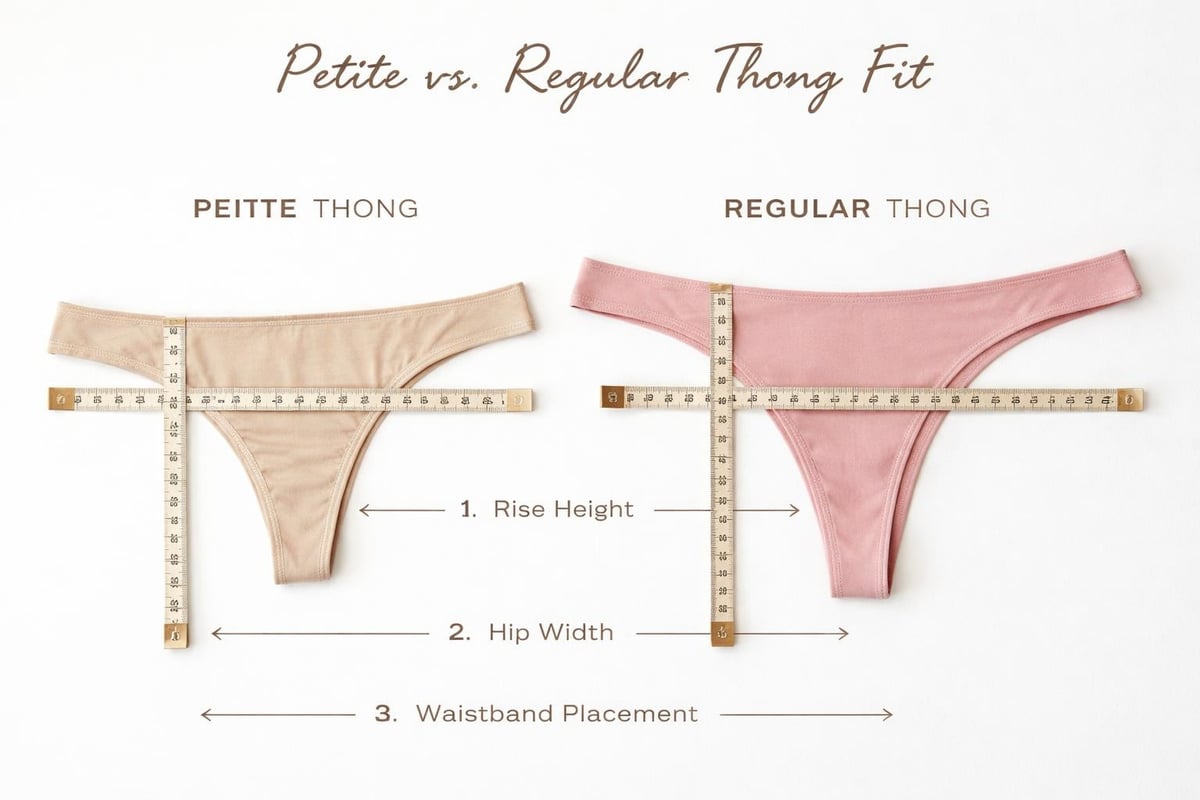
The construction differences extend beyond simple size reduction. Fabric stretch ratios are recalculated to provide adequate support without creating excessive tension. Seam placement is repositioned to avoid digging into sensitive areas. Even the width of elastic bands is often adjusted to prevent the waistband from overwhelming a shorter torso.
Material Selection for Petite Body Types
Fabric choice plays a crucial role in how petite thongs perform throughout the day. The right materials can prevent common issues like rolling, bunching, and visible panty lines, while poor fabric selection exacerbates fit problems.
| Material Type | Benefits for Petite Frames | Considerations |
|---|---|---|
| Microfiber | Lightweight, smooth, invisible under clothing | May lack breathability in hot weather |
| Cotton blends | Breathable, comfortable for all-day wear | Can show lines under very tight clothing |
| Lace | Stretches to conform to body contours | Requires proper sizing to avoid gaps |
| Modal | Soft, moisture-wicking, eco-friendly | May stretch out over time with frequent washing |
| Seamless synthetic | Eliminates all visible lines, ideal for activewear | Check for proper moisture management |
For petite women concerned about camel toe, fabric weight and structure become particularly important. Thinner, lighter fabrics may conform too closely to body contours, while heavier materials with strategic paneling can smooth and contour. This is where specialized designs from brands like Ambar Wear make a significant difference, incorporating anti-camel toe technology directly into the construction.
Seamless Construction Benefits
Seamless petite thongs offer distinct advantages for smaller frames. Without traditional seams creating bulk, these garments sit flatter against the body and reduce the risk of visible lines. The seamless construction also eliminates potential pressure points where seams might dig into skin.
Modern seamless technology provides:
- No-show performance under even the thinnest fabrics
- Reduced chafing during physical activity or long wear periods
- Improved durability since there are no seams to split or separate
- Better moisture management through continuous fabric construction
- Enhanced comfort for sensitive skin
When selecting seamless underwear, petite women should look for styles that use bonded edges rather than elastic, which can create visible ridges. The transition between the garment and skin should be imperceptible both visually and physically.
Shopping Strategies for Petite Thongs
Finding the right petite thongs requires a strategic approach different from shopping for standard sizing. Simply selecting the smallest available size in regular lines rarely produces optimal results.
Start by taking accurate measurements. You'll need your waist measurement at its narrowest point, hip measurement at the fullest part, and the rise measurement from front waist, through the crotch, to back waist. Compare these measurements to brand-specific sizing charts rather than relying on generic small, medium, or large designations.
Evaluating Fit Indicators
When trying on petite thongs, several indicators reveal whether the fit is correct:
- The waistband should rest at your natural waist without rolling or folding
- Leg openings should lie flat without gaping or creating indentations
- The back strap should follow your natural curve without twisting
- The front panel should provide smooth coverage without excess fabric
- There should be no bunching in the crotch area
According to customer reviews on Zappos, many petite women find that trying multiple brands is necessary before discovering the right fit. What works for one body type may not work for another, even within the petite category.
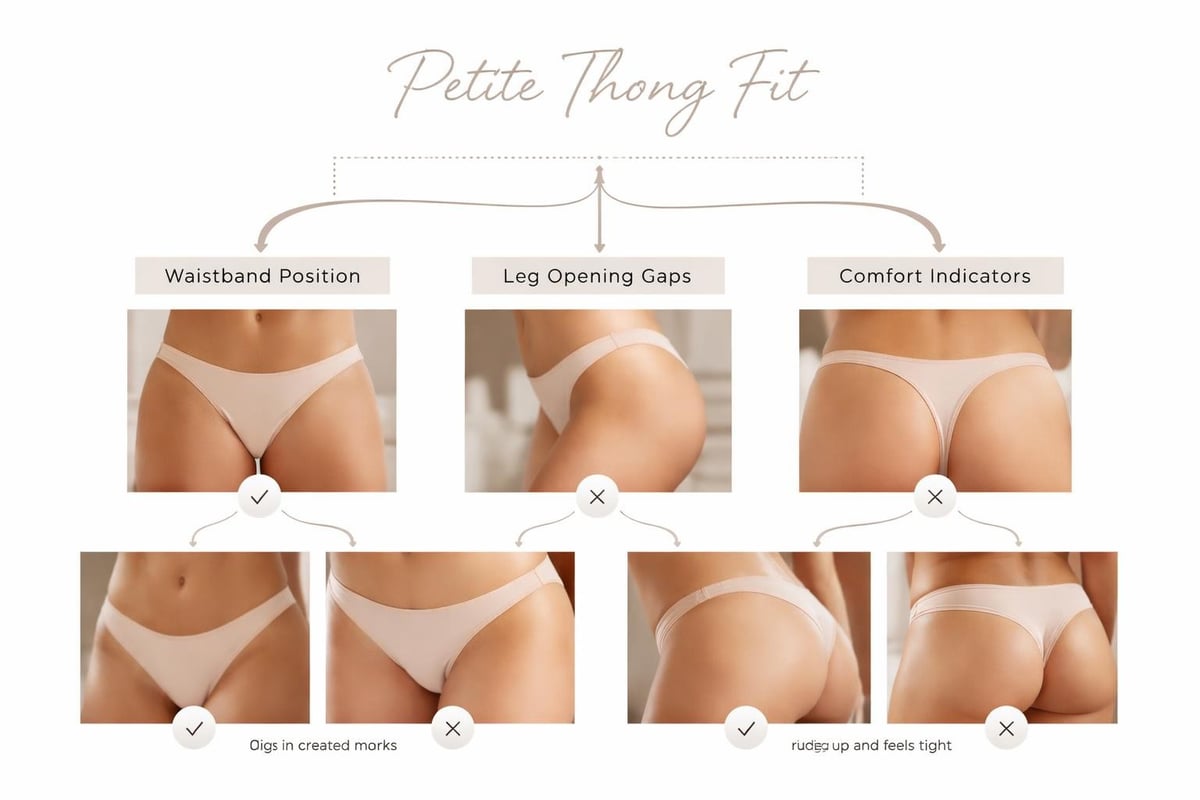
The petite bottoms checklist offers valuable guidance on what to look for when selecting any bottom garment for petite frames, including underwear. Pay particular attention to rise measurements, as this is often where standard sizing fails petite proportions most significantly.
Style Variations Within Petite Sizing
Petite thongs come in multiple style variations, each serving different purposes and pairing best with specific clothing types. Understanding these distinctions helps you build a versatile underwear collection.
Low-rise petite thongs sit below the natural waist, making them ideal for low-rise jeans, pants, and skirts. Refinery29 features a 5-pack option that demonstrates how this style specifically accommodates smaller frames while providing the coverage needed for lower-waisted bottoms.
Mid-rise options offer more coverage and support, sitting at the natural waist. These work well for everyday wear and provide a secure feel during moderate activity. They're particularly useful for preventing the "riding up" issue that petite women often experience with standard thongs.
High-waisted petite thongs are designed for high-waisted bottoms and provide additional tummy control. The proportions are adjusted so the high waist doesn't extend awkwardly high on a shorter torso.
Specialty Features for Active Lifestyles
Active petite women need thongs that can handle movement without shifting, chafing, or creating visible lines under fitted activewear. Look for styles with:
- Moisture-wicking fabrics that pull sweat away from skin
- Antimicrobial treatments to prevent odor during extended wear
- Reinforced gussets for additional support during high-impact activities
- Wider waistbands that distribute pressure more evenly
- Stay-put construction using silicone grips or specialized elastic
These features are essential when wearing thong underwear during yoga, running, cycling, or other athletic pursuits. The combination of petite sizing with performance features creates underwear that truly supports an active lifestyle.
Addressing Common Concerns and Issues
Petite women face specific underwear challenges that require targeted solutions. Understanding these issues helps in selecting styles that prevent rather than cause problems.
Camel Toe Prevention
The camel toe issue is particularly common for petite women wearing standard-sized thongs. The excess fabric in the front panel bunches and creates visible definition that many women find embarrassing. Petite thongs with properly scaled front panels reduce this risk significantly.
Beyond sizing, certain design features specifically combat camel toe:
- Contoured gussets that lie flat without gathering
- Strategic seam placement that divides and smooths rather than accentuates
- Appropriate fabric weight that skims without clinging
- Double-layer construction in the front panel
- Anti-camel toe technology built into the design
Brands specializing in camel toe proof underwear incorporate these features as standard, making them excellent choices for petite women who have struggled with this issue in the past.
Managing Visibility and Lines
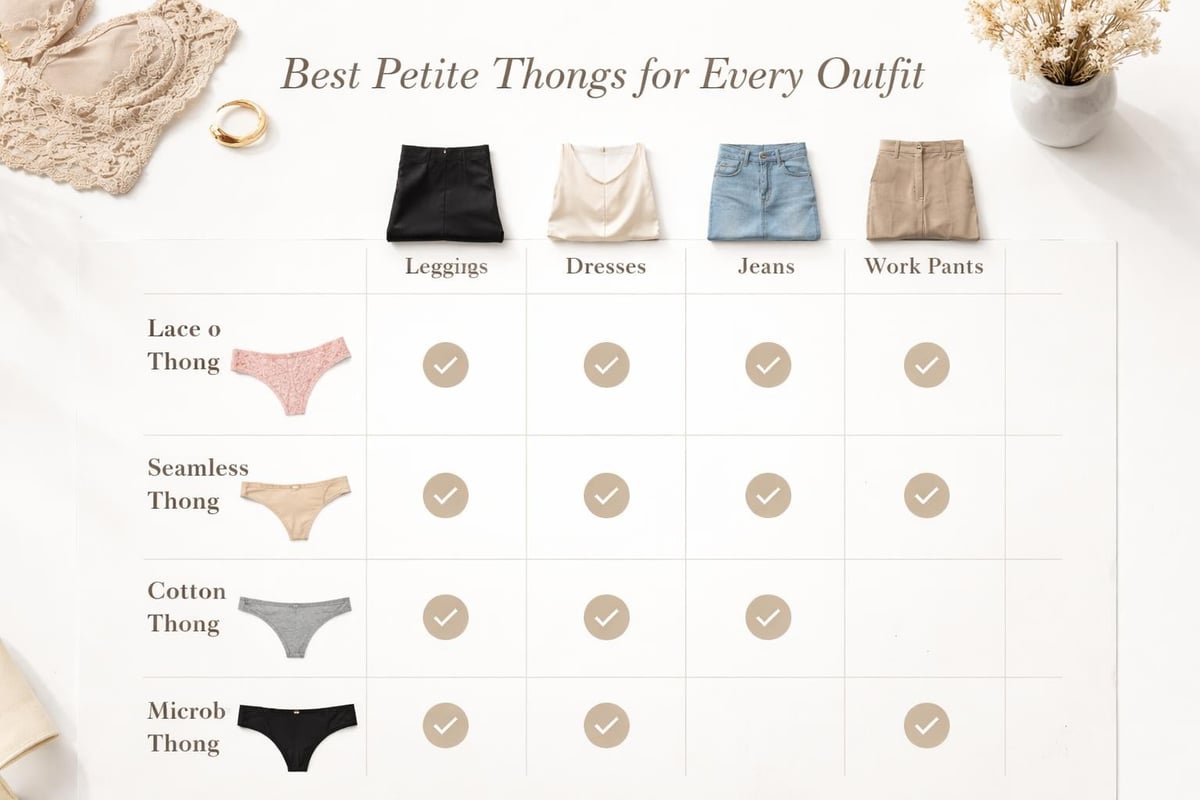
| Clothing Type | Recommended Petite Thong Style | Key Features |
|---|---|---|
| Fitted leggings | Seamless low-rise | No elastic edges, laser-cut hem |
| Dress pants | Mid-rise microfiber | Smooth fabric, bonded seams |
| Tight skirts | High-waisted seamless | Strategic paneling, no show fabric |
| Athletic wear | Performance thong | Moisture-wicking, stay-put construction |
| Sheer fabrics | Nude-tone seamless | Color-matched to skin, invisible edges |
Selecting the right style for your clothing eliminates visible lines while maintaining comfort. The comprehensive style guide provides additional context on how petite proportions influence garment selection across all categories.
Care and Maintenance for Longevity
Proper care extends the life of petite thongs and maintains their fit integrity. Delicate construction requires gentle handling to preserve the precise proportions that make these garments effective.
Essential care practices include:
- Washing in mesh lingerie bags to prevent stretching
- Using cool or warm water rather than hot
- Selecting gentle, fragrance-free detergents
- Air-drying rather than machine-drying
- Storing flat or gently folded to maintain shape
- Rotating multiple pairs to reduce wear on individual items
Elastic degradation is the primary cause of fit failure in thongs. Heat accelerates this process, so avoiding the dryer is crucial. Even "permanent press" dryer settings generate enough heat to damage delicate elastic over time.
When to Replace Your Petite Thongs
Even with excellent care, petite thongs eventually need replacement. Signs that it's time for new underwear include:
- Waistband stretching that prevents the garment from staying in place
- Visible thinning of fabric, especially in the gusset area
- Elastic that no longer recovers after wearing
- Loose or fraying seams
- Fading or discoloration that affects confidence when wearing light-colored clothing
Most quality petite thongs should last six to twelve months with regular rotation and proper care. Building a collection of at least seven to ten pairs ensures you can rotate effectively while maintaining hygiene standards.
Building a Functional Petite Thong Collection
A well-planned underwear collection provides options for every outfit and activity while minimizing decision fatigue. For petite women, this means having styles that address specific needs.
Core collection essentials:
- Three to four nude-toned seamless pairs for everyday wear under most clothing
- Two to three black seamless pairs for dark clothing and professional attire
- Two athletic performance pairs for workouts and active days
- One to two special occasion pairs in lace or decorative styles
- Additional colors that match your most-worn clothing items
This foundation of twelve to fifteen pairs provides adequate rotation while covering all typical scenarios. As you identify which styles work best for your specific body type, you can expand into additional colors and patterns.
Seasonal Considerations
Your petite thong needs may shift with seasons. Summer often requires more frequent changes due to heat and humidity, making moisture-wicking fabrics essential. Winter layering may call for slightly more coverage while maintaining the no-line benefits of thong construction.
Consider building separate warm-weather and cool-weather rotations, with fabrics and features suited to each season. This approach ensures comfort year-round while extending the life of individual garments by reducing the total wearing frequency.
Finding Your Perfect Fit Journey
Discovering the ideal petite thongs for your body is often a process of experimentation and refinement. Start with brands specifically offering petite sizing, as these demonstrate an understanding of proportional differences rather than simple size reduction.
Order multiple styles in your first purchase to compare how different constructions feel and perform. Keep detailed notes about what works and what doesn't, as this information guides future purchases. Many women find that mixing brands based on specific needs, rather than loyalty to a single manufacturer, produces the best overall collection.
Pay attention to how your body responds throughout the day. Initial comfort in the fitting room doesn't always translate to all-day wearability. Give new styles a full-day test during low-stakes activities before relying on them for important occasions.
The investment in finding properly fitting petite thongs pays dividends in daily comfort, confidence, and reduced time spent adjusting underwear. When garments fit correctly from the start, you can focus on your activities rather than your undergarments.
Finding petite thongs that truly fit your proportions transforms daily comfort and eliminates the frustration of ill-fitting underwear. By understanding the specific design considerations that make these garments work for smaller frames, you can build a collection that supports your lifestyle while maintaining the confidence that comes from properly fitting undergarments. Ambar Wear specializes in creating seamless, comfortable thongs and undergarments designed to eliminate common fit issues including camel toe, visible lines, and discomfort, with styles that flatter all body types. Explore their collection to discover how thoughtful design and quality construction can elevate your everyday comfort and confidence.