

Cloth thongs are comfortable when the fabric is soft and breathable, the waistband sits flat, and the fit matches your body, and cotton is the most common fabric choice for everyday wear. If you wear leggings or yoga pants, the cut matters as much as the cloth, because a thong with seams and a flat front can create the very lines and camel toe you want to avoid.
What Counts as a Cloth Thong?
A cloth thong is a thong made from woven or knit textile, most often cotton or a cotton blend, rather than from lace, mesh, or bonded microfiber. The term usually points to a soft, matte, breathable feel, closer to a classic cotton brief than a lingerie piece.
The category is broader than it sounds. Some cloth thongs are 100% cotton throughout. Others use a cotton gusset panel with a stretch blend elsewhere, which keeps the fabric against skin while helping the garment hold its shape. Knowing which version you are buying helps you predict comfort, stretch, and how the piece behaves under fitted clothing.
If you want a deeper look at fabric terminology, this overview of thong cloth explains how different textiles behave in a thong.
Are Cloth Thongs Actually Comfortable?
Yes, for most women a well-cut cloth thong is comfortable, and comfort depends mainly on three things: fabric softness, waistband tension, and the width of the back strip.
A thong can feel uncomfortable for reasons unrelated to fabric. A narrow, stiff waistband digs in. A rear strip that is too thin creates pressure. A size that is too small pulls the front panel upward, which is where camel toe starts. Most "I can't stand thongs" stories come down to one of these fit problems rather than the concept itself.
Many women also find that comfort improves once they stop wearing a thong that is too tight. A fit that lies flat without squeezing is the goal. If you are new to the style, a beginner-oriented read like first thongs covers what to expect in the first few wears.
Health Questions About Wearing Thongs
Thongs do not appear to raise infection risk on their own. Cleveland Clinic notes that a study found thongs did not increase the risk of yeast infections, bacterial vaginosis, or urinary tract infections. The same source adds that people with recurrent vulvar or vaginal problems may prefer looser, more breathable underwear, so it is worth adjusting if you are prone to irritation.
Why 100% Cotton Is the Default Recommendation
Cotton is recommended for regular wear because it breathes well and is less likely to irritate sensitive skin than many synthetic fabrics. Cleveland Clinic recommends choosing 100% cotton underwear for regular wear for exactly these reasons: breathability and a lower chance of an allergic reaction.
The American College of Obstetricians and Gynecologists gives similar guidance. ACOG advises wearing pants and underwear that are not tight-fitting and says underwear should have a cotton panel. Notice that the advice is about the panel that touches skin, not necessarily the whole garment.
That distinction is useful if you exercise or wear leggings daily. A cotton gusset against skin, paired with a stretchier body fabric, can satisfy the health guidance while giving you the stretch recovery that pure cotton often lacks.
What About Cotton Quality?
Not all cotton is the same. Official fiber grading looks at measures such as fineness and maturity, and the USDA's cotton standards use air-flow instrument tests and micronaire readings to designate those traits. You will rarely see these numbers on a package, but they explain why two "100% cotton" thongs can feel completely different. Cotton fiber quality is graded using standardized instrument testing, which you can read about in official USDA cotton standards if you want to understand what quality labels reflect.
In practice, soft fabric with a smooth hand and little pilling after a wash usually signals better fiber.
What Does "Seamless" Mean in a Thong?
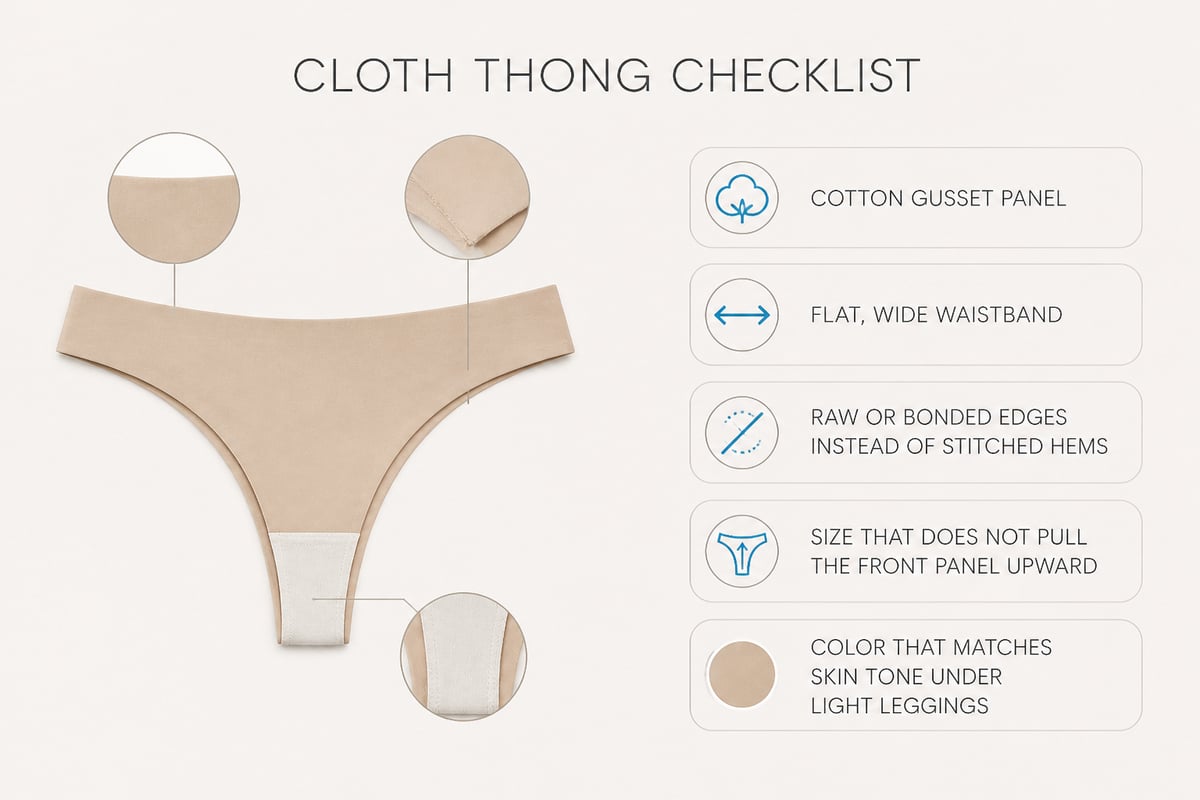
A seamless thong has no stitched hems or bulky seams along the leg openings and waistband, so nothing creates a ridge under clothing. Edges are usually bonded, laser-cut, or knit as a single piece.
Seamless construction matters most when you wear light-colored, stretchy fabrics. A hem that is invisible in jeans can show clearly under yoga pants, where the fabric stretches tight across the hips. A knit or bonded edge lies flat and moves with the body instead of cutting into it.
The trade-off is that fully seamless styles often rely on stretch blends rather than pure cotton. Look for a cotton-lined gusset if you want both benefits. For more on this style, the guide to seamless women's thongs breaks down edge types and what each looks like under clothing.
How to Avoid Camel Toe in Cloth Thongs
The most reliable way to avoid camel toe is to choose a thong with a structured, slightly contoured front panel that holds its shape instead of collapsing against the body.
Camel toe appears when thin, soft fabric is pulled tight between the legs and the garment has no front structure. Pure cotton on its own tends to be soft and unstructured, which is wonderful for comfort but not for smoothing. Several features help:
- A lined or doubled front panel that keeps the fabric from creasing inward.
- A size that fits without pulling upward. Sizing down for a "snug" look often makes the problem worse.
- A cut that follows the body's curve rather than a flat triangle of fabric.
- Fabric with some stretch recovery, so the panel returns to shape after movement.
If camel toe is a recurring concern, the dedicated read on cameltoe clothing walks through how clothing choices affect it beyond underwear alone.

The Seamless Camel Toe Thongs Pack from Ambar Wear is built around this problem. It uses seamless construction with a structured front panel designed to stop camel toe, and the brand states it stays invisible under any legging, including light colors. The fabric is breathable and moisture-wicking, and the 4-way stretch is meant to stay in place through squats, lunges, and yoga. There is a 30-day guarantee: if you do not feel the difference on your first wear, Ambar Wear refunds you. Customer reviews rate it 4.6 out of 5.
Cloth Thongs Under Leggings and Yoga Pants
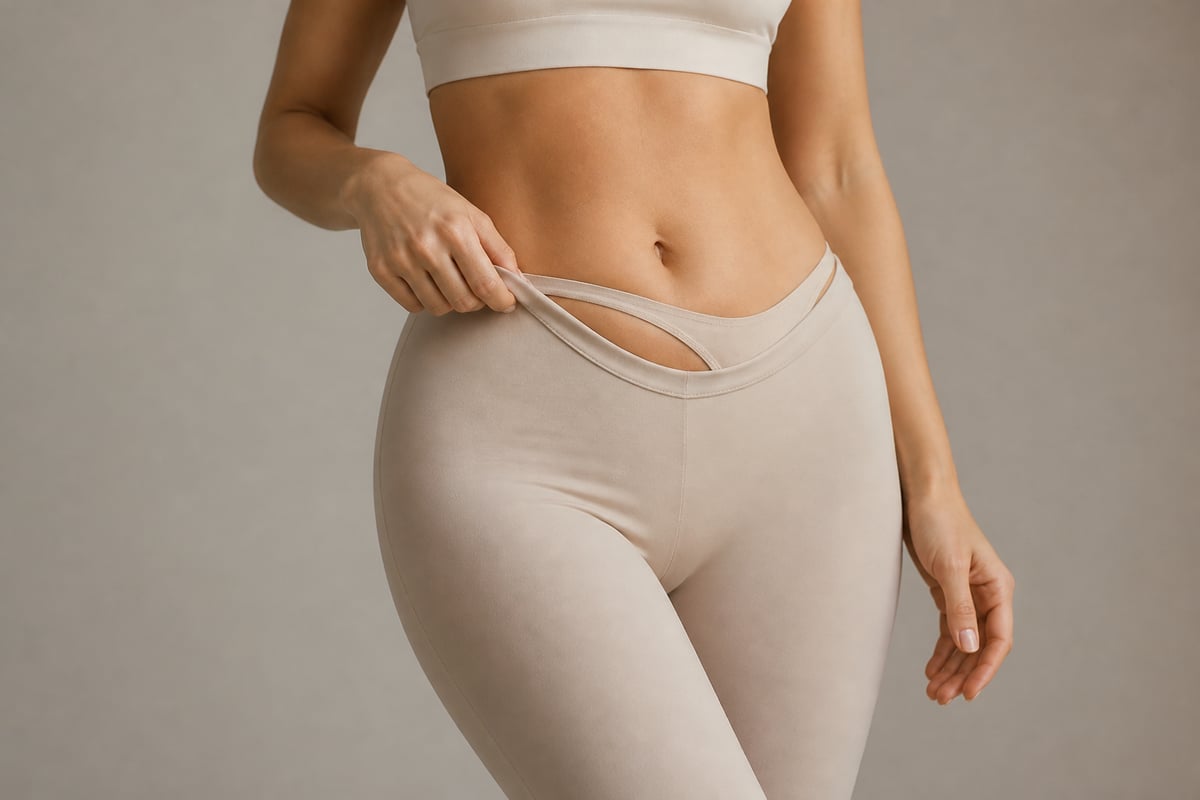
For leggings, the best cloth thong is flat-edged, skin-toned or close to your leggings' color, and fitted closely enough that it does not shift during movement.
Leggings are the hardest test because the fabric is thin and tight. Three details decide the result:
- Edge finish. Bonded or knit edges disappear. Stitched elastic edges leave a visible line, especially at the hip.
- Color. A thong that matches your skin tone is less visible under white or pale leggings than white underwear is. Bright white often shows through light fabric.
- Fit during motion. A thong that rides up or twists during squats will bunch no matter how soft the cloth is.
Many women who find thongs uncomfortable in leggings are actually reacting to a size problem or a rear strip that is too narrow. A deeper walkthrough of thongs with leggings covers color matching and fit adjustments in more detail.
The Part of Cloth Thong Care Nobody Talks About: Washing
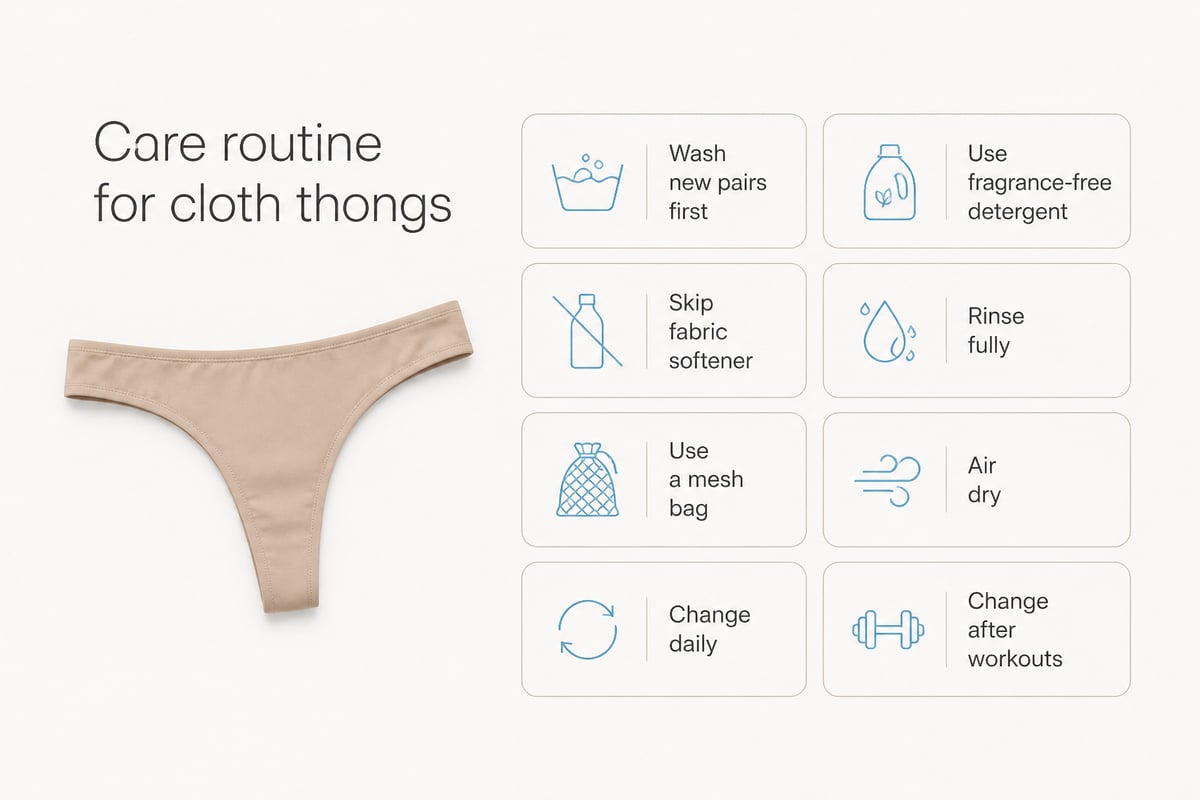
How you wash cloth thongs affects both comfort and how long they stay smooth, and the main rules are to rinse out detergent thoroughly and skip fabric softener.
Cambridge University Hospitals advises avoiding biological detergents and fabric conditioner and ensuring detergent is rinsed out when washing clothes. Fabric softener coats fibers, which can reduce breathability and moisture absorption, the very qualities you chose cotton for. It can also leave residue against sensitive skin.
A few practical habits help:
- Wash new pairs before wearing. Cleveland Clinic advises washing new underwear before wearing it, and choosing a fragrance- and dye-free detergent if residue irritates the vulva.
- Change daily. The same source recommends changing underwear regularly, and more often if it becomes wet or stained, which matters after workouts.
- Use a mesh bag. This protects bonded edges and stretch fibers from snagging in the machine.
- Air dry or low heat. High heat degrades elastic and can shrink cotton, which tightens the fit over time.
For additional guidance on reducing irritation, vulvar skin care guidelines from a university health care provider address clothing and moisture management.
How to Choose the Right Size and Cut
The right size lies flat against the hip without pinching, and the front panel should cover without pulling upward when you move.
Size by the measurements on the brand's size chart rather than by your usual size in other garments, because thong sizing varies widely between makers. If you fall between sizes, the larger size generally gives better comfort and fewer lines, while the smaller one tends to produce pulling and visible edges.
Rise matters too. A low-rise cut works under low-waist leggings. A mid-rise suits high-waisted leggings, where a low waistband would peek above the waistline. Body shape also affects which cut feels best, and resources on thongs for curvy women and thongs for larger women address fit considerations for fuller figures.
Thong Types: From Classic to Micro
Thongs range from full-back cuts with a narrow strip down to micro styles with very little fabric, and the skimpiest are usually called micro thongs or G-strings.
A micro thong has a tiny front triangle and a string-like back, designed to minimize coverage. A G-string is similar, with a string at the sides as well. For everyday wear under leggings, most women prefer a classic or wide-waistband thong, since more fabric means a flatter waistband and fewer pressure points. Micro styles can work for very tight outfits, but they offer less structure, so they are more likely to shift.
If you are unsure where a style falls, the breakdown of the difference between thongs and panties is a useful reference.
FAQ
Are there any 100% cotton thongs?
Yes. Many brands make thongs entirely from cotton, though some blend in a small amount of elastane for stretch and shape retention. If pure cotton matters to you, check the fabric label, and note that a cotton-lined gusset is a reasonable compromise when you want both breathability and a smooth fit.
What are micro thongs?
Micro thongs are the most minimal thong cut, with a very small front triangle and a thin string at the back. They offer the least coverage and the least structure, which makes them less reliable for preventing lines or camel toe under fitted leggings.
Is a thong really comfortable?
It can be, provided the size is correct, the waistband is flat, and the fabric is soft. Discomfort usually comes from poor fit rather than from thongs as a style, so trying a seamless, well-sized pair is the better test than judging by an uncomfortable first attempt.
Start by checking the label on your current thongs for a cotton gusset and a bonded or knit edge, then compare them against what you see in the mirror under your leggings. If lines or camel toe still show, a purpose-built option like the Seamless Camel Toe Thongs Pack is worth trying, and Ambar Wear's 30-day guarantee lets you test the difference on your first wear. Browse the full range of seamless thongs, leggings, and bras at Ambar Wear and shop now to find the fit that stays smooth through every workout and errand.